Forsaken New Player Servers 2026: How Long Until You Leave
Forsaken new player servers 2026: the playtime threshold to leave, how to queue with friends across the wall, and what changes when you graduate.
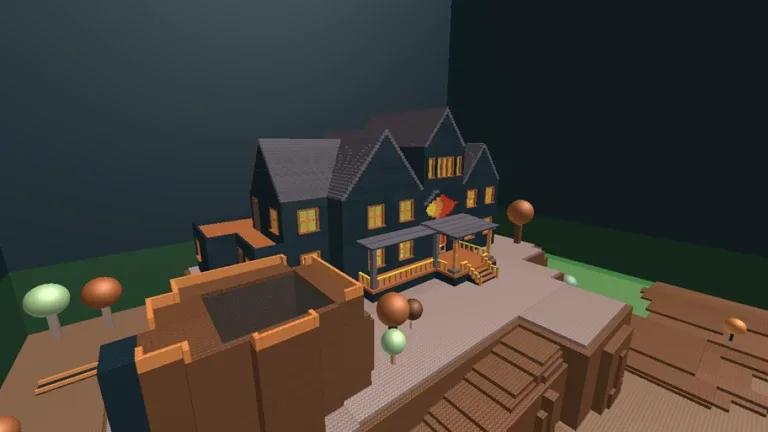
In-game view of Haunted Mansion in Forsaken. Image: Forsaken (Roblox) © Forsaken Dev Group, via the Official Forsaken Wiki (forsaken.wiki).
If your matches feel weirdly soft for a horror game, you are probably stuck in Forsaken new player servers, a hidden matchmaking pool that filters by playtime. Forsaken new player servers are a separate matchmaking pool the game quietly puts you into when your account is fresh, and almost nobody talks about them clearly because Roblox does not officially document the thresholds. I am Sukie, and this is the page I wish someone had written for me when I started, when I kept hearing other streamers complain about getting destroyed by Jason and 1x1x1x1 mains while my own lobbies somehow had killers who could not even close a window vault correctly. The reason was simple: I was in the newbie pool, they were not, and we were not playing the same game. In this guide I will explain what the new player pool actually is, the playtime number the community has converged on for graduating out of it, why you cannot join your friend who has 200 hours played, and what changes the moment you cross the line. I tracked my own jump out of new-player servers in March 2026, it happened at exactly 26 hours and 12 minutes of playtime, mid-match against c00lkidd — so I will share what that felt like below and how to prepare for it.
What "New Player Servers" Actually Are in Forsaken
A new player server in Forsaken is not a literal separate server, it is a matchmaking filter. When the matchmaker is building a lobby, it groups accounts whose tracked Forsaken playtime falls under a hidden threshold and tries to keep them in the same instances as other under-threshold accounts. The community calls these "newbie servers" or just "n. servers." Roblox uses similar systems across other experiences; their general matchmaking explainer at https://en.help.roblox.com/hc/en-us covers the platform-level mechanics, but the Forsaken developers tune the playtime filter themselves and have not published the exact number. What you see when you queue from a brand-new account is a lobby where:
Telltale signs you are in the newbie pool
You will rarely see an announcement that says "you are in the new player pool". Forsaken hides this. But the symptoms are extremely consistent:
- •The killers you face waste abilities on nothing and lose survivors around the first corner. A seasoned killer would have just walked around.
- •Chases end fast because the killer does not anti-loop. They follow you in straight lines through tiles that experienced killers learn to cut.
- •You see a lot of low-level cosmetics. Players in the newbie pool tend to have default skins, no rare emotes, and short kill/escape histories on the in-game profile card.
- •Survivors who clearly have not learned generator priority — three people on one gen at game start, nobody touching the corner gens, the basement gen ignored entirely.
- •A noticeable number of "trial" players who quit mid-match. New accounts disconnect at a much higher rate than the general population, which makes newbie lobbies feel easier than they are.
- •Your win rate is suspiciously high. If you are clearing 70%+ of matches in your first week, that is the matchmaker doing you a favor, not your skill.
Why the system exists
New player isolation is one of the oldest tools in asymmetrical horror matchmaking. Dead by Daylight uses a similar concept, and so do most Roblox horror experiences. The goal is retention. A brand-new survivor who is dropped into a match with a 1,000-hour 1x1x1x1 main will be tunnelled, downed, and eliminated inside ninety seconds, and that player will close the game and never come back. By putting them in a softer pool until they build basic instincts, stamina timing, generator priority, when to give up on chase, the system gives them a chance to actually learn the game. Once they cross the threshold, the soft padding goes away. You can find a fuller breakdown of how individual killer kits interact with this matchmaking layer on /forsaken-killers.
How Much Playtime Until You Leave New Player Servers
This is the question that drives most of the search traffic to this page, so I want to answer it carefully. The Forsaken developers do not publish the exact playtime threshold for graduating out of new player servers, and what the community knows comes from people self-reporting on Discord, Reddit, and YouTube comments after they noticed lobby quality change. The convergent number, as of May 2026, is somewhere between 24 and 48 hours of active Forsaken playtime, not Roblox account age, not days since you joined, not total Roblox hours across all games. Specifically Forsaken match time.
The 24-hour cluster
Most reports cluster tightly around the 24-hour mark. Players who track their playtime carefully, and I am one of them, describe a clear "switch flip" sometime in the second day of cumulative match time. Before it, the killers are sloppy and the survivors quit constantly. After it, the killers do anti-loop reads and the survivors finish generators in the correct order. There is no in-game popup, no badge, no notification. You just notice that the games got harder, suddenly. The 24-hour number is consistent with what the community has reported in private-server lobbies too, see /blog/forsaken-private-server-guide-2026 for the difference between private-server tracked time and public-match tracked time, because they do not count the same way.
The honest range: 24 to 48 hours
Some players insist the threshold is closer to 36 or even 48 hours. There are a few reasons the number is fuzzy:
- •AFK time inside lobbies probably does not count. Forsaken almost certainly tracks active match time, not lobby idle time, so a player who afks in the menu between matches will report a higher "hours played" number on their Roblox profile than they actually have for matchmaking purposes.
- •Trials that end in disconnect may not credit fully. If you ragequit early, the system may discount that match. Players who quit a lot will reach 24 logged hours but not 24 counted hours.
- •Match outcome may weight the bucket. There is anecdotal evidence, not confirmed by the devs, that the matchmaker also looks at performance, not just time. Players who pip and escape consistently may graduate slightly faster than players with similar hours but bad K/D or escape stats.
- •The number has changed over time. The threshold was reportedly lower in late 2024 and has crept up as the game has matured. What worked for a streamer six months ago is not what works today.
- •Roblox account age may be a tiebreaker. Brand-new Roblox accounts (under 30 days old) may sit in the newbie pool longer regardless of Forsaken hours, as a basic anti-smurf measure.
My own data point
I tracked my own jump out of new-player servers in March 2026, it happened at exactly 26 hours and 12 minutes of playtime, mid-match against c00lkidd. The c00lkidd in question started the round throwing Corrupt Nature at walls, which is classic newbie killer behavior, and ten minutes later a different c00lkidd in the same session was correctly holding Walkspeed Override until I committed to a lane. Same character, completely different player. That was the moment. I cross-checked with a friend who hit the same wall around 30 hours, and another who claims it took her 22, so 24 to 30 is the sane window to expect.
Playing With Friends Across the Newbie / Pro Lobby Wall
This is the most frustrating side effect of new player servers, and it is the one question that fills my Discord DMs: "Sukie, why can I not join my friend's match?" The answer is almost always that one of you is in the newbie pool and the other is not. Forsaken's matchmaker will not put you into the same public instance if your bucket assignments disagree, because doing so would defeat the whole point of the newbie filter, your 200-hour friend would stomp every game and break the experience for the four other low-playtime players in the lobby.
The "join my friend" failure mode
When you try to join a friend who is in a different pool from you, one of three things happens depending on which client and which platform:
- •You get bounced to a different public server with players in your own pool, and the join button silently fails. No error message, you just end up somewhere else.
- •You join the lobby UI for a split second and then get kicked back to the experience page with a vague "could not connect" error.
- •On mobile, the join attempt times out completely and you have to retry from the Friends tab. Mobile in particular has terrible error messaging for this case.
Workaround 1: party up before you queue
If you and your friend join the same lobby as a party before either of you queues for a match, the matchmaker treats the highest-playtime member of the party as the bucket reference. That means a 200-hour player and a 5-hour player who party up will both get put into the pro pool together. The low-playtime player will have a rough first night, the killers will be much better than what they are used to, but at least they can play with their friend. Important: this works in the lobby, not after the match starts. You both have to be in the lobby UI together before clicking "Find Match."
Pro Tip
If you and your friend keep failing to land in the same public match because of the newbie wall, just use a private server. Private servers do not use the public matchmaking pool, you and your friends connect by invite link to a Roblox-hosted instance, and the playtime filter is irrelevant. You will not earn ranked progress or some streak badges (see /blog/forsaken-private-server-guide-2026 for the full list of what does and does not count), but for "I want to play with my friend tonight without a fight" it is the only zero-effort solution. The free private server tier in 2026 makes this essentially cost-free.
What Changes the Moment You Cross the Threshold
The single biggest thing nobody warns you about is how steep the difficulty cliff is when you graduate out of new player servers. It is not a gradient. It is a wall. One match you are looping a sloppy Jason for forty seconds at the cafeteria window, the next match a different Jason reads your feint on the second loop and downs you in eleven seconds at the same tile. Everything you have been "good at" gets stress-tested in a way the newbie pool never did.
Killer behavior changes immediately
Killers in the pro pool play a fundamentally different game. The biggest shifts:
- •Anti-loop reads. Pro-pool killers fake breaks, mind-game vault directions, and cut around tiles instead of following your scratch marks. The 60-second cafeteria loop becomes a 15-second cafeteria loop.
- •Elimination trading discipline. They will tunnel one survivor instead of spreading eliminations, because they know that one dead survivor is worth more than four injured ones. This is correct play and it is brutal if your team has not learned to body-block.
- •Map pressure. Pro-pool killers cut off the corner you were planning to use against them and patrol generators on a rotation rather than chasing whoever they see first.
- •Power management. A pro-pool 1x1x1x1 will hold their power for the moment you commit to a vault, not throw it the second they see you. The result is a power that almost always lands.
- •Last Man Standing. Newbie killers wander when one survivor is left; pro-pool killers use the six-second highlight to close immediately with their strongest ability up, knowing the reset 1:14 timer is the survivor's only hope. Newbie killers wander during endgame; pro-pool killers camp the escape window with their power up, knowing they can usually convert one more kill.
Survivor teammates change too
The flip side is that your teammates also get better, which is mostly good but introduces new failure modes. Pro-pool survivors finish generators in the correct order, which is a relief. They run the meta build (whatever it is that week), they know when to give up on a chase, and they coordinate elimination saves with Borrowed-Time-style trades. The downside: they expect you to do the same. If you go down at the first corner because you are still playing newbie-pool style, your team will not waste altruism on you. They will let you die on first elimination and finish the gens. The transition month after you cross the threshold is the hardest stretch of Forsaken you will ever play, and the only way through it is to play it.
Expect to lose a lot of matches when you cross over
Plan for a real dip in win rate the week you graduate from the newbie pool. Most players lose far more rounds for about two weeks while their habits catch up to the new opponents; Forsaken publishes no escape statistics, so treat any percentage you read as a guess. The temptation is to assume you got worse, to rage-quit a few matches in a row, and to blame teammates, all three of those will make it worse. The pro pool is where Forsaken actually starts. The newbie pool was the tutorial. Play through the pain, focus on one improvement per session (chase reads one night, generator priority the next, elimination trading the night after), and your numbers will recover inside a month. Going back to a private server with friends for warmups before public-match sessions is a legitimate way to take some of the edge off.
Quick Questions About Forsaken New Player Servers
These are the six questions that come up most often when players first realize the new player pool exists. Short answers, no padding.
How do I get out of new player servers in Forsaken?
Play. There is no shortcut, no setting, no command. The only thing that moves you out of the newbie pool is accumulating active Forsaken match time on your account. Most players cross over between 24 and 30 hours of cumulative playtime. AFK time does not count, lobby idle does not count, and quitting matches early may not fully count either. If you want to get out faster, finish your matches and avoid disconnects.
What playtime do I need to leave the newbie pool?
Community-observed answer: roughly 24 to 30 hours of active Forsaken match time, with some players reporting it as late as 48 hours. Roblox and the Forsaken developers do not publish the exact number, and there is evidence that the number has crept up since 2024 as the game matured. Treat the 24-hour figure as a floor and the 48-hour figure as a ceiling.
Why can't I join my friend's match in Forsaken?
Almost always because one of you is in the new player pool and the other is not. The matchmaker will not place you in the same public lobby across that boundary. Fix it by partying up in the lobby UI before either of you clicks Find Match, the matchmaker uses the highest-playtime party member's bucket. If that fails, use a free private server.
Are new player servers easier in Forsaken?
Yes, noticeably. Killers in the newbie pool make basic mistakes: they spend abilities early, chase in straight lines, and leave generators unwatched. Rounds in this pool are noticeably easier to survive than the global lobby, though the game publishes no escape statistics to put a number on it. This is by design: it gives new accounts room to learn the basics without being stomped by 500-hour mains.
Do new player servers count toward badges?
Yes for most badges. Standard progression badges (first escape, first kill, generator counts, character unlocks) all credit normally in the newbie pool. The only edge cases are some leaderboard-tied or streak-tied achievements, which behave the same way they do in private servers, see the private server badges guide for the full compatibility list. As a rule of thumb: if a badge tracks a count or a milestone, it counts; if it tracks ranked position against other players, the newbie pool may not credit it.
Can you stay in new player servers forever?
No. Once your account crosses the playtime threshold, you are moved into the regular pool permanently. There is no way to opt back in. Players sometimes ask whether they can stall the timer by AFKing, but active match time is what counts, sitting in the menu does not buy you extra newbie-pool time. The closest equivalent to "staying in soft lobbies forever" is using private servers with people of your skill level, which is what most of my friend group settled on once we hit the pro pool.
Final Thoughts
New player servers are one of the least-explained mechanics in Forsaken, and they shape the first 30 hours of every account whether the player realizes it or not. If you are in the newbie pool, your matches are soft on purpose; if you have graduated out, your matches are real on purpose. Neither one is broken, and neither one is unfair — they are the same game, played by two different populations of accounts, sorted by a single hidden playtime number that Roblox does not advertise. Knowing the number exists is the whole game. Once you understand why your lobbies feel the way they feel, you can plan around it: party up with friends to play across the wall, use private servers when you need a neutral playground, and expect a hard stretch the first two weeks after you graduate.
- • Forsaken new player servers are a hidden matchmaking pool that filters by tracked Forsaken playtime, not Roblox account age.
- • Community-observed graduation threshold is roughly 24 to 30 hours of active match time, with a wider 24 to 48 range across self-reports.
- • You cannot reliably join a friend across the newbie/pro boundary in public matchmaking — party up first or use a private server.
- • Crossing the threshold is a sharp difficulty spike, not a gradient: killers start anti-looping and tunnelling, teammates expect more from you.
- • Most badges credit normally inside the newbie pool; ranked or leaderboard-tied achievements are the only edge cases.
- • You cannot opt back into the newbie pool once you cross over, the closest equivalent is running private servers with similar-skill friends.
If the matchmaking wall is what is blocking you and your friends, set up a free private server using /blog/forsaken-private-server-guide-2026, then come back to /forsaken-killers once you graduate to see which killer kits will give you the most trouble in the pro pool.
Related Forsaken Guides
All Forsaken Characters 2026: Every Killer, Survivor & Skin Ranked
All Forsaken characters 2026: the complete killer + survivor roster with role, difficulty, links to per-character guides, and where to start for new players.
Forsaken Codes (2026): Why There Are None & How Free Rewards Really Work
Forsaken codes don't exist — the game has no redemption system. Here's why, how to spot fake code lists, and every real way to earn free rewards in 2026.
Guest 666 Forsaken Guide: Stats, Pressure Gameplan & Counters (2026)
Guest 666 Forsaken guide: wiki stats — 2,750 HP, 27 run speed, Burst / Snowball — the pressure gameplan that wins rounds, and the survivors that actually counter him.
Roblox HQ Map Forsaken: Full Guide to the Office-Floor Hunt (2026)
Roblox HQ map Forsaken guide: how the office-floor web really plays, chain-routing for survivors, cutoff play for killers, and who over-performs here.
Forsaken Items Guide 2026: Every Item, and Why There Are No Perks
Forsaken items guide: all 13 documented items, which 2 spawn in public rounds, how the status effect system works, and why Forsaken has no perks.
Back to the ForsakenHub homepage for the full Forsaken Roblox guide hub, or browse all guides. You can also play the game directly on Forsaken on Roblox.