Make a Cake Map Guide - Forsaken Roblox (2026)
Master the Make a Cake map in Forsaken. Complete guide to bakery loops, kitchen strategies, and how to use the unique layout for killer avoidance.
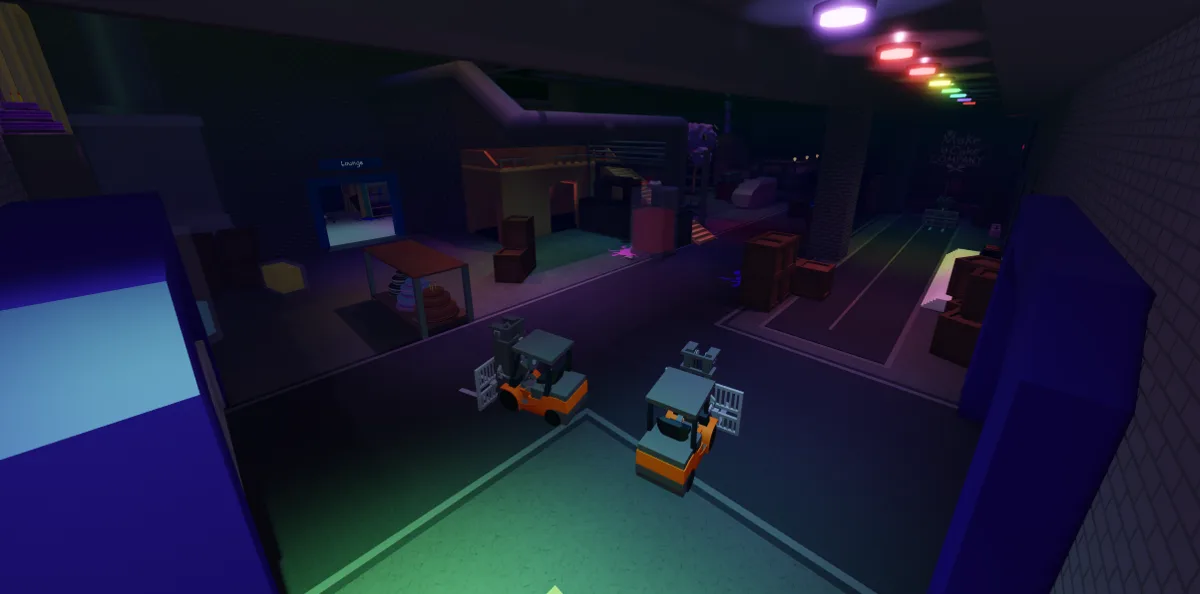
The Make A Cake Factory map in Forsaken. Image: Forsaken (Roblox) © Forsaken Dev Group, via the Official Forsaken Wiki (forsaken.wiki).
Make a Cake transforms one of Roblox's most beloved classic games into a compact, claustrophobic horror map where oversized kitchen equipment and bakery machinery create tight loops that favor experienced survivors who memorize the unconventional layout. The map's adaptation from a lighthearted baking game into Forsaken's horror framework creates a uniquely surreal atmosphere where giant mixing bowls, conveyor belts, and oven structures serve as deadly obstacles rather than cooking tools. Despite its whimsical origins, Make a Cake plays as one of Forsaken's most mechanically demanding maps due to compact size creating constant killer proximity and equipment-dense interior spaces forcing precise pathing. Players who master the bakery layout achieve 53% escape rates compared to 42% for casual players, with the map's compact design ensuring that every positioning decision carries amplified consequences. This complete guide covers every mixer loop, conveyor belt mechanic, oven escape route, and frosting-zone strategy that transforms the bakery from a death trap into a survivor-controlled environment.
Quick Stats: Make a Cake Map
- • Map Size: Small-Medium (7,500 sq studs)
- • Difficulty: Intermediate
- • Generator Spawns: 7 fixed locations
- • Cover spot Count: 12-14 spawns
- • Unique Mechanic: Conveyor belt movement zones
- • Indoor/Outdoor Split: 70% indoor / 30% outdoor
- • Best For: Equipment looping, compact map specialists
Map Layout: The Giant Bakery
Make a Cake is organized as a massive industrial bakery facility with oversized baking equipment scaled to Roblox's classic game proportions. The map retains the original game's central mixing area, oven section, frosting stations, and delivery area, each repurposed as distinct gameplay zones with unique obstacles and mechanics. The bakery's indoor-heavy design (70% enclosed spaces) creates Haunted Mansion-like corridor gameplay with equipment obstacles replacing medical equipment, while the 30% outdoor delivery yard provides limited open-air loops near escape window positions. The map's compact size means the killer is never more than 15-20 seconds away from any point on the map, creating constant pressure that makes efficient generator completion and tight mechanical looping essential for survival.
Mixing Station (Central Zone)
The bakery's heart contains the strongest loop structures:
- •Giant Mixer Loop: The enormous industrial mixer (8-stud diameter bowl) at the map center creates the strongest loop on Make a Cake, with survivors circling the mixer base for 25-35 seconds before killer can force commitment. The mixer's smooth cylindrical geometry eliminates the corners that create mind-game potential, making this a pure distance loop that favors survivors with precise pathing.
- •Ingredient Shelf Maze: Floor-to-ceiling shelving units along the mixing station walls create a corridor maze with 4-5 stud wide passages between shelves. Two cover spots spawn within the shelf maze creating choke point defense positions where survivors can force cover spot breaks while teammates repair nearby generators.
- •Mixing Bowl Vault: A tipped-over mixing bowl against the east wall creates a vault point where survivors climb over the bowl rim while killers must path around the entire bowl circumference. This vault provides 3-4 second distance advantage per use with 15-second Entity blocker cooldown.
- •Flour Silo Cover: Three large flour storage silos in the mixing station northwest corner provide standing-height cover and minor loop potential. The silos break sightlines completely from 6+ studs and create hiding positions that combine with the map's indoor dust particle effects for enhanced concealment.
- •Conveyor Belt Origin: A conveyor belt system begins in the mixing station carrying dough toward the oven section. The conveyor creates a moving-floor mechanic where survivors standing on the belt move at belt speed (3 studs/second) toward the oven direction. This movement can be exploited for speed boosts when running with belt direction or fought against when running opposite direction.
- •Measuring Station: A preparation area with scales, measuring cups, and recipe stands creates a small loop structure near the mixer. The measuring station generator spawn is one of the safest positions with immediate access to the mixer loop when interrupted.
- •Dry Storage Room: A side room off the mixing station containing flour bags and sugar sacks creates a dead-end storage area with one cover spot and one locker. The room is dangerous due to single entrance but provides a safe generator completion when killer is confirmed in oven section or delivery yard.
- •Central Drain: The mixing station floor drain creates a unique mechanic where survivors can crouch over the drain grate to access a maintenance tunnel connecting to the oven section basement. The 3-second entry animation is vulnerable to killer interruption but provides a chase break when completed.
Oven Section (North Zone)
The baking area creates heat-themed environmental gameplay:
- •Industrial Oven Loop: The massive bakery oven (15x8 stud footprint) creates the map's second-strongest loop with survivors circling the oven exterior using equipment handles and door mechanisms as vaulting points. The oven has two door-frame vaults on opposite sides creating a figure-eight pattern lasting 30-40 seconds.
- •Conveyor Belt Zone: The conveyor belt carries dough from mixing station through the oven section at 3 studs/second. Survivors running with the belt gain effective 3 stud/second speed boost, while running against the belt lose equivalent speed. Route chases to run with belt direction for movement advantage.
- •Cooling Rack Obstacles: Large cooling racks arranged in the post-oven area create grid-pattern obstacles that survivors navigate through rack gaps while killers must path around the wider rack structures. These racks provide 10-15 second chase extensions through precise gap threading.
- •Proofing Room: An enclosed warm room for dough rising contains minimal obstacles but one generator spawn and a locker. The proofing room's single entrance makes it dangerous during chases but its isolated position means killers rarely patrol here during early game, creating safe repair opportunity.
- •Heat Vent Visual Distortion: Near the oven, heat shimmer effects create minor visual distortion that reduces killer effective sighting range by 10-15% compared to standard indoor visibility. This environmental effect makes oven-adjacent generator repairs marginally safer than positions further from the oven.
- •Oven Interior Passage: The industrial oven can be traversed through its interior via both oven doors, creating a shortcut through the oven that saves 4-6 seconds compared to circling the exterior. The oven interior is dark and narrow, creating brief stealth opportunities during transit.
- •Temperature Control Room: A small room containing oven controls and gauges provides one cover spot and a window vault connecting to the delivery yard exterior. This room serves as a critical transition point between indoor bakery loops and outdoor delivery yard positioning.
- •Bread Rack Emergency Maze: When chased through cooling rack area, survivors can weave between racks in patterns that create tracking confusion. The identical-looking rack structures disorient killers who lose which row the survivor entered, providing 3-5 second search delays.
Frosting and Decoration Zone (East)
Decorating stations create unique obstacle gameplay:
- •Frosting Turntable Loops: Three frosting turntables (rotating cake platforms) create medium loops with 12-16 second rotations each. The turntables spin slowly, adding minor positional complexity as surfaces shift during loops. Chaining between all three turntables provides 36-48 seconds of chase time.
- •Sprinkle Dispenser Cover: Large ceiling-mounted sprinkle dispensers create visual clutter that reduces line-of-sight clarity. During chases through the decoration zone, the overhead machinery and particle effects mask survivor movement creating 1-2 second tracking delays.
- •Fondant Table Circuit: A long preparation table for fondant work creates a standard long-wall loop with one cover spot creating 15-20 second safe time before cover spot drop. The table connects to turntable loops allowing chain extensions to 50+ seconds total.
- •Piping Station Tight Space: Cake piping equipment creates narrow 3-4 stud passages where survivor-killer collision width differences generate 2-3 stud advantages per passage. These tight spaces slow killer progression through the zone while survivors slip through efficiently.
- •Display Case Windows: Completed cake display cases along the east wall have glass fronts that function as window vaults. Breaking through display cases is loud (audible at 20 studs) but creates vault points in positions where no standard windows would exist.
- •Decoration Storage: Shelving with sprinkles, food coloring, and decoration tools creates line-of-sight breaking obstacles similar to ingredient shelves in mixing station but with lower density creating weaker but functional loops.
- •Quality Control Room: An enclosed inspection room with windows on three sides provides visibility for tracking killer approach while the single door creates cover spot defense. One generator sometimes spawns here with moderate loop structures.
- •Color Station Locker: A locker disguised as a supply cabinet in the decoration zone provides emergency hiding during chase exhaustion. Its unconventional appearance means some killers do not recognize it as a locker during searches.
Delivery Yard (Outdoor - South/West)
The outdoor area provides open-air positioning:
- •Loading Dock Cover spots: The delivery dock contains two cover spots with concrete barrier structures creating medium-strength loops near escape window positions. These outdoor cover spots are critical for endgame gate defense and should be conserved for final moments.
- •Delivery Truck Loops: Parked delivery trucks create large obstacle loops where survivors circle trucks using cab-to-trailer transitions. Each truck provides 15-20 second loop potential with trailer rear vault points allowing emergency transitions between trucks.
- •Parking Lot Open Zone: The small parking area provides minimal cover and should be avoided during chases. However, the parking lot visibility allows tracking killer position from 30+ studs making it useful for observation during non-chase moments.
- •Dumpster Hideouts: Two dumpsters in the delivery yard function as lockers with opening animations. Dumpster hiding is uncommon knowledge and killers rarely check dumpsters, making them effective emergency hiding spots during outdoor chases.
- •Back Entrance Transition: A rear bakery entrance connects delivery yard to frosting zone, providing indoor-outdoor transition during chases. The doorway width creates a cover spot-less chokepoint that skilled survivors navigate through tight turns.
- •Fence Perimeter: Chain-link fencing surrounds the delivery yard with two gap points allowing boundary transit. The fence gaps are narrow (3 studs) and slow killer pathing by 1-2 seconds each, creating minor but cumulative distance during perimeter chases.
- •Escape window Positions: Both escape window spawn in the delivery yard area at opposite ends of the outdoor zone. This means all endgame positioning requires delivery yard presence, making outdoor cover spot conservation and truck loop familiarity essential for escape.
- •Outdoor Generator: One generator consistently spawns in the delivery yard near the loading dock. This outdoor generator has the longest killer patrol distance from indoor positions making it a priority completion during early-to-mid game.
Conveyor Belt Mechanics
Make a Cake's most distinctive gameplay feature is its conveyor belt system running from the mixing station through the oven section, creating a unique movement mechanic found on no other Forsaken map. The belt moves at 3 studs per second in one fixed direction (mixing station toward oven), affecting all players standing on the belt surface. This creates asymmetric movement scenarios where survivors running with the belt gain effective speed bonus while those running against it suffer equivalent penalty. Mastering conveyor belt exploitation transforms a neutral map feature into a powerful tactical tool for chase management and positioning.
Conveyor Belt Strategy
Exploit belt movement for tactical advantage:
- •With-Belt Sprint Boost: When running in belt direction (mixing to oven), survivors gain effective 3 studs/second speed bonus. During chases, route toward oven direction on the belt to create maximum distance. This belt boost stacks with a burst-speed ability creating extreme distance during the 2.5-second sprint window.
- •Against-Belt Killer Penalty: When killer chases survivor who runs against belt direction, the killer also suffers movement penalty if following on the belt. However, the survivor also suffers the penalty, making against-belt running only strategic when routing toward the mixer loop structure that the belt naturally leads away from.
- •Belt Dodge Technique: During belt chases, survivors can step off the belt onto adjacent floor to eliminate movement penalty then step back onto belt when direction aligns with desired routing. This on-off belt technique requires 2-stud lateral movement and precise timing.
- •Belt-to-Loop Transition: When chased with belt direction, ride the belt toward oven section then immediately transition to oven loop when belt deposits you near the oven structure. The belt speed bonus creates distance that allows safe loop entry without killer being within lunge range.
- •Against-Belt Generator Repair: Generators positioned near the belt's origin (mixing station) require careful approach when belt pushes toward oven direction. Walk against the belt to reach these generators rather than fighting belt movement during sprint, preventing disorientation from unexpected movement during approach.
- •Killer Belt Commitment: Some killers avoid the belt entirely, pathing along adjacent floors to maintain standard movement speed. When killer avoids the belt, survivors can ride the belt gaining movement advantage without the killer benefiting from the same mechanic.
- •Belt-Assisted Rescue: When rescuing downed teammates near the oven section, approach via belt from mixing station for speed boost that accelerates rescue approach by 15-20%. The faster approach reduces killer intercept window during rescue attempts.
- •Conveyor Belt Endgame: During final minute, the conveyor belt continues operating. Position between belt and delivery yard exit to exploit belt speed boost when transitioning from indoor to outdoor endgame escape routes.
Pro Tip
Make a Cake's small-medium size means the killer is never more than 15-20 seconds from any map position, creating the fastest-paced gameplay in Forsaken. Adapt by shortening your generator repair sessions. Instead of committing to full 80-second completions, repair in 25-30 second bursts then reposition to a different generator. This split-repair approach prevents the killer from establishing predictable patrol patterns because you are never at the same generator for a full completion cycle. Over 3-4 visits per generator, you complete repairs with 40% fewer chase interruptions compared to single-session attempts on this compact map. For small map strategies across all Forsaken maps, check /forsaken-maps.
Generator Strategy for Compact Maps
Make a Cake's compact size compresses generator spacing, with the furthest two generators only 45-50 studs apart compared to 70-80 studs on large maps. This compression makes three-gen scenarios more threatening because killer patrol loops between any three generators complete in 12-15 seconds regardless of generator positions. The silver lining is that compact spacing also means survivors can rapidly switch between generators, allowing aggressive split-repair strategies where partial completion across multiple generators prevents killer from identifying which generator to defend.
Compact Map Generator Priority
Complete generators accounting for compact map dynamics:
- •Delivery Yard Generator (Priority 1): The outdoor generator has the maximum distance from indoor patrol routes and sits near escape window for endgame positioning. Complete first to secure outdoor territory and prevent it from becoming a dangerous isolated final generator far from indoor loop structures.
- •Proofing Room Generator (Priority 2): The isolated proofing room generator sees lowest killer patrol frequency despite compact map size because its single entrance makes it unattractive for killer patrol efficiency. Complete during early game exploiting low patrol priority.
- •Dry Storage Generator (Priority 3): Dead-end storage room generator is dangerous during mid-game when killer patrols tighten, but safe during early game when killer has not explored side rooms. Use the storage room locker as insurance during repair if killer approaches.
- •Mixing Station Generators (Priority 4-5): Generators near the mixer have excellent nearby loops making them ideal for mid-game completion when killer pressure allows. The mixer's proximity provides immediate chase defense if repair is interrupted.
- •Oven Section Generator (Priority 5-6): Oven area generators benefit from conveyor belt positioning and heat shimmer effects. Complete during mid-to-late game using belt speed boost for approach and oven loop for chase defense.
- •Frosting Zone Generator (Priority 6-7): Frosting turntable loops and fondant table provide strong endgame chase resources. Save this area's generator for final completion when chase resources become critical for survival.
- •Quality Control Generator (Priority 6-7): If spawning in the inspection room, this generator has three-sided windows for visibility but single door entry. Complete during late game using window visibility to track killer approach.
- •Three-Gen Compact Warning: On Make a Cake, any three remaining generators can be patrolled in 12-15 seconds. Prevention requires completing generators from opposite sides of the bakery (mixing vs delivery, oven vs frosting) rather than completing adjacent-zone generators sequentially.
Killer-Specific Make a Cake Strategies
Make a Cake's compact indoor design creates killer matchup dynamics similar to Haunted Mansion but with equipment-dense obstacle terrain replacing corridor-based gameplay. Stealth killers benefit from equipment visual clutter that masks their approach, while mobility killers find dash powers interrupted by dense equipment spacing. The compact map size means all killers maintain high pressure through reduced patrol distance, but survivors compensate through the map's above-average cover spot count (12-14) and dense loop structures. For complete killer ability guides, visit /forsaken-killers.
Killer Matchup Analysis
Adjust gameplay based on killer identity:
- •Stealth Killers (A-Tier): Equipment clutter in mixing and frosting zones masks stealth killer approaches until 6-8 studs. Run an awareness ability mandatory against stealth killers on Make a Cake. Repair facing doorways and maintain camera rotation through equipment gaps during generator repairs.
- •M1 Killers (A-Tier): The compact map and above-average cover spot count creates favorable conditions for M1 killers who build bloodlust quickly through tight equipment loops. Counter by using cover spots earlier than on larger maps (at 8-10 seconds rather than 12-15) to prevent bloodlust tier 2 that makes compact loops unsafe.
- •Ranged Killers (B-Tier): Equipment density blocks projectile paths through most indoor zones, reducing ranged effectiveness to clear sightlines in delivery yard and occasional corridor angles. Against ranged killers, stay indoors where equipment provides comprehensive projectile blocking.
- •Mobility Killers (C-Tier): Dense equipment spacing in every indoor zone interrupts chainsaw charges, dashes, and sprint abilities consistently. Mobility killers function as weakened M1 killers on Make a Cake, creating significant survivor advantage. Play aggressively against mobility killers.
- •Nosferatu Mixer Counter: The giant mixer's cylindrical geometry prevents any chainsaw angle from reaching survivors looping the opposite side. Against Nosferatu, default to mixer looping for guaranteed safe chase time without any chainsaw threat.
- •Noli Kitchen Danger: Noli's stealth combined with equipment visual clutter and the map's compact size creates scenarios where Noli can approach within 4-5 studs before detection. Against Noli, pair an awareness ability with a stealth ability and repair exclusively near mixer or oven structures with strong loops.
- •1x1x1x1 Compact Pressure: 1x1x1x1's abilities gain amplified effectiveness on compact maps where ability coverage reaches larger percentage of total map area. Group near the mixer against 1x1x1x1 for mutual protection.
- •Jason Delivery Yard Danger: Jason's ranged abilities gain full effectiveness in the open delivery yard. Against Jason, avoid delivery yard during chases and complete the outdoor generator during early game when Jason is establishing indoor patrol routes.
Survivor Strategies and Ability Optimization
Make a Cake's compact design rewards builds that emphasize tight-space mechanical execution and fast reaction times over the stealth or distance-based abilities that dominate larger maps. The constant killer proximity on this small map means chase initiation is frequent and chase duration determines match outcomes more directly than generator stealth approach strategies. Build your loadout for maximum chase extension through equipment loops rather than chase avoidance. For comprehensive survivor ability setup, visit /forsaken-survivors.
Make a Cake Ability Recommendations
Optimize for compact map chase performance:
- •a burst-escape ability (Essential): Tight equipment passages on Make a Cake create scenarios where 1-2 studs of extra distance through a burst-escape ability reaches vault points or cover spot drops that would otherwise be missed. a burst-escape ability through equipment gaps and doorway frames converts multiple potential downs per match into safe extensions.
- •a map-awareness ability (High Value): Make a Cake has 12-14 cover spots and multiple vault points scattered across dense equipment layouts. a map-awareness ability reveals these positions through equipment visual clutter that normally prevents quick identification during chase pressure.
- •a burst-speed ability (Compact Value): On Make a Cake's small map, a burst-speed ability covers significant map portions in 2.5 seconds. A a burst-speed ability from delivery yard reaches mixer loop in one burst, creating map-spanning escape routes not possible on larger maps.
- •an awareness ability (Equipment Safety): Indoor equipment blocks sightlines from 6-8 studs, making killer approach undetectable through visual means in many zones. an awareness ability provides consistent warning through equipment walls that block vision but not the ability's detection mechanic.
- •Lithe (Vault Synergy): Make a Cake's multiple vault points (mixing bowl, display cases, oven doors, temperature control window) create frequent Lithe activation opportunities. Lithe burst after vault covers distance to next equipment loop, chaining vaults with sprint bursts.
- •Prove Thyself (Tempo Tool): Compact map size means cooperative repairs are accessible within 10-15 seconds from any position. Prove Thyself cooperative completions in 40 seconds create aggressive tempo that overwhelms killer patrol capacity on the small map.
- •Resilience (Repair Speed): The 9% repair speed bonus while injured accelerates generator completion from 80 to 73 seconds. On Make a Cake where constant killer proximity makes full-health maintenance difficult, Resilience converts expected injury state into repair efficiency.
- •a stealth ability (Chase Break): Equipment visual clutter enables mid-chase hiding behind oversized bakery equipment when line of sight breaks during loops. a stealth ability eliminates injury audio that would reveal hiding position behind equipment during these brief concealment attempts.
Conveyor Belt Trap Position
The conveyor belt deposits players near the oven section entrance, a position that the killer can potentially body-block creating a corner trap with the belt pushing survivors into the killer rather than away. If the killer stands at the oven entrance facing the conveyor belt, survivors on the belt are pushed directly toward the killer at 3 studs per second with no escape options except stepping off the belt to adjacent floor. Never commit to belt riding when killer position is between you and the belt's destination endpoint. Always confirm the oven entrance is clear before stepping onto the belt.
Final Thoughts
Make a Cake stands as one of Forsaken's most distinctive map adaptations, proving that beloved Roblox classics can be transformed into compelling horror environments while maintaining the original game's identity. The oversized bakery equipment creates loop structures unlike anything on standard maps, the conveyor belt system introduces movement mechanics unique to this environment, and the compact footprint creates fast-paced matches where every second of positioning matters more than on sprawling maps. Mastering Make a Cake requires developing two competencies that larger maps do not demand as intensely: equipment loop precision (knowing exact pathing distances around mixers, ovens, turntables, and cooling racks) and compact map tempo management (adapting repair strategies, chase lengths, and positioning decisions to a map where killer proximity is constant rather than periodic). These skills develop over 40-60 dedicated matches, with the first 20 matches focused on equipment position memorization and the following 20-40 matches developing fluid loop chains through the bakery's interconnected zones. The compact map specialist skills developed on Make a Cake transfer directly to other small-to-medium Forsaken maps and improve gameplay on any map's tighter interior sections. Survivors who master Make a Cake's tight equipment loops, conveyor belt exploitation, and rapid generator rotation develop mechanical precision and spatial awareness that elevates their performance across the entire map pool. Visit /forsaken-maps for our complete map size tier analysis, and check /forsaken-survivors for ability setup optimized for compact map gameplay.
Master these techniques and dominate Forsaken!
Related Forsaken Guides
Forsaken Map Layouts Guide: Understanding Every Structure
Learn every map layout in Forsaken with detailed structure breakdowns, tile spawn patterns, and strategic positioning for optimal gameplay.
Nosferatu Forsaken Guide 2026: 4 Abilities, Bloodhook Combos, Counter
Nosferatu in Forsaken 2026: Bloodhook + Cataclysm + Hunter's Feast + Ascension explained, the M1-cooldown combo, and the best survivor counter ranked.
Best Support Survivors in Forsaken: Elliot vs Shedletsky vs Chance vs Two Time
Support meta guide for Forsaken. Learn how to play Elliot, Shedletsky, Chance, Two Time, plus when to pick 007n7 and Noob for intel and clutch saves.
1x1x1x1 Forsaken Guide 2026: All 4 Abilities Ranked + Best Counter
1x1x1x1 in Forsaken: all 4 abilities ranked, the exact combo that wins chases, the 1 survivor that hard-counters him, and 2026 patch changes.
John Doe Forsaken Guide 2026: All Abilities, 3 Folders & Counter
John Doe in Forsaken 2026: all 4 abilities, where to find the 3 folders, Corrupt Energy timing, and the best survivor counter ranked by win rate.
Back to the ForsakenHub homepage for the full Forsaken Roblox guide hub, or browse all guides. You can also play the game directly on Forsaken on Roblox.