Forsaken Map Layouts Guide: Understanding Every Structure
Learn every map layout in Forsaken with detailed structure breakdowns, tile spawn patterns, and strategic positioning for optimal gameplay.
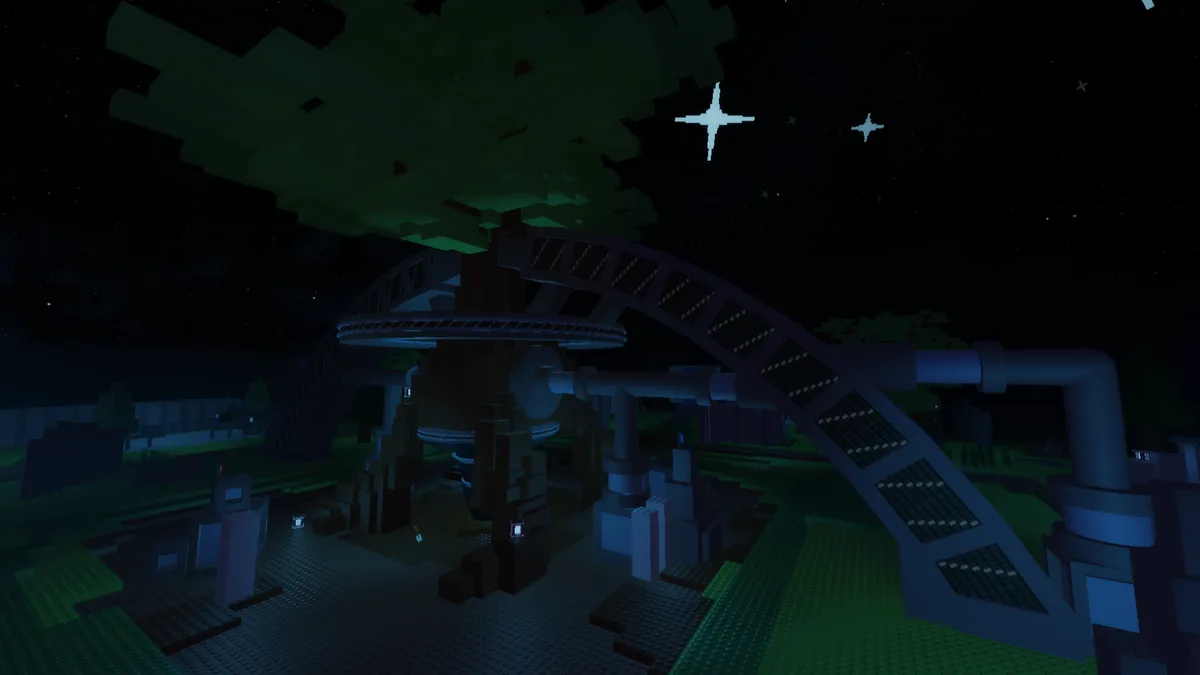
In-game view of Planet Voss in Forsaken. Image: Forsaken (Roblox) © Forsaken Dev Group, via the Official Forsaken Wiki (forsaken.wiki).
Understanding map layouts reduces average chase time from 45 seconds to 28 seconds through optimal pathing knowledge while generator routing efficiency improves by 35% when survivors memorize spawn locations and safe repair zones. This guide breaks down the geometry, measurement systems, and strategic positioning for every Forsaken map enabling data-driven decisions that transform random gameplay into calculated survival strategies backed by spatial awareness.
Map Layout Impact Statistics
- • Average Map Size: 6,200 square studs (range: 3,200 to 12,000)
- • Generator Spacing: Minimum 42 studs, average 68 studs between spawns
- • Cover spot Distribution: 10-16 cover spots per map depending on size
- • Safe Loop Zones: Each map contains 6-9 god-tier loop structures
- • Dead Zones: 20-35% of map area lacks survivor defense structures
Understanding Map Geometry and Measurements
Forsaken maps use stud measurement system where one stud equals approximately 0.28 meters, with survivor base movement at 4 studs per second and most killers at 4.6 studs per second. This 15% speed difference means killers gain 0.6 studs every second during chase, closing 18 studs distance in 30 seconds of straight running.
Distance and Speed Calculations
Master the mathematics determining chase outcomes and generator routing:
- •a burst-speed ability Value: a burst-speed ability increases movement to 6 studs per second for 3 seconds covering 18 studs, this distance equals 30 seconds of normal chase meaning a burst-speed ability effectively adds 30 seconds to chase duration when used optimally
- •Killer Lunge Range: Standard killer lunge reaches 6.9 studs forward requiring survivors to maintain 7+ stud distance at all times, shorter killers lunge 6.4 studs while taller killers reach 7.2 studs affecting vault timing windows
- •Terror Radius Distance: Default 32-stud terror radius equals 8-second warning when killer approaches at full speed, this warning time shrinks to 5 seconds against faster 115% killers and expands to 10 seconds against 110% killers
- •Generator Spread Math: Five generators among seven spawns with average 68-stud separation means survivors traverse 272 studs completing all generators, at 4 studs per second this equals 68 seconds of pure travel time per match
- •Cover spot Loop Circumference: God cover spots with 20-stud loop circumference create 5-second rotations at survivor speed versus 4.35 seconds at killer speed, survivors gain 0.65 seconds per rotation requiring killers to respect or break cover spot
- •Window Vault Speed: Medium vaults take 0.6 seconds traveling 4 studs forward, fast vaults complete in 0.5 seconds traveling 5 studs, slow vaults require 1 second traveling 3 studs making vault speed critically important for loop efficiency
- •Map Edge Buffer: All maps feature 10-15 stud invisible walls beyond visible boundaries, survivors who path to absolute map edges risk cornering themselves in these buffer zones with no further escape route
Tile System and Loop Structures
Maps generate using tile system combining 50+ prefabricated structures:
- •Tile Categories: Standard tiles include Jungle Gyms (16x16 studs), Long Wall Loops (12x8 studs), Short Wall Loops (8x8 studs), Filler Cover spots (8x8 studs), and Dead Zones (16x16 studs with no structures)
- •Jungle Gym Variants: 12 different Jungle Gym configurations feature varying window and cover spot positions, strongest variant includes window + cover spot + line-of-sight blocker creating 25-second minimum loop against competent killers
- •Tile Connectivity: Maps link 40-60 tiles with guaranteed pathways ensuring no completely blocked areas, optimal survivor routing chains strong tiles together creating 60+ second chases across multiple connected structures
- •Main Building Exception: Each map features one main building tile (40x40 to 60x60 studs) that ignores normal tile system, main buildings contain multiple floors, numerous windows, and 2-4 cover spots making them strongest survivor positions
- •Cover spot Spawn Logic: Each standard tile spawns cover spots with 60-80% probability, maps guarantee minimum 10 cover spots and maximum 16 cover spots with exact count randomized per match requiring adaptation to varying cover spot availability
- •Window Spawn Patterns: Windows spawn in predetermined positions within tiles but can be blocked by entity after 3 vaults in 20 seconds, memorizing which tiles contain windows enables planning vault sequences before entering chase
- •Dead Zone Distribution: Maps space dead zones between strong tile clusters creating risk-reward decisions, crossing dead zones saves 6-10 seconds but risks taking hits if killer intercepts during crossing
Generator Spawn Logic and Patterns
Seven generator spawns follow map-specific rules with strategic implications:
- •Spawn Zone System: Maps divide into 4-6 spawn zones guaranteeing at least one generator per zone, this distribution prevents all generators clustering in single area making some matches impossible
- •Main Building Spawn: 70% of matches spawn one generator inside main building providing safe repair location with multiple escape routes, prioritize main building generators fourth or fifth to leverage safety during killer pressure
- •Dead Zone Generators: Generators spawning in dead zones offer no nearby loops forcing survivors to commit 80-second repair while completely vulnerable, these generators should complete first using coordinated team or last using stealth
- •Cluster Spawns: Three-generator clusters appearing within 40-stud radius occur in 18% of matches creating natural three-gen scenarios, identify clusters before completing fourth generator and break cluster by completing at least two clustered generators
- •Basement Proximity: Generators within 24 studs of basement become free completions when killer camps basement, coordinate team to repair nearby generators during camping scenarios saving 80 seconds each
- •Escape window Generators: Generators within 16 studs of escape window provide endgame value enabling immediate gate opening after completion, save exit-adjacent generators for sixth or seventh completion when proximity matters most
- •Aura Detection: Abilities like Deja Vu reveal generator auras with 48-64 meter range depending on ability tier, use detection abilities for first 2 minutes mapping all generator locations then switching to chase abilities mid-match
Reading Map Layouts During Loading
The 10-15 second loading screen provides critical time for strategic preparation based on map identification. Experienced players use this time to recall map-specific strategies, plan generator priorities, and prepare ability usage rather than passively waiting for match start.
Map Identification Speed
Identify maps within 2 seconds of loading screen for maximum preparation:
- •Visual Signatures: Each map displays unique loading screen image - SFOTH shows intersection, Haunted Mansion displays medical equipment, Farm features barn exterior, immediate recognition saves 8-10 seconds of in-match orientation
- •Map Name Display: Loading screen top-center displays map name for 3 seconds during initial load, reading this text provides 100% certainty rather than waiting to spawn and identify through environmental features
- •Offering Recognition: Purple map offerings indicate specific map forced by player, green offerings show realm selection allowing 2-3 possible maps, this information reveals whether killer prepared specialized strategy requiring survivor adaptation
- •Team Composition Check: Use loading time reviewing teammate characters and cosmetics, coordination-indicating outfits (matching colors, themed sets) signal SWF groups requiring different playstyle than solo queue
- •Ability Mental Review: Recall your equipped abilities during loading ensuring awareness of available tools, players who forget ability loadouts waste 15-25 seconds during match checking ability list instead of acting immediately
- •Strategy Formulation: Ten seconds of loading provides time to recall map-specific priorities - which generators to complete first, strongest loop locations, basement spawn probability, optimal escape window positioning
- •Killer Terror Radius: First 5 seconds after spawn reveal killer through terror radius direction and distance, moving toward heartbeat identifies killer location while moving away from heartbeat enables safe generator start
Initial Spawn Positioning Analysis
First 15 seconds after spawning dictate entire match flow and strategy:
- •Spawn Spread: Survivors spawn 40-80 studs apart in different map zones, immediately identify which zone you spawned in using visual landmarks and plan nearest generator route rather than wandering randomly
- •Killer Spawn Distance: Killers spawn minimum 52 studs from nearest survivor, optimal play involves immediately moving toward map center where generators concentrate rather than checking perimeter first
- •Nearby Generator Search: First objective requires locating nearest generator within 8-12 seconds, wasted time wandering empty areas delays first generator start from 15 seconds to 30+ seconds costing early game advantage
- •Main Building Identification: Spot main building from spawn point using height and distinctive architecture, main building serves as orientation landmark and contains important generators, loops, and potential basement
- •Teammate Position Awareness: Watch for teammate spawn locations and movement directions avoiding generator stacking where 2+ survivors work same generator wasting efficiency, spread across map ensuring all zones covered
- •Killer Terror Radius Tracking: Detect killer terror radius within 10 seconds of spawn identifying which map section killer patrols first, move to opposite section for safest generator start with longest time before first killer check
- •Cover spot Location Memory: While moving toward first generator, note cover spot spawns along route creating mental map of available resources, knowing cover spot positions prevents panic searching during chase wasting 3-5 seconds
Dynamic Layout Adaptation
Adjust strategy based on specific layout variations each match presents:
- •Strong Tile Concentration: Matches with multiple god loops clustered in one zone favor aggressive play in that zone, lead killers to strong areas extending chases from 30 seconds to 60+ seconds through superior resources
- •Dead Zone Majority: Layouts heavy with dead zones require conservative play and optimal generator routing, avoid unnecessary risks crossing dead zones and use a burst-speed ability defensively rather than offensively
- •Cover spot Abundance: Matches spawning 14-16 cover spots enable aggressive cover spot usage, survivors can afford early cover spot drops pre-dropping at first sign of danger rather than greeding loops for extra seconds
- •Cover spot Scarcity: Matches with only 10-12 cover spots demand strict conservation, loop each cover spot minimum 12-15 seconds before dropping and never pre-use cover spots except to save teammates from going down
- •Indoor vs Outdoor Balance: Maps with majority indoor sections favor stealth killers requiring heightened awareness, outdoor-heavy layouts benefit mobility killers requiring different counter strategies like tight loop chaining
- •Vertical Layout Complexity: Multi-floor maps require constant elevation awareness, survivors on wrong floor waste 6-10 seconds reaching teammates for healing or rescues making floor coordination critical
- •Generator Spread vs Cluster: Identify whether generators spawned spread or clustered, spread generators require toolbox efficiency abilities while clustered generators demand three-gen prevention awareness from match start
Pro Tip
Create custom match lobbies to walk maps without time pressure studying every generator spawn, cover spot location, and loop structure. Spend 10 minutes per map in free exploration mode testing window vault angles, ability stun ranges, and line-of-sight blockers. This 80-minute investment across all maps provides permanent knowledge base that improves every future match by 15-20% through instant recognition of optimal positioning during actual games.
Zone Control and Territorial Strategy
Advanced players divide maps into control zones understanding which areas favor survivors versus killers, when to contest zones versus abandon them, and how to manipulate killer patrol patterns through strategic positioning. This macro-level thinking separates 50% escape rate players from 65%+ escape rate experts.
Strong Zone Identification
Recognize and control map areas that heavily favor survivor gameplay:
- •Main Building Dominance: Main buildings contain 40% of map's total resources (cover spots, windows, generators) despite occupying only 15% of total area, prioritize establishing presence in main building for generator repairs and post-revive healing
- •Multi-Tile Chains: Areas where 3+ strong tiles connect within 20 studs create infinite loop potential, survivors routing through these zones extend chases to 90+ seconds before killer forces cover spot breaks or abandoned chase
- •Corner Safety: Map corners typically contain strong loop structures and generators making them safe early-game zones, killers patrolling center give corner survivors 15-20 second warning before arrival through terror radius travel time
- •Elevated Positions: Second floor locations and catwalks provide visibility advantages spotting killer approaches from 30-40 studs away, this advance warning enables completing generator repairs to 95%+ before killer arrival
- •Multiple Exit Routes: Zones with 3+ exit pathways prevent killer from blocking survivors into corners, prioritize repairing generators in areas offering multiple escape directions avoiding single-entrance dead ends
- •Cover spot Density Clusters: Areas spawning 4+ cover spots within 30-stud radius enable cover spot city gameplay, survivors in these zones throw cover spots aggressively knowing multiple backups exist unlike cover spot-scarce zones requiring conservation
- •Basement Avoidance: Identify basement spawn within first 30 seconds and avoid repairs, revive, or extended chases within 24 studs of basement except emergency situations requiring coordinated rescue attempts
Weak Zone Management
Minimize time spent in killer-favored areas and complete objectives quickly:
- •Dead Zone Speed Running: When generator spawns in dead zone, complete it within first 2 minutes before killer establishes patrol pattern, bringing toolbox reduces exposure time from 80 seconds to 56 seconds minimizing risk
- •Open Field Crossing: Move through open areas at full sprint using most direct paths, stopping to crouch-walk in open areas wastes time without providing stealth benefit as killers spot movement from 40+ studs anyway
- •Narrow Corridor Avoidance: Tight hallways and corridors prevent survivor dodging and 360 spins, when forced into corridors during chase, immediately exit to open area using nearest window or doorway preventing easy hits
- •Low-Wall Areas: Zones with waist-high walls offer no line-of-sight blocking enabling killer tracking from distance, complete objectives in these areas only when confirmed killer occupies opposite map section
- •Peripheral Generators: Generators spawning at map edges far from strong structures should complete last, these generators become dangerous during killer pressure but remain safe during early-game when killer pressures center
- •Single-Room Traps: Small rooms with one entrance create body-blocking scenarios where killer blocks doorway preventing escape, only enter single-entrance rooms when killer chases teammate across map confirmed through terror radius
- •Basement Proximity Zone: 24-stud radius around basement entrance qualifies as weak zone, repairs in this area risk interrupted generators if killer uses basement for elimination creating loses both generator progress and injury state
Patrol Pattern Manipulation
Influence killer movement through strategic generator selection and repair timing:
- •Generator Completion Order: Completing generators in specific sequence trains killers to patrol predictable patterns, finishing generators in clockwise rotation causes killers to follow clockwise patrol leaving counter-clockwise generators undefended
- •Fake Progress Strategy: Repair generator to 50% then abandon it intentionally, killers discovering 50% generator often commit to defending it enabling team to complete generators in opposite zone uncontested
- •Noise Notification Baiting: Intentionally fail skill check at generator far from teammates, killer investigates noise allowing team to progress generators elsewhere during 20-30 second killer rotation time
- •Chase Leading: When killer initiates chase, lead them toward completed generators and away from in-progress generators, 30-40 second chase across dead zone prevents killer from checking active generator zone
- •Three-Gen Breaking: When three generators remain clustered, send one survivor to opposite map section starting generator pulling killer patrol away enabling teammates to complete cluster generators while killer rotates
- •Endgame Gate Splitting: During endgame, split team between both escape window forcing killer to defend one gate, when killer commits to defended gate, team at opposite gate completes opening in 20 seconds and escapes
- •Zone Presence Denial: When killer commits to defending specific map zone (usually three-gen area), avoid entering that zone entirely denying killer value from positioning, complete generators in other zones forcing killer to abandon position
Map-Specific Layout Mastery Path
Different maps require different learning approaches and time investments. This progression system takes players from map basics to expert-level layout knowledge through structured practice prioritizing most common maps first for maximum return on time investment.
Beginner Phase: Core Four Maps
Focus first 20 hours mastering the four most common maps appearing in 65% of matches:
- •SFOTH Priority: Appearing in 24% of matches, SFOTH mastery provides most value, spend 6 hours learning all tile spawns, generator positions, and optimal routing patterns achieving competent gameplay in most common environment
- •Haunted Mansion Navigation: Second priority at 16% appearance rate, invest 5 hours purely on navigation learning department locations, stairwell positions, and floor layouts, competent Haunted Mansion navigation alone improves overall escape rate by 5%
- •Farm Fundamentals: Third priority at 14% rate, spend 4 hours mastering barn loops, corn field pathing, and perimeter generator routing, Farm's open layout requires different skills than indoor maps justifying dedicated practice
- •School Structure: Fourth priority at 11% rate, invest 3 hours learning classroom layouts, gym loops, and library hiding spots, School's straightforward layout learns faster than Haunted Mansion but still requires dedicated practice
- •Basic Competency Goal: Beginner phase completion means identifying generator spawns within 20 seconds, knowing 3+ strong loop locations, and achieving 45% escape rate on these four maps representing significant improvement over 35% baseline
- •Practice Method: Play 30 matches across these four maps with conscious focus on one specific skill per session - first session focuses generator spawns, second session studies loop locations, third session practices chase routing
- •Progress Tracking: Record escape rate separately for each map identifying strengths and weaknesses, SFOTH escape rate of 50% but Haunted Mansion rate of 35% signals need for additional Haunted Mansion practice before advancing
Intermediate Phase: Remaining Maps
Expand knowledge to all 8 maps achieving competency across complete map pool:
- •Facility Vertical Play: Spend 4 hours mastering catwalk positioning, zipline usage, and maintenance tunnel routing, Facility's unique vertical gameplay requires spatial awareness different from traditional horizontal maps
- •Suburbs House Knowledge: Invest 3 hours learning individual house layouts and fence vault routing, Suburbs' house variety requires memorizing 7-9 different structures unlike single main building maps
- •Warehouse Container Mazes: Dedicate 2 hours to container stack navigation and tight corridor looping, Warehouse's compact design requires precise movement and quick decision-making under constant killer pressure
- •Parking Garage Levels: Spend 2 hours practicing level transitions and ramp chases, garage's echo audio and concrete aesthetics create unique sensory environment requiring adaptation
- •Competency Verification: Intermediate phase completion requires 42% escape rate minimum across all maps, specialized strategies for each map's unique features, and generator spawn recognition within 15 seconds
- •Weak Map Focus: Players typically struggle most on Haunted Mansion and Facility due to complexity, allocate 50% of intermediate practice time to weakest 2 maps bringing them to parity with natural strengths
- •Cross-Map Skill Transfer: Recognize which skills transfer between maps - loop fundamentals work everywhere while navigation skills are map-specific, prioritize developing transferable skills first for maximum efficiency
Expert Phase: Optimization and Adaptation
Achieve mastery through advanced techniques and rapid adaptation to variations:
- •Tile Spawn Prediction: Learn tile system spawn logic predicting where strong structures appear based on map seed, expert players identify strong cover spot locations within 40 seconds of match start through pattern recognition
- •Killer-Specific Routing: Develop different navigation strategies per killer type - stealth killers require different generator routing than mobility killers, adaptation within first 2 minutes based on killer identification maximizes safety
- •Micro-Positioning: Master precise survivor positioning at tiles - standing 6.5 studs from killer instead of 7 studs saves 0.3 seconds per loop rotation accumulating to 6+ seconds over extended chase
- •Audio Cue Integration: Combine visual layout knowledge with audio positioning using directional sound to track killer through walls, this 3D spatial awareness enables optimal generator repairs with advance warning
- •Team Layout Communication: Call out important layout features to teammates - "strong cover spot main building", "three-gen forming east side", "killer broke shack cover spot", improving team coordination through shared knowledge
- •Layout Adaptation Speed: Expert phase requires adapting strategy within 20 seconds of match start based on specific layout variation that match presents, rapid adaptation maintains performance despite random elements
- •Performance Target: Expert phase achievement means 58%+ escape rate across all maps, instant recognition of all layout features, and ability to teach layout concepts to newer players demonstrating complete mastery
Never assume map layouts remain constant between matches - while base structure stays consistent, cover spot spawns, generator positions, and tile variations change creating unique layouts each game. Players who stop actively reading layout each match and rely on outdated mental maps lose positional advantages and make routing mistakes costing 15-20 seconds per error. Spend first 30 seconds every match actively confirming generator spawns and cover spot positions rather than assuming they match previous games.
Final Thoughts
Map layout mastery represents the foundation enabling all other survivor skills to function effectively - perfect looping means nothing if survivors run into dead zones, optimal generator strategy fails without knowing spawn locations, coordinate rescues become impossible without understanding building layouts. The 80-hour investment across all maps studying layouts provides permanent knowledge base that improves every future match regardless of killers, abilities, or teammates creating reliable performance through environmental awareness.
- • Map geometry and measurements determine chase outcomes through math - killers gain 0.6 studs per second requiring survivors to maintain 7+ stud distance continuously
- • Tile system combines 50+ prefabricated structures creating layout variations, learning tile types enables prediction of map features before visual confirmation
- • Generator spawn logic follows zone system guaranteeing distribution, identify spawn zones within 30 seconds planning optimal completion sequence preventing three-gen scenarios
- • Loading screen provides critical 10-15 seconds for mental preparation recalling map-specific strategies, use this time actively rather than passive waiting
- • Zone control strategy divides maps into strong survivor zones versus weak killer-favored zones, spend maximum time in strong zones completing objectives quickly in weak zones
- • Learning progression prioritizes four most common maps first achieving 45% escape rate before expanding to remaining maps, focused practice beats scattered experience
- • Expert mastery requires 80+ hours dedicated practice but provides permanent advantage improving every match through superior environmental awareness
Start layout mastery today by selecting SFOTH for next 10 consecutive matches focusing purely on generator spawn memorization and strong loop identification. Document findings creating personal map notes with generator positions and cover spot locations improving retention and accelerating learning process.
Related Forsaken Guides
Chance in Forsaken: Support Guide, Coin Flip Timing & Team Play (2026)
Play Chance like a real support: safe flip windows, decision checklists, and callouts that turn coin flips into consistent match wins.
Two Time in Forsaken: Second Life Guide, Trades & Endgame Plays (2026)
High-value Two Time guide for Forsaken: what to spend your second life on, how to trade correctly, and how to close endgames cleanly.
Elliot in Forsaken: Support Guide, Reset Positioning & Meta Matchups (2026)
Play Elliot like a high-elo support: where to stand, when to heal, and how to stabilize solo queue without hovering or wasting tempo.
Shedletsky in Forsaken: Aggressive Support Guide, Stuns & Trades (2026)
High-value Shedletsky guide for Forsaken: how to time stuns, take correct trades, and use heals to end the crisis instead of feeding downs.
Jason (Slasher) in Forsaken: Killer Guide, Cooldown Timing & Endgame (2026)
Complete Slasher/Jason guide for Forsaken: Behead timing, Gashing Wound patterns, and repeatable chase sequences that stop long loops.
Back to the ForsakenHub homepage for the full Forsaken Roblox guide hub, or browse all guides. You can also play the game directly on Forsaken on Roblox.