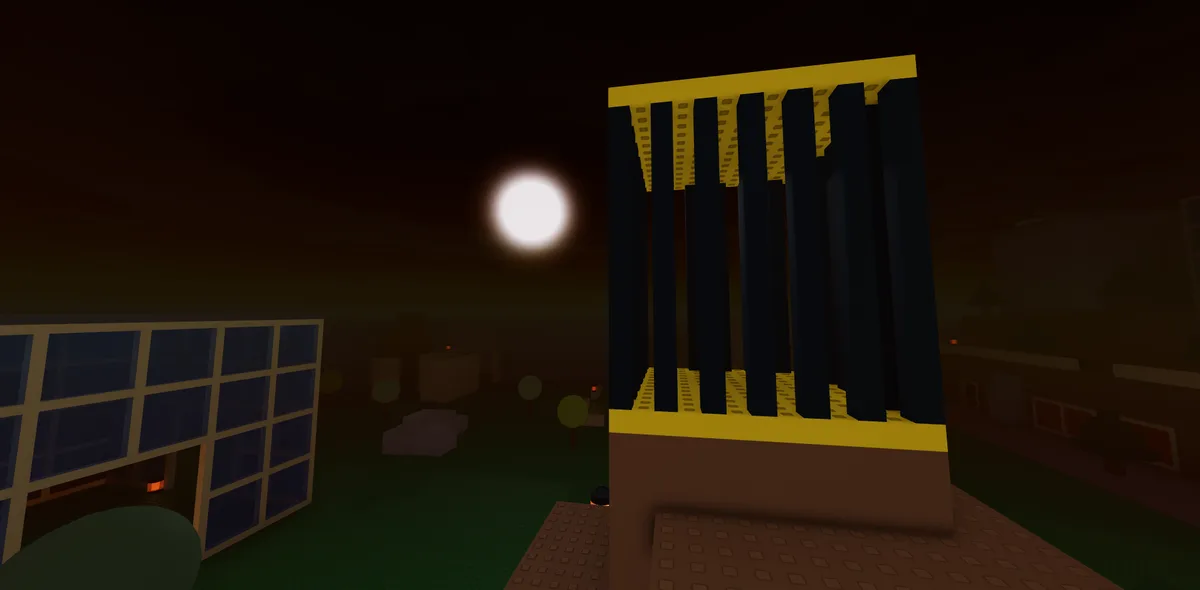
Forsaken Exit Gates Guide 2026 - How to Escape Every Time

Master Forsaken exit gates with our complete guide. Learn gate locations on every map, 99% technique, endgame strategies, and how to escape consistently.

Published March 18, 202613 min readBy Sukie
Share:

Exit gates are where Forsaken matches are decided: 38% of all survivor deaths happen after generators are completed because players misplay the endgame. You repaired five generators, the gates are powered, and then someone opens a gate too early, the killer finds the other gate unguarded, and your entire team dies in the collapse. Sound familiar? This guide covers every exit gate location on every Forsaken map, breaks down the exact mechanics of the 99% gate technique that high-level players treat as mandatory, explains the endgame collapse timer and how it changes your decisions, and provides a framework for the hardest question in Forsaken: should you leave, or should you go back for your teammate? Pair this with our /forsaken-maps page for full map layouts and our /forsaken-killers page to understand killer-specific endgame threats.

Exit Gate Key Numbers

  • Gates Per Map: 2 (always)
  • Gate Opening Time: 20 seconds base
  • Gate Progress Lights: 3 stages (25%, 50%, 75%)
  • Endgame Collapse Timer: ~120 seconds (2x speed if a survivor is downed)
  • Gate Distance Range: Varies by map (close = killer-favored, far = survivor-favored)
  • Escape Bloodpoints: ~7,000 for a full endgame escape with gate open

Exit Gate Locations on Every Map

Unlike generators, which have randomized spawns, exit gate positions are fixed on every map. Knowing where both gates are before the endgame begins gives you a head start on the killer. Below is a breakdown of gate positions and the strategic implications of their placement. For complete map layouts with callouts, visit our /forsaken-maps page.

Forest Map Gate Positions

The Forest is one of the most common maps in Forsaken, and its gate positions create a moderately survivor-favored endgame because of the distance between them and the visual cover provided by trees.

  • Gate A (North Edge): Located on the northern boundary of the map, typically near the tree line. This gate is surrounded by dense trees that provide cover for survivors approaching and opening it. The trees also block the killer's line of sight from more than about 20 studs away, making it difficult for the killer to spot gate progress from a distance.
  • Gate B (South Edge): Located on the southern boundary, usually near the clearing area or close to the forest's edge. This gate is more exposed than Gate A, with fewer trees providing cover. However, it is near strong pallet tiles, which means survivors can potentially loop the killer even after being caught opening.
  • Distance Between Gates: The Forest's gates are moderately far apart, requiring the killer approximately 18-22 seconds to run between them at base speed. This means survivors have a solid 15-18 second window on one gate before the killer can realistically check it after leaving the other.
  • Strategic Note: On Forest, the team should typically split between both gates. One survivor starts opening Gate A (the more hidden gate) while another watches or starts Gate B. If the killer commits to one side, the other gate gets opened for free. The tree cover at Gate A makes it the preferred primary opening target because the killer has less visibility approaching.

Asylum Map Gate Positions

The Asylum is a large, complex map where gate positions vary more significantly in terms of safety. The multi-story building creates unique endgame dynamics because survivors can be inside the building when gates power.

  • Gate A (East Side): Located on the eastern exterior of the Asylum grounds. This gate is typically in an open area with limited nearby cover, making it riskier to open when the killer is patrolling. However, its proximity to the main building means survivors can retreat inside if the killer approaches.
  • Gate B (West Side): Located on the western exterior, often near the parking lot area or yard. This gate tends to have more environmental clutter nearby (vehicles, fences, walls) that provide some line-of-sight protection during the opening channel.
  • Distance Between Gates: The Asylum's gates are far apart due to the large map size. The killer needs roughly 22-28 seconds to travel between them, which is extremely survivor-favored. This generous timing means coordinated teams can almost always open at least one gate safely.
  • Strategic Note: The Asylum is one of the best endgame maps for survivors because of the gate distance. If the killer commits to patrolling one gate, the other gate is essentially free. The main building provides an excellent hiding spot between gate attempts, as survivors can use the interior floors to avoid the killer entirely while waiting for the right moment to commit to a gate. Use the building's windows and second-floor vantage points to track the killer's patrol pattern before committing.

Hospital Map Gate Positions

The Hospital map creates a more killer-favored endgame because of its compact layout and the relatively short distance between gates.

  • Gate A (Front Entrance Side): Located near the front of the Hospital, this gate is typically in a more open area. The Hospital's exterior is less cluttered than the Asylum, meaning the killer has better visibility when patrolling.
  • Gate B (Rear/Side): Located on the opposite side of the Hospital, often near a back exit or side wing. Depending on the specific spawn, this gate may be partially shielded by the building itself.
  • Distance Between Gates: Hospital gates are closer together than most maps, with the killer needing only about 14-18 seconds to travel between them. This tight spacing means the killer can realistically check both gates in a single patrol loop, making it significantly harder for survivors to open either gate uncontested.
  • Strategic Note: On Hospital, the 99% technique becomes absolutely critical. Because the killer can patrol both gates quickly, opening a gate prematurely starts the collapse timer while the killer can still exert heavy pressure. The optimal Hospital endgame involves 99-ing the gate the killer checks LESS frequently, then finishing it the moment the killer commits to the other side. Communication and patience are essential on this map.

Crossroads Map Gate Positions

Crossroads is a medium-sized map with an open central area and structures at the edges. Gate positions on Crossroads create an interesting dynamic where the open center makes killer patrolling efficient but also visible to survivors.

  • Gate A (North/East Boundary): Typically positioned near one of the map's boundary edges, close to structures that provide some cover. The specific structures near this gate vary, but there are usually walls or barriers within sprinting distance.
  • Gate B (South/West Boundary): Located on the opposite boundary, often in a more open area. The distance to the nearest strong loop varies, making this gate slightly more dangerous to open under pressure.
  • Distance Between Gates: Crossroads gates are moderately spaced, with the killer needing approximately 16-20 seconds to travel between them. The open center means the killer can take a direct route, but survivors can also see the killer moving between gates from certain positions.
  • Strategic Note: The open sightlines on Crossroads cut both ways. Survivors can spot the killer leaving a gate from across the map and immediately start opening the other one. However, the killer can also see survivors running toward gates from the center. Use the edges and structures for cover when moving between gates. The team member who runs to a gate should take the route along the map boundary rather than cutting through the open center where the killer might spot them. Check /forsaken-maps for the full Crossroads layout with gate positions marked.

Other Maps (General Gate Principles)

Maps beyond the four listed above follow consistent design principles for gate placement. Understanding these principles lets you assess any map's endgame potential.

  • Gates Are Always On Opposite Sides: Forsaken always places the two exit gates on different sides or edges of the map. You will never find both gates next to each other. This design ensures the killer must patrol a meaningful distance.
  • Gate Distance Correlates With Map Size: Larger maps have farther-apart gates (survivor-favored endgame), while smaller maps have closer gates (killer-favored). Before generators are complete, mentally note how far apart the gates are so you can plan your endgame accordingly.
  • Cover Near Gates Varies: Some gates are surrounded by walls, structures, and pallets, while others are in open areas. If one gate has significantly more cover than the other, that gate is the safer opening target.
  • Elevation Matters: On maps with height variations, a gate positioned on high ground or behind a hill gives survivors cover from the killer's line of sight during approach. Use terrain to your advantage.
  • As new maps are added to Forsaken, we update our /forsaken-maps page with detailed gate locations. Check there for the latest information on any map you encounter.

Exit Gate Distance and Killer Patrol Times by Map

This table summarizes the approximate killer patrol time between gates on each major map. Use these numbers to estimate how long you have to open a gate after the killer leaves your side.

MapGate Distance (Approx)Killer Travel TimeSurvivor AdvantageEndgame Rating
ForestFar18-22 secondsHigh (tree cover + distance)Survivor-Favored
AsylumVery Far22-28 secondsVery High (distance + building)Strongly Survivor-Favored
HospitalClose14-18 secondsLow (compact layout)Killer-Favored
CrossroadsMedium16-20 secondsMedium (open sightlines)Neutral
WarehouseMedium-Close15-19 secondsMedium-Low (limited cover)Slightly Killer-Favored
SuburbsMedium-Far18-24 secondsMedium-High (house cover)Slightly Survivor-Favored

Killer travel times assume base killer speed without movement abilities. Killers with mobility (like Nosferatu or Insano) can cut these times significantly. Always account for killer-specific speed.

The 99% Gate Technique: Complete Breakdown

The 99% gate technique is the most important endgame skill in Forsaken, and not doing it is one of the most common reasons teams lose matches they should have won. The concept is simple, the execution requires practice, and the impact on your escape rate is dramatic.

What Is the 99% Technique?

The 99% technique means opening an exit gate to just before it fully opens (99% progress), then stopping and stepping away from the switch. The gate remains at 99%, ready to be finished with a single tap, but because it is not fully open, the endgame collapse timer does NOT start.

  • Why It Matters: The endgame collapse timer (approximately 120 seconds) is a death clock for survivors. Once a gate is fully opened or the killer closes the hatch, the timer starts ticking. When it reaches zero, every survivor still in the match dies instantly. By keeping the gate at 99%, you preserve an escape route without starting the timer.
  • When To 99%: You should 99% a gate whenever a teammate is still in danger and you might need to go back for them. If someone is hooked, if someone is being chased, or if someone is on the other side of the map, do NOT finish the gate. Get it to 99% and then assess the situation.
  • When To Just Open: If all four survivors are healthy and at the same gate, just open it and leave. There is no reason to 99% when everyone can walk out immediately. Similarly, if you are the last survivor alive and the killer is not nearby, open the gate fully and escape.
  • How To Hit 99%: The gate has three progress lights that illuminate at roughly 25%, 50%, and 75%. After the third light turns on, you need to tap the switch very briefly (about 1-2 more seconds of holding) to reach 99% without triggering the full open. The gate makes a specific sound that changes pitch as it gets closer to opening. With practice, you will learn to feel when to release. If you accidentally open it, do not panic, but recognize that the timer is now ticking.
  • Common 99% Mistake: Many players open the gate to about 80-85% and think it is 99%. When they come back to finish it, they need 3-4 more seconds of holding, which can be the difference between escaping and getting grabbed by the killer. Practice getting it as close to 99% as possible so the finish is nearly instant.

Advanced 99% Scenarios

Beyond the basic technique, there are specific game situations where the 99% technique has nuanced applications that can win or lose the match.

  • Double 99%: In highly coordinated teams, both gates can be 99%d simultaneously. This gives the team maximum flexibility because no matter where the killer is, a gate can be finished in under a second. This requires two survivors to commit to gates while the other two handle the rescue or generator completion. Double 99% is the gold standard for competitive play.
  • 99% Into Rescue: The most common 99% scenario is: someone gets hooked after generators are powered. You run to a gate, 99% it (20 seconds), then leave the gate and go for the rescue. If the rescue succeeds, everyone runs to the 99% gate and opens it instantly. If the rescue fails and you are now in danger, you sprint back to the gate and tap it open for a solo escape.
  • 99% Against NOED: Some killers run perks that activate when generators are completed, such as effects that allow one-hit downs. When facing these perks, the 99% technique is critical because committing to a full 20-second gate open while exposed to a one-hit killer is extremely risky. Get the gate to 99% in segments: hold for a few seconds, let go, look around, hold again. This way you can react if the killer approaches.
  • 99% Bait: An advanced tactic is to 99% one gate, then run to the other gate and start opening it to bait the killer to that location. When the killer arrives, you abandon the second gate and sprint to the first gate (already at 99%) for an instant escape. This requires map awareness and the stamina to make the run, but it is extremely effective against killers who commit to the closest gate they hear being opened.
  • When the Killer Finds Your 99%: If the killer discovers your 99% gate and starts camping near it, you have a problem. The gate progress does not decay, so the 99% is safe, but you cannot finish opening it while the killer watches. In this scenario, your team should commit to the other gate. A killer cannot camp a 99% gate AND patrol the second gate simultaneously.

There is one critical exception to the 99% rule: if you are the last survivor alive and the hatch has been closed, the endgame collapse is already running. In this case, 99-ing the gate does NOT help because the timer is ticking regardless. Open the gate as fast as possible and get out. Every second spent not holding the switch is a second closer to death. The 99% technique only prevents the GATE from starting the collapse; if the collapse was triggered by hatch closure, the timer is already active and nothing changes it.

Endgame Collapse: Timer Mechanics and Strategic Implications

The endgame collapse is the ticking clock that forces the match to end. Understanding exactly how the timer works, what speeds it up, and what your options are at each point in the countdown is essential for making the right endgame decisions.

Collapse Timer Details

The endgame collapse timer is a visual bar that appears on screen when triggered. Here are the exact mechanics.

  • Trigger Conditions: The collapse starts when either exit gate is fully opened OR when the killer closes the hatch (when only one survivor remains). Once triggered, the timer begins counting down.
  • Base Duration: The timer lasts approximately 120 seconds (2 minutes) at its normal rate. This sounds like a lot of time, but in practice, it goes fast because of the decisions and movement required to actually escape.
  • Acceleration: The timer speeds up to 2x rate when a survivor is in the dying state (downed on the ground). This means if someone goes down during the collapse, the timer burns through remaining time twice as fast. A 60-second remaining collapse becomes 30 effective seconds when someone is downed. This acceleration is the killer's primary endgame tool: downing someone near an open gate forces the team to either rescue quickly or lose the match.
  • Timer Pause: The timer pauses momentarily when a survivor is being hooked. This prevents the extremely unfair scenario where the killer hooks someone at the exact moment the timer expires. The pause is brief (a few seconds) and only delays the inevitable.
  • Death At Zero: When the timer reaches zero, every survivor still in the trial dies instantly, regardless of their health state, location, or what they are doing. There is no "almost made it" with the collapse timer; you are either through the gate or you are dead.
  • Hatch Escape During Collapse: If the hatch is still open during the collapse (rare, but possible in some edge cases), survivors can still escape through it. The collapse timer does not close the hatch; only the killer can close it.

Endgame Time Management

Effective endgame play requires constant mental tracking of the collapse timer and what is realistically achievable in the remaining time.

  • 120 Seconds Remaining (Full Timer): You have time for one hook rescue, healing, and escape. This is the most comfortable window. If a teammate is hooked and you are near the gate, you can afford to go for the save, provided the hook is not on the far side of the map.
  • 90 Seconds Remaining: You can still rescue a nearby hook and escape, but there is no room for errors. If the rescue gets contested by the killer and you get chased, you may not have time to run back to the gate.
  • 60 Seconds Remaining: This is the critical threshold. A hook rescue is only possible if the hook is very close to an open gate. If you have to run across the map, you will not make it back. Prioritize your own escape.
  • 30 Seconds Remaining: Leave immediately. There is no realistic scenario where you can save someone and still escape unless they are hooked right next to the open gate. Sprint to the gate and walk through.
  • 15 Seconds Or Less: If you are not at the gate, you are almost certainly dead. The only play is a direct sprint to the closest gate. Do not stop for anything.
  • Downed Teammate Calculation: Remember the 2x acceleration when someone is downed. If there are 60 seconds remaining and a teammate goes down, you effectively have 30 seconds. Adjust all time estimates accordingly when someone is slugged.

The Hardest Decision: Leave or Save?

This is the question that defines endgame Forsaken: a teammate is hooked or in danger, the gate is open, and you are safe. Do you leave (guaranteeing your escape) or go back (risking your life to save them)? There is no universal answer, but there IS a decision framework that produces correct answers most of the time.

The Leave vs. Save Framework

Before running back into the map, ask yourself these five questions in order. The framework takes about 3 seconds of mental evaluation and saves you from emotional, impulsive decisions that get you killed.

  • Question 1: How Much Time Is Left? Check the collapse timer. If less than 30 seconds remain and the hook is more than a 10-second run from the gate, the math does not work. You need time to reach the hook, complete the unhook channel (1.5 seconds), and both run back. At 30 seconds or less, you are almost always leaving.
  • Question 2: Where Is the Killer? If the killer is camping the hook, you need either a second person to distract or a way to take a hit and still complete the rescue. If the killer is between you and the hook, you risk being chased and never reaching the hook at all. If the killer is at the other gate or nowhere near the hook, the rescue is much more viable.
  • Question 3: What Is Your Health State? If you are healthy (two hits to down), you can afford to take one hit during the rescue and still potentially escape. If you are injured (one hit to down), any hit from the killer puts you on the ground, and now the collapse timer accelerates. Going for a rescue while injured is high risk.
  • Question 4: Is Anyone Else Going? If another teammate is already heading for the rescue, you do NOT need to go. Two people running to the same hook rarely helps and often results in both getting caught. One rescuer is optimal. If you see a teammate heading toward the hook, stay at the gate and be ready to leave.
  • Question 5: What Hook Stage Is the Teammate On? If the teammate is on Stage 1 (just hooked, 60 seconds remaining), you have time. If they are deep into Stage 2 (struggle phase), the window for rescue is smaller. If they are about to hit Stage 3 (sacrifice), the rescue is borderline impossible because any delay means they die on hook before you arrive.

Common Endgame Scenarios and Correct Plays

Here are specific scenarios you will encounter repeatedly and the generally correct decision for each.

  • Scenario: Teammate hooked near an open gate, killer is elsewhere. Correct Play: Go for the rescue. Run to the hook, unhook, and both sprint to the gate. Even if the killer comes back, the proximity to the gate means you can likely trade at worst (you get hit but both escape or you get downed but teammate escapes).
  • Scenario: Teammate hooked across the map, killer is patrolling gates. Correct Play: Leave. The distance is too great, and the killer is between you and the hook. Attempting the rescue means running through the killer's patrol zone, getting chased, and likely dying without completing the rescue.
  • Scenario: Teammate hooked, killer is camping hook, 90+ seconds on timer. Correct Play: If you have two healthy survivors available, one baits the killer into a chase while the other rescues. If you are alone, the rescue is extremely risky because the camped hook gives the killer immediate access to hit you during the unhook animation. Consider leaving unless you have protection perks.
  • Scenario: You are injured, teammate hooked, 60 seconds on timer. Correct Play: Leave. Going for a rescue while injured means one hit puts you down, which accelerates the timer. The risk-reward is terrible. Your guaranteed escape is worth more than a likely failed rescue that results in two deaths instead of one.
  • Scenario: All four survivors are alive, gates are 99%d, and the killer is chasing someone. Correct Play: The two survivors not in chase should position near the 99% gates. If the chased survivor goes down, open the gate immediately and prepare to leave. If the chased survivor escapes, they run to the nearest 99% gate and open it. The team exits together.
  • Scenario: Two survivors left, one hooked, one at gate. Correct Play: This depends entirely on the five framework questions above. If you are healthy, the hook is close, the killer is not camping, and there is ample time, go. Otherwise, take the escape. A 1-escape match is better than a 0-escape match.

Pro Tip

Here is the hardest truth about the leave-or-save decision: leaving is correct more often than most players want to admit. The emotional pull to save a teammate is strong, especially if they are a friend. But Forsaken rewards rational decisions, not heroic ones. A guaranteed escape is always worth more than a probable death. The best survivors are the ones who can override their instinct to "be a hero" and make the mathematically correct play. If you rescue successfully, great. If the rescue was clearly doomed from the start and you die trying, you did not help your teammate and you lost your own escape. Review your endgame replays and ask: "Was that rescue attempt realistic, or was I being emotional?" The answer will improve your decision-making significantly.

Killer Endgame Strategies: Preventing the Escape

This section is for killer players. Your job in the endgame is to prevent as many escapes as possible once generators are completed. The strategies below maximize your kills during the most chaotic phase of the match. Understanding the killer side also helps survivors predict what the killer will do, making this section valuable for both roles. Visit /forsaken-killers for killer-specific endgame ability usage.

Gate Patrol Optimization

Efficient gate patrol is the foundation of killer endgame play. You need to check both gates frequently enough that survivors cannot complete the 20-second channel.

  • Patrol Route: Run from one gate to the other in a loop. Check for gate progress (look at the lights on the gate), listen for the opening sound, and look for scratch marks or survivor models near the switch. If you see no one at Gate A, sprint to Gate B. If Gate B is clear, sprint back to Gate A.
  • Commit Timing: If you see a survivor at a gate, you have a decision: chase them off or commit to the area. Chasing them off is usually correct early in the endgame because it resets their progress (they have to start over from where they left off). However, if the gate is at high progress (two or three lights), the survivor may be able to finish it during the time it takes you to run back from the other gate.
  • Proximity Camping: If one gate is significantly closer to a hooked survivor, camp between the hook and that gate. Survivors will try to open the close gate for a quick escape after rescue. By positioning between hook and gate, you threaten both the rescue and the gate opener simultaneously.
  • Sound Awareness: The gate switch makes a loud, continuous sound while being operated. Even from a moderate distance, you can hear when someone starts opening. Use audio to determine which gate to prioritize rather than blindly running back and forth.
  • Do Not Overcommit To One Gate: A common killer mistake is seeing one gate at 50% and standing in front of it permanently. While you guard that gate, the other gate gets opened. Unless you have a specific reason to camp one gate (like a nearby hook), keep patrolling both.
  • Use Your Abilities: Many killers have abilities that supplement gate patrol. Ranged killers can threaten gate openers from a distance. Trap killers can place traps near gates. Mobility killers can patrol both gates faster than their base speed would suggest. Use your killer's kit to cover more ground than a basic M1 patrol allows.

Endgame Slugging and Snowball

Slugging (downing a survivor and not picking them up) becomes a powerful tool in the endgame because a downed survivor creates pressure on the entire team.

  • Why Slug In Endgame: A downed survivor near an open gate forces other survivors to come pick them up or leave them behind. If they come for the pickup, you can chase them and potentially get a second down. The collapse timer acceleration (2x when someone is downed) also works in your favor.
  • Slug Near The Gate: If you down someone near an open exit gate, leave them on the ground and immediately look for other survivors nearby. Other survivors will almost always try to pick up their teammate rather than leave them. This creates a snowball opportunity where one down leads to two or three.
  • Slug To Prevent Escape: If a downed survivor is crawling toward the gate, they can crawl through and escape. Watch crawling survivors carefully. If they are close to the gate, pick them up to prevent the crawl escape. If they are far from the gate, leave them and hunt the others.
  • The 4-Slug Dream: In rare but beautiful scenarios, the killer can down all four survivors during the endgame. This usually happens when survivors cluster near one gate and the killer has a multi-hit ability or catches them in a tight space. The collapser timer acceleration from multiple downed survivors makes this nearly impossible to recover from.

Full Timer (2:00)

You have time for one rescue cycle: run to hook, unhook, heal, and escape. Commit to saves if the path is clear. 99% a gate before leaving if possible.

Mid Timer (1:00)

Only rescue if the hook is close to an open gate. No cross-map runs. If injured, escape now. Open a 99% gate if you have one ready.

Low Timer (0:30)

Leave immediately. No rescues unless the hook is within 5 seconds of the gate. Every second counts. Sprint to the nearest open gate.

Healthy at Gate

You can afford one hit. If a teammate is nearby and hooked, the rescue is viable. Take the protection hit, unhook, and both run to the gate.

Injured at Gate

One hit kills you. Only go for a rescue if the hook is extremely close and the killer is not camping. Otherwise, escape. A 1-out is better than 0-out.

Killer Camping Hook

Need 2 survivors minimum for a camped hook rescue. One baits, one unhooks. If you are alone, consider leaving. Solo rescue against a camper is near-impossible without protection perks.

Map-Specific Endgame Tips and Tricks

Each Forsaken map has unique endgame properties that affect how you should play the exit gate phase. These tips build on the gate locations discussed earlier and provide actionable advice for specific maps.

Map-Specific Endgame Advantages

Use these map-specific insights to gain an edge during the endgame on each map.

  • Forest Endgame: Use the trees near Gate A to completely break line of sight while opening. If the killer approaches, hide behind a tree trunk and wait for them to pass, then resume opening. The dense tree cover also makes it possible to sneak between gates without being seen, enabling the 99% bait strategy where you 99% one gate and finish the other.
  • Asylum Endgame: The main building is your best friend during endgame. If the killer is patrolling gates, hide inside the building on the second floor. From the observation deck or windows, you can track the killer's patrol pattern. When the killer commits to checking one gate, drop down and sprint to the opposite gate. The building creates a safe zone the killer must clear if they want to find you, buying you time.
  • Hospital Endgame: Because gates are close together, always 99% rather than full-open. Consider having one teammate loop the killer through the Hospital's interior corridors while another finishes the gate. The Hospital's tight hallways create strong loops even during endgame, allowing a good looper to waste enough time for the gate to be opened.
  • Crossroads Endgame: Use the open sightlines to your advantage by watching the killer from the map's center structures. When you see the killer heading to one gate, run to the opposite one. On Crossroads, information is power because you can track the killer from so far away. The map's relatively flat terrain means you can see scratch marks at longer distances, which helps you avoid the killer's path.
  • General Tip: On every map, identify the gate with more nearby cover before the endgame begins. When generators are at four out of five complete, mentally plan your gate approach route so you are not scrambling when the last gen pops. Preparation during the mid-game makes the endgame significantly less stressful.

Pro Tip

Practice the 99% gate technique in custom matches until it becomes muscle memory. Load into a game alone, find a gate, and practice bringing it to 99% without accidentally opening it. Do this 10-15 times on each map. Once you can consistently 99% without looking at a guide, start practicing the full endgame loop: 99% the gate, run to a hook location, spend 5 seconds there (simulating a rescue), then sprint back and finish the gate. Time yourself. The best players can 99% a gate and return from a nearby hook in under 30 seconds. Check our /merch page for Forsaken merchandise while you take a break from grinding.

Final Thoughts

Exit gates are where Forsaken matches end, but the decisions you make in the last two minutes of a match often matter more than everything that came before. A team that dominates the generator phase can still lose if they mishandle the endgame: opening a gate too early, failing to 99%, making emotional rescue attempts, or panicking when the collapse timer starts. Conversely, a team that barely finishes generators with everyone injured can still pull off a clean 4-person escape if they execute the endgame properly. Master the gate locations on every map so you know exactly where to go when that fifth generator pops. Drill the 99% technique until it is automatic. Build the leave-or-save framework into your decision-making so you never throw a match on an emotional play. And above all, remember that the endgame is a team effort: communicate gate progress, call out the killer's position, and coordinate rescues. Solo heroics lose endgames. Team execution wins them.

  • Exit gate positions are fixed on every map: learn both locations before the endgame begins so you never waste time searching
  • The 99% gate technique prevents the endgame collapse timer from starting while keeping an instant escape ready for your team
  • Gate opening progress is shown by three lights visible to both sides: at 25%, 50%, and 75% completion
  • Endgame collapse lasts approximately 120 seconds but speeds up to 2x when a survivor is in the dying state
  • Use the 5-question leave-or-save framework (time, killer location, health state, teammate availability, hook stage) before every endgame rescue decision
  • Map gate distance determines endgame difficulty: Asylum is survivor-favored (far gates), Hospital is killer-favored (close gates)
  • Killers should patrol both gates, use abilities to cover ground, and slug near open gates to create snowball pressure
  • Double 99% (both gates at 99%) is the gold standard for coordinated teams, providing maximum flexibility and safety during endgame rescues

Load into your next match and before the fifth generator is done, locate both exit gates on the map. When the last generator pops, go to the closer gate and practice a clean 99%. If a teammate gets hooked, go for the rescue with your framework in mind. Track your endgame decisions over your next 10 matches: how many times did you make the right call? How many times did an emotional play cost you? Endgame mastery is the fastest way to boost your overall escape rate. Visit /forsaken-maps for detailed gate locations on every map and /forsaken-killers to understand which killers are most dangerous during endgame.

Related Forsaken Guides

Back to the ForsakenHub homepage for the full Forsaken Roblox guide hub, or browse all guides. You can also play the game directly on Forsaken on Roblox.

Share: