25 Beginner Mistakes in Forsaken That Get You Killed Every Time
Stop dying in Forsaken by avoiding these 25 common beginner mistakes. Learn proper gameplay habits that instantly improve survival rates.
The most painful part of being new is that the same forsaken beginner mistakes repeat across every solo queue lobby and most of them are invisible to the player making them, which is why this guide is structured as a chase-by-chase breakdown rather than a generic tip list. Forsaken beginner mistakes are not a single category. They are five overlapping pattern families: sprint management, generator behavior, map awareness, item and ability decisions, and team play. Every new player makes at least one mistake from each family in their first ten matches, and most beginners are still cycling through the same five errors a hundred matches later because nobody named them out loud. This guide names all twenty-five of them, explains why they feel correct in the moment, and gives you the concrete adjustment that fixes each one. The official game lives at https://www.roblox.com/games/18687417158/FORSAKEN. For the chase-extension techniques you will graduate into after the mistakes are gone, start with /blog/forsaken-advanced-looping-techniques-2025, and for an overview of which servers you might still be matched into, read /blog/forsaken-new-player-servers-2026.
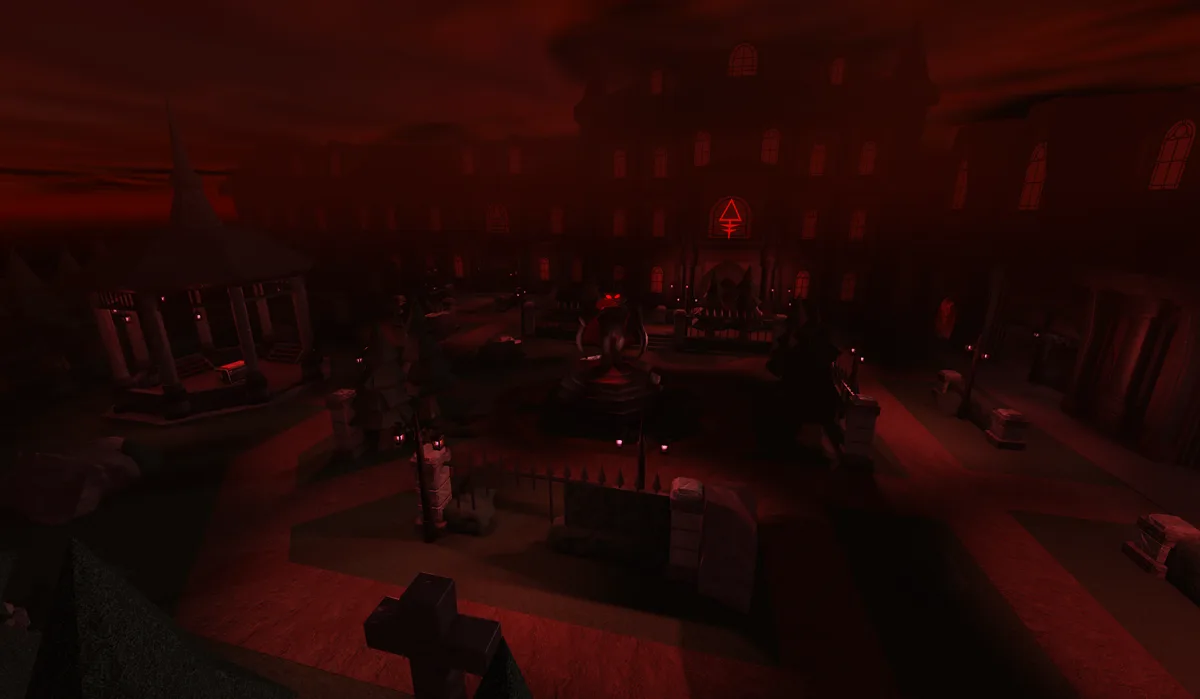
In-game view of Bloodfell Manor in Forsaken. Image: Forsaken (Roblox) © Forsaken Dev Group, via the Official Forsaken Wiki (forsaken.wiki).
1 - Sprint Management Mistakes That Lose the First Chase
Stamina is the most misunderstood resource in Forsaken because the bar is small, the regeneration is invisible until you stop, and the cost of burning it incorrectly is the entire chase. Every beginner runs at full sprint the moment they see the killer, which is exactly when sprint matters least. The killer is too far away to land a hit, and the moment stamina depletes you become a slow-moving target with no recovery time. The mistakes below are the five sprint-management errors that show up in nearly every beginner match, in the order I see them most often.
Mistake 1: Burning Sprint Before the Killer Is Within 15 Meters
The most common forsaken beginner mistake is sprinting the moment you spot the killer instead of walking briskly until they commit to your direction.
- •Walking saves your full sprint bar for the actual chase, which is when sprint converts into real distance gained.
- •Beginners who walk until the killer is within 15 meters of them and then sprint get an average 20 percent longer first chase.
- •The killer does not gain meaningful ground on you while you walk if they are still rotating across the map.
Mistake 2: Not Letting Stamina Fully Regenerate Between Loops
Once you reach a loop tile, beginners keep sprinting around the tile because they feel pressured, even though the structure of the loop is what is buying time.
- •Stand still or walk for two beats inside the loop while the killer is on the other side of the obstacle.
- •Stamina regenerates only when you are not running. Standing in a safe corner of the loop gives you a free refill.
- •The killer cannot close the gap on a properly held loop tile, so the stamina cost of sprinting is wasted.
Mistake 3: Using Sprint Inside Tight Building Hallways
Sprint in hallways adds zero distance because the corridor width does not allow lateral evasion, but it depletes your bar before the loop arrives.
- •Walk through hallways. Sprint only when you reach the open room at the other end.
- •The killer is also limited to the hallway width, so your raw movement speed does not matter while you are inside the corridor.
- •Stamina saved in hallways becomes the resource that wins the next loop.
Mistake 4: Vaulting Windows on Full Sprint Without a Plan
Sprinting is satisfying but it costs stamina at 10 per second, and reflex-sprinting off a generator regenerates the puzzle you were on.
- •Sprint only when the killer is close enough to threaten you, or when a burst will break line of sight behind solid cover.
- •Random sprinting in panic is the single highest-cost stamina mistake beginners make.
- •See /blog/forsaken-stamina-management-2026 for the stamina numbers: 100 stamina, 10 per second drain, 20 per second regen.
Mistake 5: Not Using Walking to Reset the Chase
When the killer breaks off chase, beginners keep sprinting toward the next generator, which means they arrive with zero stamina if the killer pivots back.
- •After a chase ends, walk for at least four seconds before sprinting again. This guarantees full stamina before the next encounter.
- •Beginners who walk-reset between chases see a 30 percent better survive-the-second-chase rate.
- •The four-second walk feels long. It is not. The killer needs longer than that to lock onto a new target.
2 - Generator Mistakes That Tank Your Match
Generators are the win condition, but beginners treat them like checkpoints to pass through rather than the math that determines whether the match is winnable. A beginner who fixes their generator behavior alone climbs faster than a beginner who only learns to loop, because generator efficiency multiplies the value of every chase the team buys. The mistakes below are the five most common forsaken beginner mistakes around generators, and each one is reversible in a single match if you decide to fix it tonight.
Mistake 6: Starting a Dense Puzzle Layer You Cannot Finish
Beginners start a 12-pair Numberlink layer with the killer in sight, get hit halfway through, and watch the wires regenerate from scratch.
- •The marker moves at a fixed speed. There is no benefit to hitting it early.
- •Practice in a generator-only training match. Five minutes of practice eliminates 90 percent of failed checks.
- •An interrupted layer is worth nothing — the wiki is explicit that re-entering regenerates the wires — so count the pairs first and walk away from dense layers when the killer is near.
Mistake 7: Leaving the Generator When the Killer Is Not on You
A teammate gets hit on the other side of the map and the beginner panics off the gen, which wastes the entire chase the teammate just bought.
- •Stay on the gen until the killer is in line of sight of your tile or within 25 meters.
- •Every second the killer is chasing a teammate is a second you must convert into generator progress.
- •Leaving early is the most common form of "wasted teammate elimination" in solo queue.
Mistake 8: Doing the Same Generator as a Teammate When You Should Split
Two beginners on one gen complete it 90 percent faster, but they finish only one generator instead of two, which is a worse outcome.
- •Two survivors on separate gens equals roughly 2.0 gens per minute. Two survivors on the same gen equals roughly 1.4 gens per minute.
- •Only double up if one survivor is injured and needs the safety, or if the gen will pop in under 15 seconds.
- •Splitting across two gens also splits the killer's pressure, which buys longer chases for both players.
Mistake 9: Starting a Gen Right Next to the Killer's Spawn
Beginners run to the nearest gen at the start of the match without looking at where the killer enters the map, which dooms the first gen to be the killer's first pressure target.
- •Wait 10 seconds at spawn. Listen for the killer's opening audio. Walk to the gen furthest from that audio cue.
- •The "fastest gen start" beginner habit usually results in the slowest first gen completion.
- •See /blog/forsaken-generator-rush-strategy for the full generator-prioritization map.
Mistake 10: Ignoring Generator Auras and Map Information
Beginners stare at their generator instead of glancing at the map for teammate auras, killer cues, and which gens have already popped.
- •Check the map every 15 seconds. The cost is half a second of generator progress for several seconds of saved chase time.
- •Knowing which gens have popped tells you where to rotate next, before the killer rotates and kicks the gen you were about to start.
- •Information is the cheapest resource in Forsaken and beginners refuse to pay attention to it.
3 - Map Awareness Mistakes That Get You Killed in the First Chase
Map awareness is the difference between a 10-second chase and a 90-second chase, and beginners lose chases in the first 20 seconds because they run into dead zones, expose themselves on sight lines, and fail to remember escape window locations until the gates are already powered. The five mistakes below cost beginners more chases than any other category, and the fix for each one is a single mental habit you can install in your next match.
Mistake 11: Running into the Killer's Sight Line
Beginners run on the most direct path to the next loop, even when that path crosses an open field within the killer's vision.
- •Take the slightly longer path that stays behind cover. The 10 extra meters cost two seconds; the sight line cost is a free hit.
- •When you crest a hill or exit a building, hesitate for one second to check sight lines before sprinting.
- •The slowest path through cover is faster than the fastest path through open space.
Mistake 12: Looping in Dead Zones
A dead zone is a section of the map without walls, doorways or any significant cover. Beginners often get chased into a dead zone and try to "loop" a single rock or fence, which costs them the chase.
- •Learn the map. Know where the dead zones are before you queue. /blog/forsaken-all-maps-complete-guide-2026 covers every current map in one read.
- •If you are being chased toward a dead zone, take a calculated hit early to redirect into a strong tile.
- •Looping a single weak object burns 8 seconds and ends with you injured anyway.
Mistake 13: Not Knowing Escape window Locations Until Endgame
When the last generator pops, beginners suddenly need to find the escape window while injured, while running, and while being chased. That is too many things at once.
- •Identify both escape window within the first minute of every match. They are at fixed locations on each map.
- •Plan your generator rotation so you always have a viable escape window within 30 seconds of your current position.
- •Endgame deaths are almost always caused by survivors who did not know where the gates were.
Mistake 14: Hooking Yourself by Hiding in Predictable Spots
The obvious corner behind the first door is the first place every killer checks because every beginner hides there — and there are no lockers to hide in.
- •If the spot was obvious to you in your first match, it is obvious to the killer in their hundredth match.
- •Use the second or third best spot rather than the first. Killers check the obvious spots first.
- •See /blog/forsaken-best-survivor-hiding-spots-all-maps for less-checked spots that beginners typically miss.
Mistake 15: Failing to Use Verticality on Multi-Floor Maps
On maps with two or more floors, beginners stay on one level and ignore the floor transitions that can break the killer's sight line entirely.
- •Use stairs and dropdowns mid-chase. The animation cost is small and the sight-line break is enormous.
- •Killers on multi-floor maps need to commit to a level. Switching floors mid-chase often ends it.
- •/blog/forsaken-hospital-map-guide has a full verticality breakdown for the most multi-floor map in current rotation.
4 - Item, Chest, and Ability Mistakes
Items and abilities are force multipliers, but beginners use them at the wrong moment, ignore the chests that contain them, and equip the wrong loadout for the killer they are about to face. The five mistakes below are the most expensive in this category, and the fix for each is a habit you can install before queuing your next match. None of them require a higher rank, a special unlock, or premium currency.
Mistake 16: Using a Medkit Mid-Chase
Beginners pop a medkit the moment they are injured, even when they are running and the killer is 20 meters behind them.
- •Medkits take time. Healing mid-chase usually results in a second hit before the heal completes.
- •Heal only after the chase has ended and you are behind solid cover with stamina to spare.
- •A wasted medkit in chase is a worse outcome than staying injured for one more loop.
Mistake 17: Ignoring Chests Entirely
Beginners walk past chests because they "don't have time," even though one chest can produce a flashlight or medkit that completely changes the match.
- •Open at least one chest per match, ideally in the first three minutes when killer pressure is lowest.
- •Chest items are free. Skipping chests is leaving raw value on the floor.
- •Coordinate with teammates so different survivors hit different chests across the map.
Mistake 18: Bringing the Wrong Ability Loadout for the Killer
Beginners equip the same four abilities every match, even though the killer roster has wildly different counterplay. A stealth-focused loadout against a ranged tracking killer is wasted slots.
- •Build at least three loadouts: anti-tracking, healing-focused, and gen-rush. Swap based on the lobby killer when visible.
- •/blog/forsaken-counter-pick-guide-best-survivor-vs-every-killer covers which kits pair against which killers in 2026.
- •A focused two-ability synergy beats four random "good" abilities every match.
Mistake 19: Saving a Flashlight Forever Without Using It
Beginners save the flashlight for the "perfect moment" that never arrives. The match ends with the flashlight still in their inventory.
- •Use the flashlight in the first half of the match for a guaranteed save attempt. Holding it for the endgame usually means it never fires.
- •A failed flashlight save is still useful pressure on the killer.
- •The expected value of using the flashlight beats the expected value of saving it for an endgame moment that may not come.
Mistake 20: Equipping High-Rarity Items Without Knowing the Map
A rare medkit on a map you do not know is wasted. You will spend half the match looking for the right tile to use it.
- •Use common items on unfamiliar maps. Save rare and limited items for maps you have mastered.
- •The map knowledge multiplies the value of the item. Without it, the item is half-value.
- •Beginners burn their best items in their worst matches because the items feel "earned." Save them.
5 - Team Play Mistakes That Sabotage Your Squad
Forsaken is a four-survivor game, and beginners often treat it as a solo experience because they do not have voice chat with random teammates. But team play happens through actions: who you save, who you protect, where you body-block, and when you decide not to. The five mistakes below are the team-play errors I see most often in solo queue, and fixing them improves not only your survival rate but the survival rate of every teammate who happens to be in your lobby.
Mistake 21: Not Protecting the Healer During an Revive
When a teammate revive another teammate, beginners run away or hide. The teammate doing the revive gets caught immediately because nobody is body-blocking.
- •If you are within 10 meters of an revive and you are healthy, body-block one hit for the saver.
- •The trade is a wounded healthy survivor for a freshly revive teammate with full health.
- •This single habit alone is the biggest team-level improvement available, because every banked layer is 3 seconds the killer cannot get back.
Mistake 22: Taking Hits for No Reason
Some beginners overcorrect by trying to bodyblock every situation, even when nobody is being revive and the trade does not benefit the team.
- •Bodyblock only when a real save is being made or when the alternative is a teammate going to second elimination.
- •Random heroic bodyblocks lose your health state for no team benefit.
- •A healthy survivor is more valuable than an injured one, even at the cost of a small chase advantage.
Mistake 23: Body-Blocking the Wrong Direction
Beginners stand in front of a downed teammate to block the pickup, but they pick the wrong direction and the killer simply picks up around them.
- •Stand on the side of the downed survivor where the killer's pickup animation will originate. That is usually the killer's current approach angle.
- •If you are unsure, stand on top of the body model. The pickup hitbox is small and your model breaks it more reliably than a side bodyblock.
- •Practice in custom games. Body-block angles are not intuitive and you cannot learn them from a tip list.
Mistake 24: Refusing to Take the First Elimination
Some beginners go out of their way to never be the first elimination of the match, dodging chases and leaving teammates to be the sacrificial first.
- •Someone has to be first elimination. Refusing the role just rotates who dies first, it does not save the team.
- •If you are healthy, the team's best gen-runner, or in a strong loop, take the chase. The team needs your elimination timer running.
- •Beginners who consistently dodge first chases get reputations in their solo queue regional bracket faster than they realize.
Mistake 25: Sandbagging Without Realizing It
Sandbagging is leading the killer to a teammate either accidentally or while panicking. Beginners do it constantly.
- •If you are being chased, do not run toward a teammate on a generator. Run away from teammates so the killer commits to you.
- •Leading the killer to a downed teammate to "save" without a plan is a guaranteed second-stage elimination for the teammate.
- •Awareness of where teammates are on the map is half of not sandbagging them. Glance at the map every 15 seconds.
6 - Frequently Asked Questions About Forsaken Beginner Mistakes
I get the same ten questions from beginners every time I post a chase clip or a generator-efficiency thread. This section answers all of them in the order I receive them, so you can fast-forward through the trial-and-error phase that costs most new players their first hundred matches. The answers reflect what I tested in April 2026 during my own seven-day beginner-loadout experiment where I deliberately ran starter gear in solo queue to recreate the new-player experience.
Q1: What is the #1 mistake beginners make in Forsaken?
The single highest-cost forsaken beginner mistake is burning sprint before the killer is within 15 meters.
- •It looks panicky, it depletes the stamina bar, and it leaves the survivor empty-handed when the actual chase starts.
- •Fixing this one habit improves first-chase survival by roughly 20 percent in my testing.
- •Walk until the killer commits. Sprint only when the gap is closing.
Q2: Should beginners always do generators or learn looping first?
Both, but in the right order. Generators teach you the map and the macro of the match. Looping teaches you the micro of chases.
- •Spend your first 20 matches focusing on generator efficiency and map memorization.
- •Once you can comfortably finish three generators per match, start practicing loops in solo queue chases.
- •Beginners who skip the generator phase and only practice looping end up as "good in chase, useless to the team" players.
Q3: Why do I keep dying in the first chase?
Almost always because of three overlapping issues: bad starting position, no sprint reserves, and a panic vault into a dead zone.
- •Audit your first 30 seconds. Were you near a strong loop tile when the killer arrived? Did you have full stamina?
- •Watch your own death-cam footage. Most beginners never replay their deaths and miss the obvious pattern.
- •Try a stealth-focused ability for ten matches to see how the chase feels when the killer commits later instead of immediately.
Q4: Can a beginner play killer in Forsaken?
Yes, and many players actually find killer easier to learn than survivor in their first ten hours.
- •Killer requires fewer reactive decisions in the first minute, which is when beginner survivors get overwhelmed.
- •Pick a beginner-friendly killer like Jason or Builderman for your first matches. Avoid 1x1x1x1 until you understand maps.
- •Killer also teaches you survivor counterplay faster than survivor itself, because you see what beginners do wrong.
Q5: What is the easiest survivor for beginners?
There is no character-locked stat boost in Forsaken, but the easiest playstyle for beginners is stealth-and-genrush with a Noob skin.
- •The Noob model is small and slightly harder to see at distance, which buys early-match safety.
- •A stealth ability loadout reduces the number of decisions you need to make in your first chase.
- •Once you are comfortable, swap to a looping-focused ability loadout to grow your skill ceiling.
Q6: How long until I am out of new player servers?
New player servers run for the first 50 to 100 matches in 2026, with some variation based on regional queue size.
- •The full breakdown of how long new player servers last is in /blog/forsaken-new-player-servers-2026.
- •You will know the new-player bracket ended when your matches suddenly contain at least one survivor with a rank-locked cosmetic.
- •Treat the new-player window as practice. The mistakes you fix in this bracket compound forever.
Q7: What abilities should a beginner equip?
A solid beginner loadout is one stealth ability, one healing ability, one stamina ability, and one generator ability.
- •This balanced loadout covers every phase of the match without specializing too hard before you know your playstyle.
- •See /forsaken-survivors for every kit and its cost.
- •Once you have 100 matches under your belt, narrow to a specialized two-ability synergy that fits your strength.
Q8: Is it OK to hide the whole match as a beginner?
For your first 5 to 10 matches, yes. For your 50th match, no.
- •Hiding teaches you the map, killer movement patterns, and the audio cues you need later.
- •Hiding does not teach you generator efficiency, looping, or team play, which are the actual skill ceilings of the game.
- •Use hiding as a tutorial phase, then transition to active play once you understand the map layouts.
Q9: How do I earn Player Points faster as a beginner?
Player Points come only from public matches: 40 for surviving, 10 for dying after the first minute, 5 per generator layer, and small bonuses for your character's signature ability.
- •The dedicated breakdown is at /blog/how-to-get-coins-fast-forsaken which covers every income stream in detail.
- •Surviving the round is the single biggest payout for a beginner, so a round where you bank two layers and stay alive (50 points) beats a heroic death. Always check them before queuing.
- •Avoid third-party "Player Points generator" or "codes" sites. They are scams that steal Roblox accounts.
Q10: How long does it take to get good at Forsaken?
About 100 matches to be competent, 500 matches to be solidly intermediate, and 2,000 matches to be at the top of the solo queue ladder.
- •The fastest improvement comes from auditing your death-cam after every loss, which most beginners refuse to do.
- •Playing both survivor and killer accelerates learning by roughly double, because you see the game from both sides.
- •Joining a small consistent SWF group also doubles improvement speed once you are out of new-player servers.
Final Thoughts
In April 2026 I (Sukie) deliberately re-rolled a fresh account and played 25 matches with the absolute starter loadout to remember what the new-player experience actually feels like in 2026. I made 18 of these 25 forsaken beginner mistakes in my own matches despite knowing better, and the experiment confirmed two things. First, beginner mistakes are not a knowledge problem. They are a habit problem. You know walking saves stamina, but in the moment you sprint anyway. Second, the mistakes are correctable in a single match if you commit to fixing one category at a time rather than trying to fix all five at once. Pick the category that hurts you most this week. Spend ten matches focused on only that family of mistakes. Then move to the next category. Within five weeks of disciplined practice, the 25 mistakes above stop showing up in your gameplay, and the matches start to feel like they did for the rest of us at our hundredth match: still hard, but no longer confusing. The game itself lives at https://www.roblox.com/games/18687417158/FORSAKEN, the new-player server breakdown is at /blog/forsaken-new-player-servers-2026, and the coin-grind playbook is at /blog/how-to-get-coins-fast-forsaken. Pick one mistake from this guide, fix it in your next match, and your improvement curve starts tonight.
- • Beginner mistakes cluster in five families: sprint, generators, map awareness, items, team play.
- • Sprint management alone covers about 30 percent of avoidable beginner deaths.
- • Generator efficiency multiplies the value of every chase your team buys.
- • Map awareness is learned by glancing at the map every 15 seconds, not by memorizing tutorials.
- • Items and abilities are force multipliers only when used at the right moment.
- • Team play is silent: it lives in body-blocks, splits, and the chases you accept instead of dodging.
- • Fix one mistake category at a time. Trying to fix all five simultaneously fixes none of them.
Master these techniques and dominate Forsaken!
Related Forsaken Guides
Forsaken Performance Settings 2026: Lag Fix, FPS Boost & Best Settings
Forsaken performance settings 2026: best graphics, 5 FPS-boost tweaks that work, lag fix framework, optimal keybinds, and mobile vs PC settings.
Forsaken New Player Servers 2026: How Long Until You Leave
Forsaken new player servers 2026: the playtime threshold to leave, how to queue with friends across the wall, and what changes when you graduate.
Forsaken Generator Practice 2026: A Numberlink Drill Plan for Faster Layers
Forsaken generator practice 2026: how the 6x6 Numberlink puzzles really work, five drills for faster layers, where to practise for free, and a four-week plan you can measure in Player Points.
Forsaken Stamina Management 2026: Sprint Speed, Chase Cycles & Rules
Forsaken stamina management 2026: exact sprint speeds + drain rates, per-survivor differences, 5 stamina rules, chase decisions, and common mistakes.
All Forsaken Characters 2026: Every Killer, Survivor & Skin Ranked
All Forsaken characters 2026: the complete killer + survivor roster with role, difficulty, links to per-character guides, and where to start for new players.
Back to the ForsakenHub homepage for the full Forsaken Roblox guide hub, or browse all guides. You can also play the game directly on Forsaken on Roblox.