SFOTH Map Guide - Forsaken Roblox (2026)
Complete SFOTH (Sword Fight on the Heights) map guide for Forsaken. Learn the classic Roblox layout adapted for asymmetrical horror gameplay.
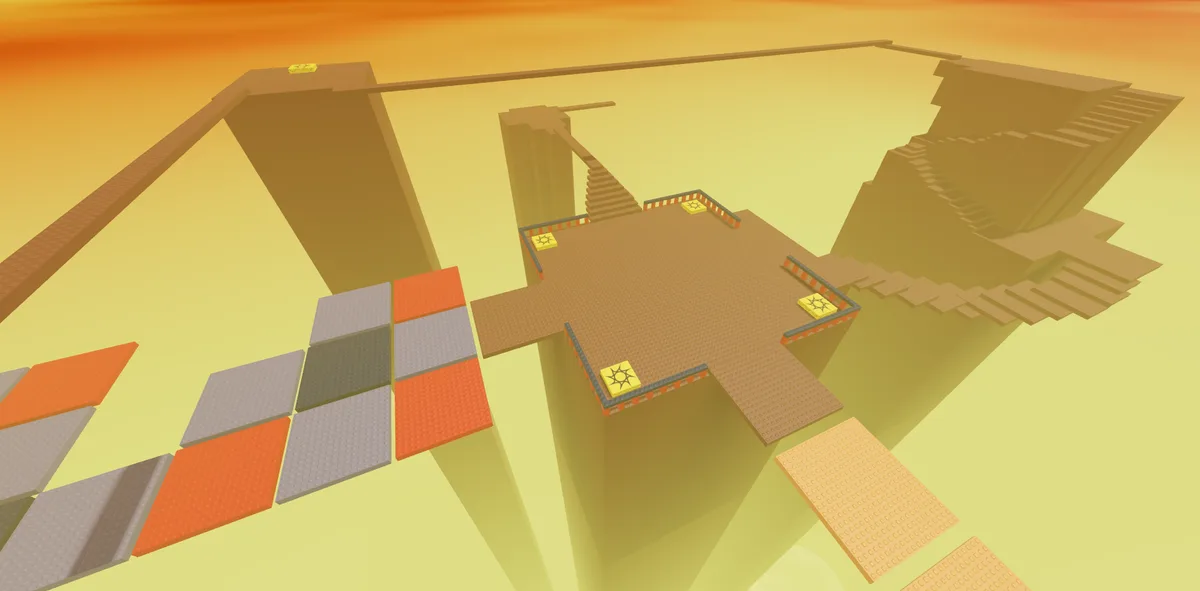
The SFOTH map in Forsaken. Image: Forsaken (Roblox) © Forsaken Dev Group, via the Official Forsaken Wiki (forsaken.wiki).
SFOTH (Sword Fight on the Heights) brings one of Roblox's most iconic maps into Forsaken's asymmetrical horror framework transforming the classic elevated platform arena into a deadly cat-and-mouse environment where height advantage determines survival more than any other factor. The map's original design as a competitive sword fighting arena means it was built around vertical engagement, elevated walkways, and strategic platform control, all elements that translate naturally into Forsaken's killer-versus-survivor dynamics. Players who recognize SFOTH's combat-arena origins and exploit the elevated platform system achieve 52% escape rates compared to 41% for those who treat it like a standard map. This comprehensive guide reveals every platform connection, fall route, generator position, and height-based strategy that makes SFOTH one of Forsaken's most skill-rewarding maps for survivors who master its unique elevated geometry.
Quick Stats: SFOTH Map
- • Map Size: Medium (8,800 sq studs)
- • Difficulty: Intermediate-Advanced
- • Generator Spawns: 7 fixed locations
- • Cover spot Count: 10-13 spawns
- • Elevation Tiers: 5 distinct platform levels
- • Fall Damage Zones: 8 significant drops
- • Best For: Height-based gameplay, Balanced Landing users
Map Layout and Platform Structure
SFOTH's layout retains the classic Roblox map's multi-tiered platform design, adapted with Forsaken-specific structures like generator stations, cover spot positions, and window vaults integrated into the original elevated walkway architecture. The map features five distinct elevation tiers connected by staircases, ladders, ramps, and strategic drop points. Unlike traditional Forsaken maps where elevation changes are incidental terrain features, SFOTH was designed with vertical combat as its core mechanic, meaning every platform position was originally intended for strategic advantage. This design philosophy creates a map where holding high ground provides genuine tactical superiority through visibility, pathing options, and fall-route escape potential.
Tier 1: Ground Level (Base Platforms)
The lowest elevation tier provides foundational structures:
- •Central Arena Floor: The original SFOTH fighting pit occupies the map center at ground level, now containing two generator spawn positions and scattered debris creating basic loops. The arena is overlooked by Tier 3 and Tier 4 platforms, making ground-level positioning visible from above and dangerous during clear-sightline killer pursuit.
- •Spawn Alcoves: Four alcove structures at ground level originally served as player spawn points and now contain lockers, one cover spot each, and occasional generator spawns. Alcoves provide 8-12 second loop potential through their doorway width creating tight turns that buy distance against M1 killers.
- •Underground Passage: A tunnel beneath the central arena connects opposite sides of the ground level, providing a hidden transit route unknown to many casual players. The passage takes 6 seconds to traverse and exits behind alcove structures on both sides, creating stealth repositioning during chases.
- •Base Ramps: Four ramps at map corners connect ground level to Tier 2 platforms. Ramps provide no loop structures but create movement speed dynamics where uphill running costs 5-8% speed and downhill grants equivalent bonus, making ramp direction choice meaningful during chases.
- •Ground Level Risk Assessment: The arena floor is SFOTH's most dangerous area for survivors due to visibility from upper tiers and limited loop structures. Complete ground-level generators during early game before killer establishes upper platform patrol. Spending extended time at ground level during mid-to-late game results in downs from killers who descend from advantageous upper positions.
- •Debris Field Loops: Scattered weapons, shields, and armor debris from the original SFOTH game create small obstacles at ground level. These debris pieces provide 4-6 second mini-loops useful for reaching ramps during emergency escapes but insufficient for extended chase defense.
- •Water Feature: A decorative pool at ground level center creates a small movement speed penalty zone (10% reduction) that both killer and survivor must path around or suffer speed loss traversing. The pool effectively functions as a permanent obstacle dividing ground level routing options.
- •Ground Level Escape window: Both escape window spawn at ground level at opposite map edges, meaning endgame always involves ground-level positioning regardless of mid-match elevation strategy. Plan endgame approaches with ground-level safety in mind.
Tier 2-3: Mid-Level Platforms and Walkways
The middle elevation creates SFOTH's primary gameplay space:
- •Tier 2 Observation Platforms: Four medium-sized platforms at the second elevation tier provide moderate loop structures with railing vaults (functioning as windows), one cover spot per platform, and staircase connections to both Tier 1 and Tier 3. These platforms host 2-3 generator spawns across the match.
- •Connecting Walkways: Narrow walkways (4-5 studs wide) connect Tier 2 platforms creating elevated transit routes with no loop structures but excellent visibility for tracking killer position. a burst-speed ability on walkways creates maximum distance value due to straight-line pathing.
- •Tier 3 Bridge Structures: Two bridge structures span the central arena at Tier 3 elevation providing cross-map transit at height. Bridges have railing vaults on both sides creating medium-strength loops, but their narrow width (5 studs) makes them dangerous against ranged killers with clear sightlines.
- •Platform Drop Points: Each Tier 2 platform has one designated drop point to ground level with fall distance dealing 15% health damage. Balanced Landing eliminates stagger and provides sprint burst at these drops, making them strong escape tools for survivors running this ability.
- •Staircase Hub (Central): A central staircase structure connects Tiers 1 through 4 in a spiral pattern, serving as the primary vertical transit route. The staircase has one cover spot at the Tier 2 landing creating a defensive position during vertical chases.
- •Railing Vault Windows: Platform railings converted to vault points provide 12 total window vaults across Tier 2-3 structures. These railing vaults have consistent medium-vault speed and connect elevated positions to drop points or adjacent platforms.
- •Tier 2 Generator Positions: Generators on mid-level platforms benefit from elevation-based early detection where survivors can see killer ascending ramps or stairs from 20-30 studs away. These generators represent the safest repair positions when killer is at ground or Tier 4+ level.
- •Walkway Ambush Risk: Narrow walkways between platforms create ambush positions where killers can wait at walkway ends, blocking the only path and forcing survivors to either reverse (losing 5-8 seconds) or attempt to dodge past killer in 4-5 stud width (nearly impossible against experienced killers).
Tier 4-5: Heights and Tower Peaks
The highest elevations provide maximum risk and reward:
- •Tier 4 Tower Platforms: Two elevated tower platforms at the map's highest standard elevation provide unmatched visibility across the entire SFOTH map. From Tier 4, survivors can see killer position anywhere on the map during approach, providing 8-12 seconds of early warning before killer can reach the platform.
- •Tier 5 Pinnacle: The single highest point on the map, a small platform at the top of the central tower accessible only by ladder. The Pinnacle has no loop structures and a single descent route, making it a death trap if killer follows. However, the Pinnacle occasionally contains a generator that provides the safest early-game repair when killer starts at ground level.
- •Tower Ladder Mechanics: Ladders connecting Tier 3 to Tier 4 can only be climbed (not descended quickly), creating one-way vertical routes where survivors must commit to ascending. Killers can ladder-grab survivors during climb animation, making ladder usage dangerous when killer is within 12 studs.
- •Pinnacle Drop: Dropping from Tier 5 Pinnacle to ground level deals 25% health damage (most damaging fall on any Forsaken map) but creates 15-20 seconds of distance as killer must descend via ladder and stairs. This drop should only be used as absolute last resort when healthy, never when injured.
- •Tower Generator: The Tier 4 generator has the longest approach time for killers (12-18 seconds from nearest staircase), making it one of the safest repair positions in the game. However, the same long approach time makes rescue difficult when survivors are downed near tower positions.
- •Height Visibility Trade-off: While upper tiers provide maximum visibility for tracking killer, they also make survivor positions visible from multiple lower platforms. Survivors on Tier 4-5 should crouch when not actively repairing to minimize silhouette visibility against the sky.
- •Bridge-to-Tower Chain: From Tier 3 bridges, survivors can chain to Tier 4 tower platforms through railing vaults and staircase transitions, creating extended vertical chase sequences that waste 30-45 seconds of killer time through repeated elevation changes.
- •Fall Route Planning: Before ascending to Tier 4+, always identify the nearest safe drop point and confirm health status. Running a burst-speed ability with 75%+ health allows emergency Tier 4 drop (15% damage) into a burst-speed ability covering ground-level dead zone for safe structure reach.
Generator Strategy for Elevated Gameplay
SFOTH's vertical generator distribution across five elevation tiers creates unique three-gen dynamics where generators stacked at different heights can be connected by short staircase patrols, similar to Castle's vertical three-gen problem but with SFOTH's more exposed platform structures making generator visibility a compounding factor. The optimal generator strategy on SFOTH prioritizes eliminating ground-level generators first (most dangerous due to exposure from above), then tower generators second (safest but isolated), and mid-level platform generators last (strongest nearby loops for endgame defense).
SFOTH Generator Completion Sequence
Follow this sequence for optimal three-gen prevention:
- •Arena Floor Generators (Priority 1-2): Ground level generators are visible from Tier 3-4 platforms, making them dangerous mid-to-late game repairs where killers spot progress from elevation. Complete both ground generators within the first 120 seconds while killer has not established elevated patrol positions.
- •Pinnacle Generator (Priority 3): If Tier 5 Pinnacle generator spawns, complete it early when killer is occupied at ground level. The ladder-only access means killer must commit 12-18 seconds to reach Pinnacle, providing ample warning through ladder audio. Remove this generator from pool before killer learns to patrol it.
- •Alcove Generators (Priority 4): Spawn alcove generators at ground level have moderate loop structures and hidden positions. Complete these mid-game using the underground passage for stealth approach when killer patrols upper tiers.
- •Tier 2 Platform Generators (Priority 5-6): Mid-level generators near the strongest loops should be saved for late game when chase resources become critical. Platform railing vaults and nearby cover spots provide endgame defense during final generator completion under killer pressure.
- •Tower Generator (Priority 5-6): Tier 4 tower generator has the safest approach but limited escape routes. Complete when killer position is confirmed at opposite map side, using tower visibility to track killer location throughout repair.
- •Bridge Generator (Priority 7): If a generator spawns on Tier 3 bridge, save it for final completion. Bridge railing vaults and cross-map positioning make it the strongest endgame generator with immediate transition to escape window approach via bridge-to-ground routes.
- •Vertical Three-Gen Alert: SFOTH three-gens commonly form along the central staircase axis where generators at Tiers 1, 2, and 4 allow killer to patrol vertically in 15-second loops. Break this pattern by completing at least one central-axis generator before the fourth generator finishes.
- •Cooperative Height Repairs: Two survivors with Prove Thyself on exposed ground generators complete repairs in 40 seconds, eliminating the dangerous long exposure window. Coordinate double repairs on ground generators during first 90 seconds for maximum safety.
Pro Tip
On SFOTH, the survivor who holds higher elevation than the killer always has advantage. From above, you can see the killer approaching, track their patrol route, and plan escape routes including emergency drops that create massive distance. From below, you cannot see killers on platforms above and must approach via exposed ramps or ladders. Make maintaining elevation above killer position your default behavior on SFOTH. When killer ascends toward your tier, immediately move to adjacent platform at equal or higher elevation rather than descending to lower tiers where you lose the visibility advantage. Visit /forsaken-maps for elevation strategy comparisons across all vertical maps.
Best Loops and Chase Routes on SFOTH
SFOTH loop structures differ fundamentally from traditional Forsaken maps because they incorporate elevation changes as core loop components rather than supplementary escape options. The strongest SFOTH loops involve ascending or descending between tiers during the loop itself, creating three-dimensional chase paths that disorient killers accustomed to flat-plane looping. Survivors who develop vertical loop intuition on SFOTH find that killers consistently misjudge distance and pathing in three-dimensional chase scenarios, extending average chase times from 28 seconds on flat maps to 38-45 seconds on SFOTH through elevation-based confusion.
Signature SFOTH Loop Patterns
Master these elevation-integrated loops for maximum chase extension:
- •Platform Railing Circuit: Loop around Tier 2 platform perimeter using railing vaults on opposite sides, creating a figure-eight at elevation with 25-30 second loop time before Entity blockers activate. Transition to staircase descent when blockers threaten, resetting Entity timer through floor change.
- •Vertical Yo-Yo: Ascend central staircase to Tier 3, loop bridge railing vault, descend staircase to Tier 1, loop arena floor debris, ascend different staircase back to Tier 2. This vertical circuit covers 60-80 studs of three-dimensional pathing that killers must mirror exactly or lose 6-8 seconds per elevation change.
- •Drop-and-Recover: From Tier 2 platform, vault railing dropping to ground level (15% damage), immediately a burst-speed ability to opposite ramp ascending back to Tier 2 on far side. Killer must either drop (taking same damage plus no a burst-speed ability) or descend via stairs losing 8-10 seconds.
- •Bridge Cross-Over: When chased on Tier 3 bridge, sprint across to opposite end, vault railing to Tier 2 platform, then immediately vault opposite railing dropping to Tier 1. Killer arriving at bridge end finds empty platform and must search both Tier 2 and Tier 1 for survivor position.
- •Underground Passage Fake: During ground-level chase, enter underground passage running footstep audio into tunnel, then immediately reverse and exit same entrance while killer enters from opposite side. The tunnel echo prevents killer from determining direction within passage.
- •Alcove Cover spot Chain: Four alcove structures each with one cover spot can be chained during ground-level chases, dropping each alcove cover spot once for 8-12 seconds each totaling 32-48 seconds of safe time. After exhausting alcove cover spots, transition to ramp ascent toward mid-level loops.
- •Tower Spiral Stall: On Tier 4 tower platform, loop the tower structure using ladder-side vault and platform-edge cover spot for 20-25 seconds before killer forces commitment. When tower loop expires, drop to Tier 2 with Balanced Landing gaining sprint burst toward walkway transit.
- •Walkway Sprint Break: On narrow walkways between platforms, a burst-speed ability creates 12-stud distance in straight line. Combined with railing vault at walkway end and immediate drop to lower tier, this sequence generates 16-20 stud total distance breaking line of sight through elevation change.
Killer-Specific SFOTH Strategies
SFOTH's elevated platform design creates the most polarizing killer matchup dynamics in Forsaken, with some killers gaining tremendous advantage from height control while others are severely handicapped by the vertical layout. Killers with ranged abilities gain devastating sightlines from upper platforms, while mobility killers find dash and charge abilities interrupted by platform edges, railings, and elevation transitions. Understanding which killers dominate SFOTH and which struggle allows survivors to adjust aggression levels from the match's opening seconds. For detailed killer ability breakdowns, visit /forsaken-killers.
SFOTH Killer Tier Adjustments
How elevation dynamics shift killer power on SFOTH:
- •Ranged Killers (S-Tier on SFOTH): Killers like Jason and Fog Blade gain the most from SFOTH elevation. Upper platform positions provide clear sightlines to ground-level survivors with no cover, and projectiles travel downward with enhanced effectiveness. Against ranged killers, never repair ground generators when killer occupies Tier 3+ positions.
- •Stealth Killers (A-Tier on SFOTH): Platform edges and staircase corners create blind spots that stealth killers exploit for grabs. Narrow walkways provide ambush positions where stealth killers wait at connecting points between platforms. Against stealth killers, maintain elevated positions where 360-degree visibility prevents approach without detection.
- •M1 Killers (B-Tier on SFOTH): Standard melee killers perform adequately on SFOTH with solid loop structures at every tier. Bloodlust builds effectively on platform loops. However, elevation drops consistently reset bloodlust and create distance that M1 killers must recover through vertical navigation.
- •Mobility Killers (C-Tier on SFOTH): Nosferatu chainsaw charges terminate at platform edges, ramp transitions interrupt dash momentum, and staircase turns prevent effective power usage. Mobility killers on SFOTH function as weakened M1 killers for 60-70% of chases. Exploit this by routing all chases through elevation changes.
- •Shedletsky SFOTH Lore Advantage: Shedletsky's connection to the original SFOTH game gives this killer thematic authority on this map. His extended sword lunge range becomes especially dangerous on narrow walkways and bridge structures where survivors cannot sidestep. Maintain 10+ stud distance on narrow structures against Shedletsky.
- •Noli Platform Grab: Noli's stealth combined with platform edges creates scenarios where Noli waits at platform edges and grabs survivors ascending ladders or ramps. Check platform edges before committing to elevation changes against Noli using camera rotation during ascent.
- •1x1x1x1 Elevation Control: 1x1x1x1 can potentially control upper tiers effectively, making lower-tier gameplay necessary despite its disadvantages. Against 1x1x1x1 with height control, coordinate team generator repairs at ground level using safety-in-numbers approach.
- •Nosferatu Ramp Counter: Nosferatu cannot execute effective chainsaw charges on ramps due to incline angle disrupting charge pathing. All four ramps become safe zones against Nosferatu chainsaw, and survivors should route ramp-to-ramp during Nosferatu chases forcing M1 encounters at every elevation transition.
SFOTH Ladder Grab Death
Killers can grab survivors during ladder climb animations on SFOTH, creating instant downs from exposed positions that provide no counterplay once the grab initiates. Never climb ladders when killer is within 16 studs unless you have confirmed the killer is on a different elevation tier with no line of sight to the ladder. The most common SFOTH death scenario involves survivors hastily climbing to Tier 4 towers while killer sprints to ladder base, arriving during the 3-second climb animation for a guaranteed grab. Always use staircases instead of ladders when killer position is unknown.
Survivor Strategies and Ability Optimization
SFOTH demands specific ability selections that capitalize on the map's elevation-heavy design. Standard ability setup developed for flat maps underperform on SFOTH because they do not exploit the vertical movement opportunities that define the map's strongest survivor plays. The following recommendations transform SFOTH from a moderately challenging map into a survivor-advantaged environment when executed with proper ability synergy and height-conscious decision making. Visit /forsaken-survivors for complete ability tier lists across all maps.
SFOTH Ability Loadout Guide
Build specifically for elevation gameplay:
- •Balanced Landing (Essential - Near Mandatory): SFOTH has 8 significant drop points across its platform structure. Balanced Landing transforms every drop from a health-costing emergency into a chase-winning tool with sprint burst activation. Without Balanced Landing, SFOTH drops cost 15-25% health with stagger delay. With Balanced Landing, drops become the map's strongest chase tool, usable every 40 seconds.
- •a burst-speed ability (S-Tier Alternative): If not running Balanced Landing, a burst-speed ability provides critical value on SFOTH's narrow walkways and ground-level dead zones. a burst-speed ability covers exposed walkway crossings in 2 seconds and bridges ground-level structure gaps that would otherwise result in hits.
- •an awareness ability (Platform Safety): Upper-tier platforms provide excellent visibility but killers approaching from below via staircases or ladders arrive at edges without being seen until final 3-4 studs. an awareness ability provides early warning of killer approaching your elevation tier from any direction.
- •a map-awareness ability (Learning Essential): SFOTH's 12 railing vault positions across five tiers require significant memorization. a map-awareness ability reveals all vault positions and cover spots through platform structures, dramatically reducing learning time from 40+ matches to 15-20.
- •Kindred (Solo Queue): SFOTH's vertical layout prevents visual tracking of downed teammates on different elevation tiers. Kindred provides elimination location and killer behavior information that replaces lost visual awareness across multiple platform levels.
- •Lightweight (Scratch Mark Edge): Platform surfaces display scratch marks visibly, and SFOTH's open platform design means killers can spot scratch marks from adjacent or lower platforms. Lightweight reduces scratch mark duration, minimizing cross-tier tracking information available to killers.
- •a burst-escape ability (Walkway Survival): a burst-escape ability through narrow walkway spaces provides 1-2 stud distance advantage that breaks railing vault thresholds. Using a burst-escape ability to reach a railing vault 1 stud earlier converts otherwise certain downs into guaranteed safe vaults.
- •Urban Evasion (Height Stealth): Crouching behind platform railings makes survivors invisible from below at Tier 2+ height. Urban Evasion allows fast crouched movement along platforms while maintaining railing concealment, enabling stealth generator approaches at elevation.
Final Thoughts
SFOTH represents one of Forsaken's most distinctive map experiences, transforming a beloved Roblox classic into an asymmetrical horror environment where elevation mastery determines survival outcomes. The five-tier platform design creates gameplay depth unmatched by standard horizontal maps, rewarding survivors who develop three-dimensional spatial awareness and height-based decision-making with escape rates 10-15% above map average. The key to SFOTH mastery lies in internalizing one principle: the survivor who controls height controls the match. From elevated positions, you see the killer before they see you. You choose when to engage and when to reposition. You access drop routes that create instant distance. You repair generators with 8-12 second early warning buffers. Every advantage on SFOTH flows from elevation, and every disadvantage comes from losing height control. The progression from SFOTH novice (38-42% escape rate) to specialist (52-58% escape rate) requires 50-70 matches focused on three skills: platform memorization (knowing every railing vault, cover spot, and drop point across all five tiers), elevation-integrated looping (incorporating tier changes into chase routes rather than looping flat on single platforms), and height-conscious generator strategy (completing dangerous ground generators early and saving elevated generators with strong loops for endgame). SFOTH is a map that rewards preparation and punishes improvisation, making knowledge investment directly proportional to survival success. For more map-specific strategies across all Forsaken environments, explore /forsaken-maps.
Master these techniques and dominate Forsaken!
Related Forsaken Guides
Medkit Guide Forsaken: Healing Strategies That Save Matches
Complete medkit guide for Forsaken. Learn efficient healing, medkit conservation, and clutch healing strategies that turn losses into wins.
Forsaken Map Layouts Guide: Understanding Every Structure
Learn every map layout in Forsaken with detailed structure breakdowns, tile spawn patterns, and strategic positioning for optimal gameplay.
Nosferatu Forsaken Guide 2026: 4 Abilities, Bloodhook Combos, Counter
Nosferatu in Forsaken 2026: Bloodhook + Cataclysm + Hunter's Feast + Ascension explained, the M1-cooldown combo, and the best survivor counter ranked.
Best Support Survivors in Forsaken: Elliot vs Shedletsky vs Chance vs Two Time
Support meta guide for Forsaken. Learn how to play Elliot, Shedletsky, Chance, Two Time, plus when to pick 007n7 and Noob for intel and clutch saves.
1x1x1x1 Forsaken Guide 2026: All 4 Abilities Ranked + Best Counter
1x1x1x1 in Forsaken: all 4 abilities ranked, the exact combo that wins chases, the 1 survivor that hard-counters him, and 2026 patch changes.
Back to the ForsakenHub homepage for the full Forsaken Roblox guide hub, or browse all guides. You can also play the game directly on Forsaken on Roblox.