Horror Hotel Map Guide - Forsaken Roblox (2026)
Master the Horror Hotel map in Forsaken. Floor-by-floor guide with room loops, elevator strategies, generator locations, and killer avoidance tips.
Horror Hotel is the tallest map in Forsaken with four full floors connected by elevators, staircases, and balcony drops creating a vertical labyrinth where survivors who master floor transitions and room-based gameplay achieve escape rates 22-28% higher than those who treat it like a standard indoor map. This haunted hotel features a grand lobby on the ground floor, guest room corridors on the second and third floors, and a rooftop area with a pool and maintenance access on the fourth floor. The map's signature mechanic is its functional elevator system that transports survivors (and killers) between floors in 3-second rides, creating unique escape opportunities and patrol dynamics unlike any other Forsaken environment. With 40+ individual rooms across four floors, Horror Hotel has the highest room count of any map, and each room presents micro-decisions about whether to enter, hide, loop, or bypass that accumulate to determine match outcomes. The hotel's repetitive room-corridor-room layout creates disorientation that mirrors Haunted Mansion map's navigation challenges, but the elevator system and balcony access provide escape options that Haunted Mansion lacks. Survivors who learn the floor layouts, elevator positions, and room-specific loops transform Horror Hotel from a confusing nightmare into a controllable environment where vertical mobility outperforms raw chase mechanics. This guide covers every floor, every elevator trick, and every room strategy needed to check out of Horror Hotel alive. For a comparison with all Forsaken maps, visit /forsaken-maps.
Quick Stats: Horror Hotel
- • Map Size: Large (11,500 sq studs across 4 floors)
- • Difficulty: Advanced
- • Generators: 7 spawns, 5 required
- • Cover spots: 12-14 spawns
- • Floors: 4 (Lobby, 2nd, 3rd, Rooftop)
- • Elevators: 2 functional shafts
- • Guest Rooms: 40+ individual rooms
- • Best For: Vertical mobility and elevator tactics
- • Killer Win Rate: 53% (slightly killer-favored)
Horror Hotel Floor-by-Floor Layout
Horror Hotel is structured as a four-story hotel building with a distinctive layout on each floor. The ground floor features an expansive lobby and service areas, the second and third floors are near-identical guest room corridors creating deliberate disorientation, and the fourth floor opens to a rooftop area with unique outdoor gameplay. Two elevator shafts connect all four floors on the east and west sides of the building, while a central staircase and a service stairwell provide traditional vertical transit. Understanding each floor's personality, resources, and escape options is essential because Horror Hotel's vertical nature means a wrong floor choice can trap you far from generators, teammates, or escape window.
1 - Ground Floor - Grand Lobby and Services
The ground floor is the most diverse and resource-rich level:
- •Grand Lobby: A large open area (22x18 studs) with a reception desk, seating area, luggage carts, and a decorative fountain. The reception desk creates the floor's strongest loop (15-20 seconds) with the desk counter forcing killers into wide pathing while survivors cut through the desk opening. The fountain provides a secondary loop (8-10 seconds). The lobby has high ceilings and chandelier lighting providing 65% visibility, the best lighting on the map. Contains a guaranteed cover spot at the reception desk.
- •Restaurant: A medium dining area off the lobby with tables, a bar counter, and kitchen access. The bar counter provides a strong loop (12-15 seconds) similar to kitchen island loops. Tables create minor weaving obstacles (5-8 seconds per cluster). The restaurant kitchen has cooking equipment providing additional obstacles and a back exit to the service corridor. Contains a generator spawn 50% of the time near the kitchen.
- •Conference Room: A medium room with a large table and office chairs creating a moderate loop (10-12 seconds). The conference room has two entrances (main door and connecting door to lobby) preventing dead-end scenarios. Contains a generator spawn 30% of the time and a cover spot at the main entrance.
- •Service Corridor: A narrow behind-the-scenes hallway connecting the restaurant kitchen, laundry room, and the service stairwell. The corridor measures 5 studs wide with supply carts providing minor obstacles. Contains a cover spot at the laundry room entrance. The service stairwell here connects to all four floors and is less visible than the main central staircase.
- •Laundry Room: A medium room with industrial washers, dryers, and folding tables creating cluttered obstacles. The laundry room provides 10-15 seconds of chase time through equipment navigation. Contains a generator spawn 40% of the time. The large machines provide hiding spots when killers lose line of sight.
- •Elevator Lobby (Ground): Both elevators open into the grand lobby area. The east elevator is near the reception desk and the west elevator is near the restaurant. Ground floor elevator access is the most visible on the map as the open lobby provides clear sightlines to elevator doors from 20+ studs.
- •Main Entrance and Escape window: The hotel front entrance leads to a small exterior area with a covered portico and parked vehicles. One escape window always spawns at the front entrance. The second gate spawns at the rooftop fire escape on the fourth floor, creating a unique split where one gate is on the lowest floor and one is on the highest.
- •Basement: The basement spawns beneath the lobby accessible through a door behind the reception desk. The basement contains a boiler room and storage area with pipe-based loops. The reception desk proximity makes the basement moderately safe for rescues as survivors escaping the basement immediately access the lobby's strong desk loop.
2 - Second Floor - Guest Room Corridor
The first of two nearly identical guest room floors:
- •Main Corridor: A 6-stud-wide hallway running the building length (50+ studs) with guest room doors on both sides. The corridor has dim overhead lighting (40% visibility) with room numbers and carpet providing the only visual variation. Three corridor intersections create T-junctions where survivors can break line of sight during hallway chases.
- •Standard Guest Rooms (8-10): Identical small rooms containing a bed, nightstand, desk, and bathroom. Each room provides a weak bed loop (6-8 seconds) with the bathroom adding a small dead-end alcove. Room doors can be closed creating 1-second delays for killers. Two rooms per floor contain window vaults to exterior balconies providing escape routes.
- •Suite Room (1 per floor): A larger corner room with a sitting area, king bed, and full bathroom. The sitting area couch creates a medium loop (10-12 seconds) supplementing the bed loop. The suite has a balcony with a controlled drop to the floor below (minor damage). Contains a generator spawn 60% of the time. The suite is the strongest room structure on guest room floors.
- •Ice Machine Alcove: A small nook along the corridor containing an ice machine and vending machine. The machines provide minor cover and a hiding spot. No loop value but useful for mid-corridor stealth breaks during killer patrols.
- •Elevator Lobby (Second Floor): Both elevators open into a small lobby area with seating. The second-floor elevator lobbies have reduced visibility (35%) creating dark waiting areas where survivors can monitor elevator doors for killer arrival or departure.
- •Linen Closet: A walk-in closet containing housekeeping supplies and fresh linens. The closet has a single entrance (dead end) but contains a locker. Use only for stealth hiding when the killer passes through the corridor without detecting you. Never enter during active chases.
- •Second Floor Cover spots: Three cover spots spawn on the second floor: one guaranteed at the central staircase landing, one at a corridor intersection (70% chance), and one in the suite doorway (50% chance). These cover spots are essential for corridor chase survival as the narrow hallway provides no other defensive resources.
- •Second Floor Generator Distribution: Two generators typically spawn on the second floor in standard guest rooms or the suite. Their identical-room positioning makes it difficult for killers to remember which rooms contain generators, providing a minor stealth advantage for repair activity.
3 - Third Floor - Mirror Layout with Variations
Nearly identical to the second floor with critical differences:
- •Mirrored Corridor: Same dimensions and room count as the second floor but mirrored left-to-right. This mirroring creates deliberate disorientation where survivors who memorize second-floor room positions turn the wrong way on the third floor. Learn both floor orientations independently to prevent routing errors.
- •Penthouse Suite: The third floor features an upgraded penthouse suite with a living room, bedroom, and private bathroom. The living room is larger than the second-floor suite sitting area, providing a stronger loop (12-15 seconds) through furniture arrangement. The penthouse has two balcony doors and a generator spawn 70% of the time. This is the strongest room structure on guest room floors.
- •Maintenance Room: Unique to the third floor, a small room containing electrical panels, tools, and building systems. The maintenance room connects to a service ladder that provides one-way access to the rooftop, creating a unique escape route unavailable on the second floor. Contains a generator spawn 30% of the time.
- •Third Floor Balconies: Third-floor balconies provide controlled drops to second-floor balconies (minimal damage) or ground-level exterior (moderate damage). The height from the third floor makes ground drops costly but survivable, providing emergency escape when all indoor routes are blocked.
- •Haunted Room: A unique third-floor room with atmospheric horror elements: flickering lights, blood stains, and eerie ambient sounds. The haunted room has identical layout to standard rooms but its distinctive visual design makes it the primary landmark for third-floor navigation. Survivors who identify the haunted room instantly know their position on the third floor.
- •Third Floor Generator Distribution: Two generators typically spawn on the third floor with placement rules identical to the second floor. The maintenance room generator (30% spawn) is especially valuable as it provides the rooftop ladder escape route if the killer interrupts.
- •Third Floor Cover spots: Three cover spots mirror the second-floor placement pattern. The penthouse cover spot (50% spawn) is the most valuable as the penthouse room provides the best loop structure to combine with cover spot defense.
4 - Fourth Floor - Rooftop
The unique outdoor rooftop level with distinctive gameplay:
- •Rooftop Pool: A swimming pool occupying the central rooftop area creating terrain that must be pathed around. The pool edge forces killers into wider routing around the perimeter adding 6-8 studs to direct chase paths. Pool chairs and umbrellas provide minor cover. The pool area provides 15-20 seconds of chase time through perimeter looping.
- •HVAC Units: Large rooftop air conditioning units positioned around the rooftop perimeter creating medium loops (10-12 seconds each). The units' bulk blocks line of sight and killer pathing. Three HVAC units distributed across the rooftop provide multiple loop options connected by open rooftop space.
- •Elevator Machine Room: A small enclosed structure housing elevator machinery. Contains a generator spawn 50% of the time. The machine room has a single entrance but the rooftop's open nature means survivors are never truly trapped as they can run across the rooftop to reach stairs or elevator access.
- •Fire Escape Escape window: The second escape window spawns at the rooftop fire escape on the building's east side. This gate opens onto a metal stairway descending to ground level. The rooftop gate position means endgame scenarios require vertical coordination with one team at ground-level front entrance and one team on the rooftop.
- •Rooftop Stairwell Access: The central staircase terminates at a rooftop door and the service stairwell also connects to the rooftop. Both stairwells provide vertical transit but the rooftop doors can be heard opening from 16+ studs providing audio warning of killer arrival on the rooftop.
- •Rooftop Lighting: The rooftop has outdoor lighting providing 55% visibility, better than the dim guest room corridors. The open sky and ambient city lights create a unique atmosphere where survivors have better visual range than indoor floors. The improved visibility makes rooftop chases more readable but also makes hiding less effective than dark corridors.
- •Rooftop Cover spots: Two cover spots spawn on the rooftop: one near the pool entrance (70% chance) and one near the fire escape gate (guaranteed). The fire escape cover spot protects gate opening during endgame.
- •Rooftop Generator Strategy: The elevator machine room generator should be completed mid-game. The rooftop's isolated position means killers must commit significant travel time to check this generator (8-12 seconds from the third floor), creating generous repair windows when the killer patrols lower floors.
Elevator Mechanics and Tactics
Horror Hotel's two functional elevators are the map's defining mechanic and the key to mastering vertical movement. Each elevator operates independently and can be called to any floor by interacting with the elevator call button. The ride between adjacent floors takes 3 seconds with the doors remaining open for 2 seconds at each stop. Both killers and survivors can use elevators, creating dynamic scenarios where elevator usage becomes both escape tool and potential trap. Learning elevator mechanics deeply, including timing, positioning, and prediction, separates average Horror Hotel survivors from elite players who use elevators as the map's most powerful escape resource.
Elevator Fundamentals
Core elevator mechanics every survivor must understand:
- •Call Button Interaction: Pressing the elevator call button on any floor summons the nearest elevator to your position. The call takes 3-5 seconds depending on the elevator's current floor. The elevator doors open with a distinctive ding audio cue audible from 20 studs indicating arrival.
- •Ride Duration: Floor-to-floor travel takes 3 seconds. Ground to fourth floor takes 9 seconds total. During the ride, survivors are inside the elevator cab which is a small enclosed space with no exits until the doors open at the destination floor.
- •Door Timing: Elevator doors remain open for 2 seconds at each floor. Survivors must enter within this window or the doors close. Killers approaching an elevator with open doors can enter before closure. Doors can be forced open by standing in the doorway, holding them for up to 5 seconds before the system overrides.
- •Dual Elevator Awareness: Two elevators operate independently. When one elevator is on the third floor, the other may be on the ground floor. Always check which elevator is nearest before calling to minimize wait time. The east and west elevator positions mean one is usually closer to your current position.
- •Elevator Audio Cues: Elevator machinery creates audible humming when in motion, detectable from 12-16 studs. The floor arrival ding carries 20 studs. Experienced survivors use elevator audio to track killer movement: hearing an elevator ding on the second floor while you repair on the third means the killer may be ascending one floor away.
- •Elevator Vulnerability: While inside the elevator cab, survivors cannot interact with anything, vault, or use items. The 3-second ride creates a vulnerability window where you are locked in a small space. If the killer is waiting at the destination floor, you exit directly into their attack range with no escape until you clear the elevator lobby.
- •Cooldown Mechanic: After being used, each elevator has a 5-second cooldown before it can be called again. This prevents rapid back-and-forth elevator spam but allows tactical spacing between uses.
Advanced Elevator Tactics
Elite elevator usage for chase-breaking and map control:
- •Chase Break Elevator: During a chase, reach an elevator with pre-called doors open, enter, and select a floor 2+ levels away. The 6-9 second elevator ride plus the killer's staircase traverse time (8-12 seconds per floor) creates 14-21 seconds of total distance. This is the strongest single escape action on Horror Hotel.
- •Elevator Fake-Out: Call an elevator during chase, wait near the open doors as if entering, then sprint away when the killer approaches the elevator expecting you inside. The killer checks the empty elevator (2-3 seconds) while you gain distance down the corridor. This technique succeeds 45-50% of the time against killers who do not see through the fake.
- •Double Elevator Confusion: Call both elevators to your floor simultaneously. Enter one, ride to a different floor, immediately exit and call the second elevator. The killer checking the first elevator's destination floor finds it empty while you ride the second elevator to a third floor. This double-elevator technique creates 15-20 seconds of killer confusion.
- •Elevator Door Hold: When a teammate is being chased toward your elevator, hold the elevator doors open by standing in the doorway. The teammate enters, you both ride to a safe floor, and the killer must take stairs losing 8-12 seconds per floor. This cooperative elevator rescue requires communication but provides the strongest team escape on the map.
- •Elevator Bait Generator: Repair a generator near an elevator with the elevator pre-called to your floor. If the killer interrupts, enter the elevator immediately. The pre-called elevator has zero wait time: you enter, select a floor, and depart within 2 seconds of abandoning the generator.
- •Elevator Audio Tracking: Monitor both elevator sounds throughout the match. Hearing elevator machinery on the east side while you occupy the west side tells you the killer is using the east elevator, providing directional information about killer movement between floors.
- •Endgame Elevator Strategy: During endgame with gates on the ground floor and rooftop, use the elevator to rapidly transit between gates. If the killer defends the ground floor gate, take the elevator to the rooftop gate (9 seconds). If the killer takes stairs to follow (24-36 seconds for four floors), you have opened the gate before they arrive.
Pro Tip
Always pre-call an elevator to your floor before starting any generator repair. The 3-5 second call wait time is manageable during repair but becomes fatal when the killer is actively chasing you and you must wait for the elevator to arrive. Pre-calling transforms the elevator from a risky escape (3-5 second vulnerability while waiting) into an instant escape (0 second wait, immediately enter and ride). This single habit improves Horror Hotel escape rates by 15-20% through guaranteed elevator availability during critical moments.
Generator Strategy for Horror Hotel
Horror Hotel's four-floor generator distribution creates the most complex 3-gen prevention puzzle in Forsaken. Generators stack vertically across floors, and killers who exploit the elevator system can patrol generators on multiple floors in 6-9 seconds per elevator trip. Preventing vertical 3-gen requires completing generators on different floors in alternating sequence, ensuring remaining generators never cluster on adjacent floors where elevator patrol compresses them into a tight rotation.
Generator Priority by Floor
Balance completions across all four floors:
- •Priority 1 - Rooftop Generator: Complete the elevator machine room generator first. The rooftop's isolated position (8-12 seconds from third floor via stairs) creates generous repair windows. Early completion eliminates the need to ascend to the fourth floor during late game when elevator usage becomes risky due to killer patrol.
- •Priority 2 - Dead-End Room Generators: Complete generators in standard guest rooms (single entrance) on the second or third floor early. These rooms become death traps under late-game pressure when the killer can body-block the single door. Complete while the killer patrols distant floors.
- •Priority 3 - Ground Floor Service Generators: Complete the laundry room and restaurant generators mid-game. These ground-floor generators benefit from strong nearby loops (bar counter, reception desk) for escape but their ground-floor position means the killer patrols them frequently.
- •Priority 4 - Suite and Penthouse Generators: Save the second-floor suite and third-floor penthouse generators for final completions. Their superior room loops (10-15 seconds) and multiple exits (balcony drops, hallway access) make them the safest late-game repair positions.
- •Priority 5 - Conference Room Generator: When it spawns, the conference room generator is a moderate-priority completion with good escape options (dual entrances) and nearby lobby loops.
- •Vertical 3-Gen Prevention: Never leave remaining generators stacked on the second and third floors. These adjacent floors are connected by both staircases and elevators in 3-6 seconds, allowing killers to patrol between them faster than any other floor combination. Complete at least one generator per guest room floor before your fourth total.
- •Elevator Patrol Timing: The killer can elevator between the ground floor and third floor in 6 seconds. This means generators on floors 1 and 3 are only 6 seconds apart from the killer's perspective. Maintain floor spread by completing generators on non-adjacent floors (ground + third, or second + rooftop) to maximize patrol time between remaining generators.
Chase Mechanics and Corridor Combat
Horror Hotel corridor chases share DNA with Haunted Mansion map's hallway combat but add the elevator and balcony drop dimensions that Haunted Mansion lacks. The 6-stud-wide guest room corridors create narrow chase environments where bloodlust builds quickly and cover spot resources deplete fast. However, the elevator escape option and balcony drops provide chase-breaking tools that compensate for the corridor limitations. Successful Horror Hotel chase play combines tight corridor looping with timely vertical escapes that reset chase mechanics entirely.
Corridor and Room Loop Strategies
Maximize chase time on each floor:
- •Lobby Reception Desk Loop: The strongest loop on the map. Circle the reception desk counter using the desk opening as a direction change point. The desk's length creates 15-20 second loops with mindgame potential at both ends. Combine with the lobby fountain loop (8-10s) for extended ground-floor chase time of 25-30 seconds.
- •Bar Counter Loop: The restaurant bar counter provides a 12-15 second loop with height difference across the counter creating a vault point. Survivors vault over the bar counter while killers must path around the counter end, providing 3-4 studs of distance per vault.
- •Guest Room Bed Loops: Standard bed loops provide 6-8 seconds per rotation. The key on Horror Hotel is not committing to single room loops but chaining between adjacent rooms by exiting one room door, sprinting down the corridor, and entering the next room. Each room-to-room transition adds 3-4 seconds of corridor sprint between 6-8 second room loops.
- •Suite Sitting Area Loop: The second-floor suite and third-floor penthouse sitting areas provide 10-15 second loops through furniture arrangement. These are the strongest guest room floor loops. Route chases toward suites when available rather than attempting extended corridor running.
- •Corridor Intersection Jukes: The T-junction intersections in guest room corridors provide line-of-sight breaks for direction changes. When reaching an intersection, break line of sight around the corner then immediately reverse direction. The killer commits to one direction while you escape the opposite way. This technique succeeds 40-45% of the time.
- •Door Close Chain: Sprint through a guest room corridor closing every room door you pass. The killer must either open each door (1 second per door, 8-10 doors = 8-10 seconds delay) or commit to chasing you down the corridor ignoring the closed doors. Either choice benefits you through distance or distraction.
- •Rooftop Pool Chase: Circle the pool perimeter using pool chairs and HVAC units as obstacles. The pool forces wide pathing for killers while survivors cut close to the pool edge. Rooftop chases provide 20-30 seconds of open-air loop time with HVAC units extending to 40-50 seconds when chained.
- •Elevator Chase Break: When corridor chase extends beyond 15 seconds, route toward the nearest elevator. Pre-called elevators provide instant escape; uncalled elevators require 3-5 second wait during which you must loop the elevator lobby seating for survival time.
Vertical Chase Transitions
Use floor changes as chase-extending tools:
- •Staircase Bloodlust Reset: Descending or ascending stairs during a chase resets killer bloodlust. On Horror Hotel, change floors via staircase every 15-20 seconds to prevent bloodlust tier 2 from making corridor chases unwinnable. The central staircase is wider and safer for this than the narrow service stairwell.
- •Balcony Drop Escape: Suite and penthouse balconies provide controlled drops to the floor below. The 1-floor drop deals minor damage but creates 6-8 seconds of distance as the killer must take stairs or elevator to follow. The 2-floor drop (third to ground) deals moderate damage but provides 12-16 seconds of distance. Use multi-floor drops only when healthy.
- •Elevator Mid-Chase: Entering an elevator mid-chase and riding 2+ floors provides the strongest chase break on the map. The 6-9 second ride plus killer staircase time creates 14-21 seconds of total distance. However, if the killer predicts your elevator destination floor and takes the elevator themselves, you may exit into the killer on the destination floor.
- •Service Stairwell Stealth: The service stairwell behind the restaurant is less visible than the main staircase. When breaking chase on the ground floor, routing through the service corridor to the service stairwell allows silent floor changes while the killer checks the main staircase.
- •Floor Transition Pattern: During extended chases, alternate between floors in an unpredictable pattern: second floor chase (15s), elevator to ground (6s escape), ground floor lobby loop (15s), stairs to third (8s), third floor corridor (15s), balcony drop to second (6s). This pattern provides 65-80 seconds of chase time through four vertical transitions that constantly reset killer positioning.
- •Maintenance Ladder (Third Floor Only): The third-floor maintenance room ladder to the rooftop provides a one-way upward escape. Use this when chased on the third floor to reach the rooftop where pool and HVAC loops provide fresh chase resources. The killer must take stairs or elevator to the rooftop adding 8-12 seconds of travel time.
Killer-Specific Horror Hotel Strategies
Horror Hotel's four-floor structure and elevator system create distinct killer matchup dynamics. Killers who can patrol vertically through abilities rather than stairs or elevators maintain map pressure efficiently, while killers without vertical mobility struggle to cover four floors creating generous generator windows for survivors. Understanding these dynamics informs your floor selection, elevator usage frequency, and generator priority. Visit /forsaken-killers for complete killer ability breakdowns.
Killer Adaptations by Category
Adjust your strategy based on killer type:
- •Stealth Killers (High Threat): Horror Hotel's dim corridors (40% visibility) reduce detection range to 10-12 studs for stealth killers. The repetitive room layout makes every corridor approach look identical, preventing survivors from detecting stealth approaches through environmental awareness. Run an awareness ability as mandatory protection. Repair generators with your back against the room wall facing the door for maximum detection time.
- •Teleport Killers (High Threat): Killers with teleport abilities negate elevator escape tactics by teleporting to the destination floor before you arrive. Against teleport killers, reduce elevator usage and rely more on staircase transitions where the killer must physically follow. Use elevators only as bait (elevator fake-out) rather than actual escape.
- •Trap Killers (Medium Threat): Guest room doorways and elevator entrances create perfect trap placement spots. However, 40+ room doors make full coverage impossible. Check doorway floors before entering rooms and elevator lobbies. Standard guest room traps are predictable at doorway thresholds; experienced survivors walk slowly through every door.
- •Ranged Killers (Medium Threat): Guest room corridors provide long sightlines (50+ studs) that ranged killers exploit for projectile shots. Counter by routing through rooms rather than down corridors, using room doorframes as projectile blockers. Never sprint down a long corridor toward a ranged killer; always enter the nearest room first.
- •Chainsaw Killers (Low Threat): Corridors seem ideal for chainsaw charges but the frequent T-intersections, room doors, and 6-stud width cause constant collision. Chainsaw killers lose 60-70% of their power on guest room floors. The lobby and rooftop provide some chainsaw lanes but overall Horror Hotel significantly reduces chainsaw effectiveness.
- •Mobility Killers (Low Threat): Dash abilities that cover 20-30 studs collide with corridor walls, room furniture, and staircase geometry. Mobility killers must use elevators and stairs like anyone else on this map. Their mobility advantage is almost completely neutralized by the indoor vertical layout.
- •M1 Killers (Balanced): Standard killers without power shortcuts face Horror Hotel's true challenge: four floors to patrol. Without mobility or teleport abilities, M1 killers require 24-36 seconds to patrol from ground to rooftop via stairs, creating enormous repair windows. Against M1 killers, repair on the floor furthest from the killer's current position for maximum safety.
Advanced Horror Hotel Techniques
Elite Horror Hotel survivors combine elevator mastery with floor-specific knowledge and team coordination to create a vertical defense network that makes four-floor patrol nearly impossible for killers. These advanced techniques transform Horror Hotel from a confusing maze into a controlled environment where vertical mobility provides consistent escape rates of 55%+.
Navigation and Floor Identification
Prevent disorientation on identical-looking guest room floors:
- •Floor Number Awareness: Each floor has room numbers displayed on doors (200s for second floor, 300s for third floor). Glance at the nearest room number when entering a corridor to instantly confirm your floor. This 0.5-second check prevents the multi-second disorientation that occurs when survivors confuse floors.
- •Landmark Differentiation: Second floor has the suite in the east corner and the ice machine alcove in the center. Third floor has the penthouse in the west corner, the haunted room with distinctive lighting, and the maintenance room with the rooftop ladder. Memorize these unique elements to instantly differentiate mirrored floors.
- •Elevator Floor Display: Both elevators display the current floor number above the doors. When arriving on a floor via elevator, check the display to confirm your vertical position before routing to generators or chase structures.
- •Audio Floor Identification: Each floor has subtly different ambient audio. The ground floor has lobby music and fountain sounds. Guest room floors have corridor creaking. The rooftop has wind and city ambient noise. With headphones and practice, you can identify your floor through audio alone within 2-3 seconds of arrival.
- •Mental Floor Tracking: Consciously track your current floor throughout the match. Every time you change floors via stairs, elevator, or balcony drop, mentally update your floor count. This conscious tracking prevents the gradual disorientation that accumulates during chaotic mid-game phase.
Team Strategies and Endgame
Coordinated play across Horror Hotel's vertical layout:
- •Floor Assignment: Assign two survivors per floor pair (ground+second, third+rooftop) at match start. Each pair handles generators on their assigned floors, using elevators to transfer between paired floors. This prevents four survivors from stacking on one floor while three floors go unattended.
- •Elevator Information Network: Call out elevator usage through quick chat or SWF voice: "taking east elevator to third." This information tells teammates which elevator is occupied (preventing them from waiting for a busy elevator) and alerts floor teammates to incoming arrivals.
- •Vertical Chase Handoff: When one survivor leads a chase across floors, teammates on each floor should note the killer's floor arrival and begin repairing generators on other floors immediately. The killer committing to a chase on the third floor provides 100% safe repair windows on the ground floor and rooftop.
- •Multi-Gate Endgame: Horror Hotel's split escape window (ground floor front entrance + rooftop fire escape) create the most complex endgame in Forsaken. Assign two survivors to each gate. The ground team opens the front entrance while the rooftop team opens the fire escape. The killer can only defend one gate at a time, and elevator transit between gates takes minimum 9 seconds giving the undefended team guaranteed opening time.
- •Elevator Body Block Rescue: When a teammate is downed on a guest room floor, ride the elevator to the elimination floor with a second teammate. Both exit the elevator simultaneously toward the elimination. The killer must choose which rescuer to chase while the other revive. This dual-rescuer elevator approach succeeds 65-70% against non-camping killers.
- •Endgame Elevator Bait: During endgame with one gate at 99%, call the elevator to the gate floor to create an audio cue (elevator ding) that the killer can hear. The killer investigates the elevator arrival expecting a survivor, while the actual gate opener approaches silently via staircase. This audio bait technique succeeds 40-50% of the time. Combine with survivor builds from /forsaken-survivors for optimized endgame performance.
Horror Hotel Floor Comparison
| Floor | Best Loop | Cover spots | Generators | Visibility | Overall Rating |
|---|---|---|---|---|---|
| Ground (Lobby) | Reception Desk (15-20s) | 3-4 | 2-3 | 65% | 8/10 |
| Second Floor | Suite Sitting Area (10-12s) | 2-3 | 1-2 | 40% | 5/10 |
| Third Floor | Penthouse Living (12-15s) | 2-3 | 1-2 | 40% | 6/10 |
| Rooftop | Pool + HVAC (20-30s) | 2 | 1 | 55% | 7/10 |
Elevator Trap Warning
Never enter an elevator when the killer is within 16 studs and has visual line of sight to the elevator doors. The killer can enter the elevator during the 2-second door open window, trapping you inside a 4x4 stud elevator cab with zero escape for 3-9 seconds of uninterruptable ride time. An elevator trapped survivor is a guaranteed down. Only enter elevators when you have at least 3 seconds of distance from the killer (16+ studs) ensuring the doors close before the killer arrives. The elevator is your strongest escape tool when used with proper spacing and your deadliest trap when used carelessly.
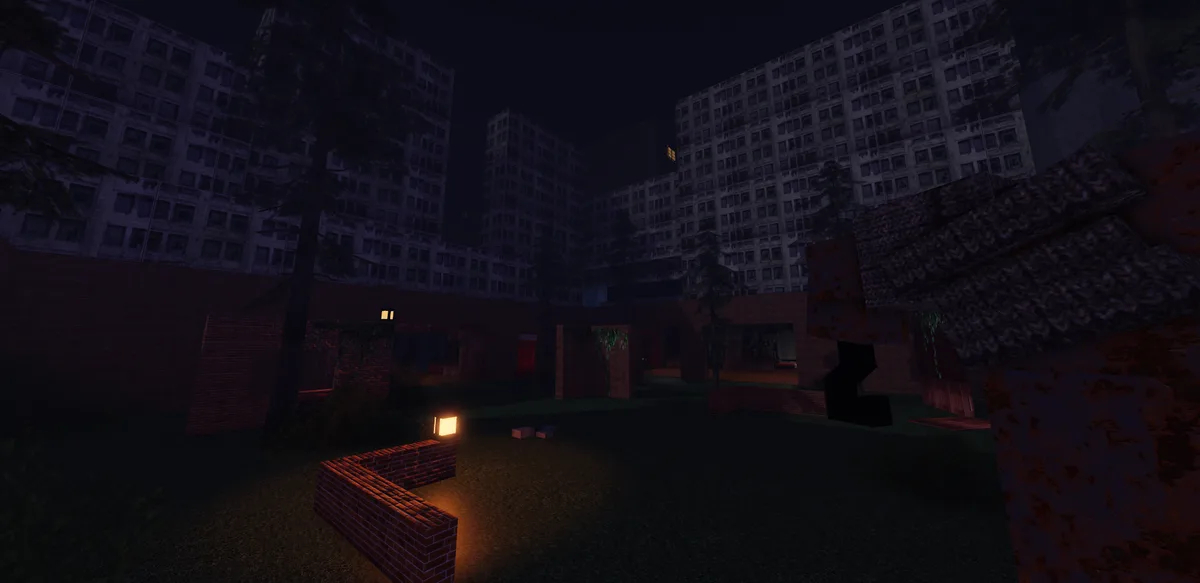
The Horror Hotel map in Forsaken. Image: Forsaken (Roblox) © Forsaken Dev Group, via the Official Forsaken Wiki (forsaken.wiki).
Final Thoughts
Horror Hotel stands as Forsaken's most vertically complex map with its four-floor structure, functional elevator system, and split-level escape window creating gameplay dynamics unique to this environment. The map rewards vertical thinking: survivors who mentally track their floor position, pre-call elevators for instant escape, and use balcony drops for emergency chase breaks consistently outperform survivors who treat Horror Hotel like a wider Haunted Mansion map. The elevator system is the great equalizer, providing survivors with a chase-breaking tool that no amount of killer mechanical skill can prevent when used with proper spacing and timing. Your Horror Hotel improvement path begins with floor familiarization (2-3 custom matches identifying room numbers, landmarks, and generator positions on each floor), progresses through elevator mechanic mastery (10-15 matches practicing pre-call timing, chase-break rides, and fake-out techniques), and culminates in vertical chase integration (30-50 matches combining corridor looping with timed floor transitions and elevator escapes). The survivors who master Horror Hotel develop a three-dimensional spatial awareness that transfers to every multi-floor map in Forsaken, making this map's skill investment one of the highest-return learning experiences in the game. Check in to Horror Hotel prepared and you will check out consistently alive.
- • Horror Hotel is the tallest map in Forsaken with four floors connected by elevators, staircases, and balcony drops creating unmatched vertical gameplay
- • The two functional elevators are the map's defining mechanic providing 14-21 seconds of chase-breaking distance when used with proper spacing and timing
- • Always pre-call an elevator to your floor before starting generator repairs for instant escape availability that improves survival rates by 15-20%
- • The lobby reception desk loop is the strongest single structure providing 15-20 seconds of chase time and should be your primary ground-floor destination
- • Complete rooftop and dead-end room generators first to eliminate dangerous positions before late-game killer pressure intensifies on guest room floors
- • Exit gates split between ground floor and rooftop creating the most complex endgame in Forsaken requiring vertical team coordination for consistent escapes
- • Never enter elevators when the killer is within 16 studs and has line of sight as the elevator cab becomes an inescapable death trap during the ride
Start your Horror Hotel practice by spending one custom match riding both elevators between all four floors, timing the rides and memorizing which floor the elevator doors open onto. Then practice pre-calling elevators while standing at generators on the second and third floors. This elevator fluency creates the mechanical foundation for every advanced Horror Hotel strategy and immediately provides a chase-breaking tool unavailable on any other Forsaken map.
Related Forsaken Guides
Cool Carnival Map Guide - Forsaken Roblox (2026)
Master the Cool Carnival map in Forsaken. Complete guide to ride loops, tent hiding spots, generator locations, and carnival-specific strategies.
Haunted Mansion Map Guide - Forsaken Roblox (2026)
Navigate the Haunted Mansion map in Forsaken. Learn room connections, secret passages, generator spawns, and how to survive this spooky map.
Work at a Pizza Place Map Guide - Forsaken Roblox (2026)
Complete guide to the Work at a Pizza Place map in Forsaken. Learn kitchen loops, dining area strategies, and delivery route escapes.
The Tempest Map Guide - Forsaken Roblox (2026)
Survive The Tempest map in Forsaken. Complete guide covering storm mechanics, generator locations, visibility strategies, and optimal escape routes.
Planet Voss Map Guide - Forsaken Roblox (2026)
Master the Planet Voss map in Forsaken. Navigate alien terrain, find hidden generators, and use the unique environment for survival strategies.
Back to the ForsakenHub homepage for the full Forsaken Roblox guide hub, or browse all guides. You can also play the game directly on Forsaken on Roblox.