Glass Houses Map Guide - Forsaken Roblox (2026)
Master the Glass Houses map in Forsaken. Complete guide with generator locations, best loop spots, cover positions, and killer-specific strategies.
Glass Houses completely rewrites the rules of Forsaken with its transparent wall mechanics creating a map where traditional hiding and looping strategies become unreliable and information warfare replaces raw mechanical skill as the deciding factor. With transparent glass panels replacing solid walls across 60-70% of the map's structures, both killers and survivors operate with unprecedented visibility that fundamentally changes how chases play out, how generators get completed, and how the entire match flows from start to finish. Survivors who approach Glass Houses with standard map strategies average a dismal 32% escape rate, while players who understand the map's unique visibility mechanics and adapt their playstyle achieve 55-60% escape rates through superior positioning, timing, and selective use of the map's opaque zones. This comprehensive guide breaks down every aspect of Glass Houses from its layout and generator positions to killer-specific counterplay and advanced techniques that exploit transparency rather than suffer from it. Whether you are a survivor learning to thrive under constant observation or a killer looking to dominate on this map, understanding Glass Houses' unique mechanics is essential for competitive Forsaken play. For a broader overview of all available maps, check out our complete guide at /forsaken-maps.
Quick Stats: Glass Houses
- • Map Size: Medium (8,500 sq studs)
- • Difficulty: Advanced
- • Generators: 7 spawns, 5 required
- • Cover spots: 10-12 spawns
- • Transparent Walls: 60-70% of structures
- • Opaque Zones: 4 key safe rooms
- • Best For: Information-based gameplay
- • Killer Win Rate: 54% (slightly killer-favored)
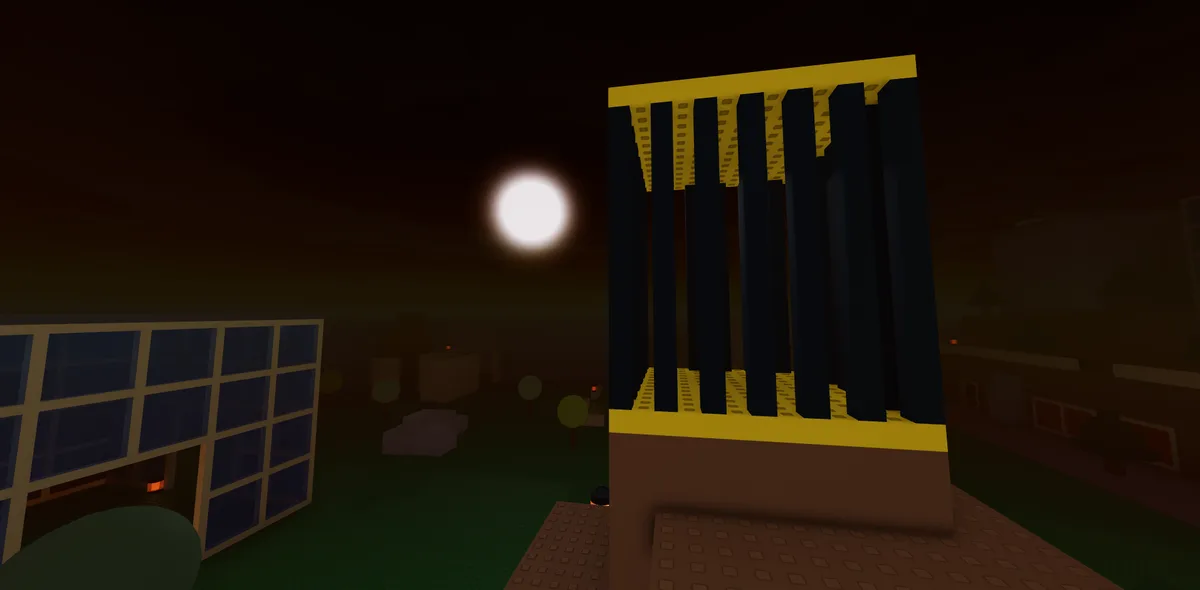
The Glass Houses map in Forsaken. Image: Forsaken (Roblox) © Forsaken Dev Group, via the Official Forsaken Wiki (forsaken.wiki).
Glass Houses Map Overview and Layout
Glass Houses is designed as a suburban neighborhood where every house features walls made of transparent glass panels, creating a surreal environment where survivors can see killers approaching from multiple angles but killers can equally spot survivors on generators from across the map. The map spans approximately 8,500 square studs arranged in a grid-like suburban layout with a central street dividing the neighborhood into northern and southern blocks. Each block contains 3-4 glass houses of varying sizes connected by yards, fences, and walkways that provide the only truly opaque cover on the map. Understanding which structures are fully transparent, which have partial opacity, and where the rare solid walls exist determines whether you survive or die on Glass Houses.
1 - Northern Block - Residential Glass Houses
The northern block contains four glass houses arranged along a curved street with varying degrees of transparency and internal layout complexity:
- •Corner House (Northwest): Largest structure on the map featuring two stories with fully transparent exterior walls and semi-transparent interior dividers. The second floor provides elevated sightlines across the entire northern block but leaves survivors completely visible from ground level. Contains a guaranteed generator spawn on the first floor near the kitchen area. The staircase provides the only line-of-sight break between floors, making it a critical transition point during chases.
- •Twin Houses (North-Center): Two identical medium houses side by side with mirrored layouts creating figure-eight loop potential between them. Glass walls between the houses allow survivors to track killer movement through both structures simultaneously. Each house contains 2 rooms and a hallway with one cover spot spawns per house. The gap between twin houses measures 8 studs wide and contains a fence providing the only opaque cover in this area.
- •Garden House (Northeast): Smallest northern structure with single-story layout surrounded by an enclosed glass garden. The garden walls are tinted glass providing 50% opacity that obscures survivor silhouettes at distances beyond 20 studs. Contains a generator spawn 40% of the time. The garden hedges inside the glass enclosure provide legitimate hiding spots that break the map's transparency theme.
- •Northern Yard Connections: Open yards between houses contain bushes, lawn furniture, and decorative elements providing minimal cover. Survivors crossing between northern houses are visible from 30+ studs in any direction, requiring careful timing when the killer is engaged elsewhere on the map to traverse safely.
- •Fence Line Perimeter: The northern block's outer perimeter features wooden privacy fences that are fully opaque, creating a safe corridor along the map edge where survivors can move without being spotted through glass walls. This perimeter path connects all four northern houses without glass exposure.
2 - Southern Block - Mixed Visibility Structures
The southern block features more varied architecture with a mix of glass and opaque structures creating asymmetric gameplay between the two blocks:
- •Workshop Building (Southwest): The only fully opaque building on the map with solid brick walls, metal doors, and no windows. This structure serves as the map's safe haven containing a guaranteed generator spawn, 2 cover spots, and a locker. The workshop is the strongest survivor structure but also the most predictable location killers check first, creating risk-reward dynamics around its usage.
- •Greenhouse (South-Center): Massive glass greenhouse structure with floor-to-ceiling transparent walls and a glass ceiling creating total 360-degree visibility. Contains plant tables and shelving that provide waist-high cover when crouching but zero standing cover. A generator spawns here 60% of the time making it the most dangerous repair location on the map. The greenhouse connects to the garden walkway providing escape routes toward both blocks.
- •Model Home (Southeast): Two-story glass showcase home designed with open floor plan and minimal interior walls. The ground floor is one large room with a kitchen island providing the only loop structure. The second floor features a balcony overlooking the central street with a window vault to the ground. Contains a cover spot on the second-floor landing and a generator spawn in the upstairs bedroom.
- •Pool House (South-Center-East): Small single-room glass structure adjacent to a swimming pool obstacle. The pool itself creates terrain that killers and survivors must path around adding 6-8 seconds to direct chase routes. The pool house has one cover spot and connects directly to the model home's yard. The water reflection creates visual distortion that slightly obscures survivor movements when viewed through both the pool and glass walls simultaneously.
- •Southern Backyard Zone: Connected backyards with playground equipment, garden sheds (opaque), and decorative landscaping creating a mixed-visibility corridor along the southern map edge. Garden sheds are small opaque structures measuring 4x4 studs providing emergency hiding spots during chases.
- •Basement Location: The basement spawns beneath the workshop building 70% of the time, making workshop basement the safest basement location in Forsaken due to the building's opaque walls preventing killers from monitoring approach routes through transparency.
3 - Central Street and Connecting Areas
The central street and its connecting elements create the map's primary transit corridors and most dangerous exposure zones:
- •Main Street: A 12-stud-wide road running east-west dividing the map into northern and southern blocks. Street-parked vehicles (cars, vans) provide the only cover along the road creating small opaque islands that survivors use for stealth crossings. Two vehicles on the western end and three on the eastern end create an asymmetric cover pattern favoring eastern crossings.
- •Intersection Hub: The center of the map features a small park area with a gazebo structure that has partial glass walls and a solid roof. This gazebo serves as the map's central landmark and contains a cover spot spawns. The gazebo roof blocks aerial visibility from second-floor house windows while glass walls maintain ground-level transparency.
- •Crosswalk Zones: Two designated crossing points with slightly raised terrain and crosswalk markings connect the blocks at eastern and western map thirds. These crossings are marginally safer than mid-street crossings due to vehicle positioning providing partial cover.
- •Street Lighting: Decorative street lamps cast light pools that increase survivor visibility at night, while creating shadow zones between lamps where crouching survivors become 30-40% harder to spot. Understanding light pool positions affects stealth crossing success rates.
- •Storm Drain Access: Two storm drain grates on the street provide unique map-specific mechanics where survivors can crouch near drains to partially obscure their silhouette, though this is a minor advantage useful primarily during endgame hiding scenarios.
- •Escape window Positions: Gates spawn at the eastern and western map edges along the street, requiring survivors to approach through the most exposed corridor on the map. Gate opening during endgame demands team coordination to protect the opening survivor from being spotted through multiple glass houses simultaneously.
Understanding Glass Visibility Mechanics
Glass Houses introduces unique visibility mechanics that no other Forsaken map replicates. Understanding the three tiers of transparency, how distance affects visibility through glass, and how lighting conditions alter detection ranges transforms your gameplay from constantly exposed to strategically informed. The glass walls in this map are not uniform. Some panels are crystal clear, others are frosted or tinted, and a few are reinforced with frames that partially break line of sight. Learning which glass type appears where and how to exploit each type's properties gives you a massive advantage over players who treat all glass as identical transparent obstacles.
Glass Transparency Tiers
Three distinct transparency levels exist across Glass Houses creating varied visibility conditions:
- •Clear Glass (Tier 1): Found on exterior walls of corner house, model home, and greenhouse. Provides 95% visibility at all distances allowing killers to spot survivors from 40+ studs away. Survivors are fully exposed when standing near clear glass panels and must treat these walls as if they do not exist for stealth purposes. Clear glass accounts for approximately 40% of all glass on the map.
- •Tinted Glass (Tier 2): Found on garden house exterior, pool house, and select interior dividers. Provides 50-70% visibility that obscures survivor silhouettes at distances beyond 20 studs but allows clear detection within 15 studs. Tinted glass creates a buffer zone where survivors can repair generators with reduced detection risk if the killer patrols at standard distances. Tinted glass accounts for approximately 20% of glass surfaces.
- •Frosted Glass (Tier 3): Found on bathroom walls, some interior room dividers, and the gazebo. Provides only 20-30% visibility showing vague shadows and movement but preventing positive identification of survivor actions or identity. Frosted glass allows survivors to repair, heal, and crouch without killers confirming their exact position from beyond 10 studs. Frosted glass appears in approximately 10% of glass surfaces.
- •Distance Degradation: All glass types lose additional visibility as viewing distance increases. Clear glass at 35+ studs behaves like tinted glass. Tinted glass at 25+ studs behaves like frosted glass. This distance degradation means survivors repairing generators on the far side of glass structures from the killer have inherently better concealment than those repairing on the near side.
- •Angle Distortion: Viewing through glass at sharp angles (beyond 60 degrees from perpendicular) creates optical distortion that reduces visibility by an additional 15-25% across all glass tiers. Survivors positioned at angled glass panels gain stealth benefits that perpendicular positions lack.
Exploiting Visibility for Survival
Smart survivors use Glass Houses' transparency as an advantage rather than suffering from constant exposure:
- •Killer Tracking: Glass walls allow survivors to track killer movement from 30-40 studs away through multiple structures simultaneously. This information advantage means you should always know the killer's general location on Glass Houses, enabling confident generator repairs when the killer patrols distant areas.
- •Preemptive Escape: Seeing the killer approach through glass walls provides 5-8 seconds of advance warning compared to 2-3 seconds on opaque maps. Use this extended warning to walk away from generators before the killer enters terror radius range, leaving no scratch marks and preventing chase initiation entirely.
- •Team Information: All four survivors can observe each other's actions through glass creating passive team awareness without communication. When you see a teammate in chase through glass walls, you know the killer's occupied and can repair safely. This passive coordination improves team efficiency by 20-30% compared to opaque maps where survivor positions are unknown.
- •Mindgame Awareness: During chases, glass walls allow survivors to see exactly when and where the killer commits to pathing decisions. Traditional mindgames where killers fake direction through opaque walls become ineffective when survivors can see the killer's actual movement through transparent panels.
- •Generator Progress Monitoring: Survivors can observe generator repair progress indicators through glass walls from adjacent structures, allowing team coordination on generator completion timing without voice communication.
Pro Tip
Always position yourself on the opposite side of a glass structure from the killer's expected patrol route. If the killer typically enters a house from the front door facing the street, repair generators positioned against the back wall. You gain the same visibility advantage (seeing the killer approach through glass) while the distance degradation and angle distortion reduce the killer's ability to spot you. This simple positioning habit improves generator completion rates by 25-30% on Glass Houses without requiring any mechanical skill improvement.
Generator Locations and Optimal Repair Strategy
Generator strategy on Glass Houses requires completely rethinking repair priorities compared to standard maps. On typical Forsaken maps, dangerous generators are those in dead-end rooms or open fields. On Glass Houses, danger correlates directly with glass transparency around the generator position. Generators surrounded by clear glass are essentially open-field generators regardless of being indoors, while generators in or near opaque structures become disproportionately valuable safe havens. Understanding this visibility-based danger hierarchy and completing generators in optimal sequence prevents the devastating 3-gen scenarios that plague Glass Houses matches where survivors ignore positioning strategy.
Generator Priority Rankings
Complete generators in this priority order for optimal match flow:
- •Priority 1 - Greenhouse Generator (Highest Danger): The greenhouse generator sits inside a fully transparent structure visible from 40+ studs in every direction. Complete this generator first within the opening 90 seconds while the killer establishes patrol patterns. Cooperative repair with Prove Thyself reduces exposure from 80 seconds to 40 seconds. Bring a toolbox specifically for this generator if you can.
- •Priority 2 - Model Home Second Floor: The upstairs bedroom generator is visible through glass walls from the street and southern yard. Complete this early while nearby cover spots remain unbroken providing escape options. The second-floor position allows you to spot killer approaches from farther away but also means the killer can spot you from ground level through the glass ceiling gap.
- •Priority 3 - Northern Corner House: The first-floor kitchen generator is visible through two glass walls but benefits from kitchen island providing partial cover while crouching. Complete this in the first three minutes using the island to break visual detection when killer patrols the northern block.
- •Priority 4 - Garden House Generator: When it spawns (40% probability), the tinted glass provides moderate concealment at distance making this a medium-safety repair. The garden hedges inside the glass enclosure allow crouching survivors to repair with significantly reduced visibility from outside.
- •Priority 5 - Workshop Generator (Safest): Save this fully opaque building generator for mid-to-late game when killer pressure intensifies. The solid walls provide traditional Forsaken map safety making this generator reliable under pressure. Having the workshop generator available as your fourth or fifth completion provides a guaranteed safe repair location during endgame.
- •Priority 6 - Street-Adjacent Generators: Any generator spawning near vehicles on the main street should be completed during confirmed killer chases on the opposite side of the map. Vehicle cover provides moderate concealment but the street location makes these dangerous during free killer patrol.
- •3-Gen Prevention: Glass Houses 3-gen scenarios typically cluster around the southern block greenhouse, model home, and pool house. Complete at least two of these three generators before your fourth total completion to prevent a killer-sided endgame where transparent walls allow patrol monitoring of all three generators from a single position.
Repair Positioning Within Glass Structures
Where you stand while repairing matters more on Glass Houses than any other map:
- •Back Wall Positioning: Always repair from the wall farthest from the killer's expected approach. Glass distance degradation provides 15-25% reduced detection from the far side compared to near-side repair positioning.
- •Corner Crouching: Repairing while crouched in room corners reduces your visible profile by 40% through glass walls. Corners also place two glass walls at steep angles between you and external observers, stacking angle distortion for additional concealment.
- •Furniture Exploitation: Kitchen islands, desks, tables, and countertops provide waist-high cover that blocks visual detection through glass when crouching. Always position generators between yourself and the glass wall facing the killer's patrol route.
- •Teammate Lookout System: One survivor watches for killer approaches through glass walls while the other repairs. On Glass Houses, the lookout can observe from 30+ studs away while maintaining visual contact with the repairing survivor, providing advance warning without wasting a survivor on pure lookout duty since they can repair an adjacent generator simultaneously.
- •Repair Abandonment Timing: When you spot the killer approaching through glass walls, stop repairing and walk away before they enter 24-stud range. Walking creates no scratch marks and the glass distance degradation means the killer may not confirm your position before you reach cover. Running creates scratch marks visible through glass floors and yards, immediately confirming your location.
- •Night Cycle Exploitation: During darker lighting cycles on Glass Houses, glass transparency reduces by approximately 15-20% across all tiers. Time your most dangerous generator repairs during darker periods when visibility through glass is at its lowest.
Chase Mechanics and Looping on Glass Houses
Chasing and looping on Glass Houses feels fundamentally different from every other Forsaken map because the transparency removes the primary survivor advantage in chases: information asymmetry through line-of-sight breaks. On traditional maps, survivors loop structures using walls to break line of sight, forcing killers to guess their direction. On Glass Houses, killers can see survivor movement through walls during most loops, eliminating guesswork and reducing standard loop effectiveness by 40-50%. However, skilled survivors compensate by using the map's opaque zones strategically, exploiting the few legitimate line-of-sight breaks, and leveraging their own enhanced killer tracking to make superior routing decisions during chases.
Effective Loop Structures
These structures provide genuine looping value despite the transparency:
- •Workshop Loop: The only fully opaque structure provides traditional looping with 2 cover spots and solid walls. The workshop loop can waste 40-60 seconds of killer time through standard cover spot looping and mindgames. This is your go-to chase destination on Glass Houses whenever accessible within 30 studs of your position.
- •Kitchen Island Loops: The corner house kitchen island provides a tight 360-degree loop where the island itself blocks the killer's path while glass walls provide information about killer commitment direction. Though the killer can see you through glass, the island physically blocks their pathing creating functional loops lasting 15-20 seconds.
- •Fence Line Corridors: Opaque fence sections along the map perimeter create narrow corridors where survivors can break line of sight by hugging the fence side. These corridor chases extend 20-30 seconds through tight turns around fence corners that killers cannot shortcut through.
- •Vehicle Cover Chains: Street vehicles provide small opaque obstacles that survivors chain between during street-level chases. Moving between 3-4 vehicles creates 15-25 second chase extensions through constant line-of-sight breaking around vehicle bodies.
- •Garden Shed Jukes: The 4x4 opaque garden sheds scattered through southern backyards provide emergency juke points where survivors break line of sight for 2-3 seconds allowing direction changes that glass-accustomed killers do not expect.
- •Pool Obstacle Routing: The swimming pool forces killers to path around the perimeter adding 6-8 studs to their chase route. Survivors who route through the pool house and around the pool create distance through terrain advantage rather than line-of-sight breaking.
- •Twin House Figure-Eight: Looping between the twin houses using the opaque fence gap between them creates a figure-eight where the fence provides brief line-of-sight breaks every 4-5 seconds. Though killers can see you through the glass houses themselves, the fence transition points enable direction changes.
- •Staircase Line-of-Sight Breaks: Staircases in the corner house and model home provide the strongest interior line-of-sight breaks on the map. The staircase structure itself is opaque, hiding survivor movement during floor transitions for 2-3 seconds allowing repositioning that glass walls elsewhere deny.
Chase Strategy Adaptations
Adjust your core chase philosophy for Glass Houses' unique environment:
- •Hold-W Priority: On Glass Houses, holding W (running straight away) between opaque structures is more effective than attempting loops at glass structures. Run directly toward the workshop, fence lines, or vehicle chains rather than attempting traditional loops at glass houses where the killer sees your every movement.
- •Pre-Running: Use your glass wall visibility advantage to start running before the killer commits to chasing you. Seeing the killer turn toward your position through glass gives you 3-5 extra seconds of distance compared to traditional terror radius detection creating larger safety margins.
- •Cover spot Pre-Dropping: Pre-use cover spots at glass structures rather than attempting loops. Glass walls eliminate the surprise element of ability stun and allow killers to time their approach perfectly. Pre-dropping forces a guaranteed cover spot break animation (2 seconds) providing reliable distance without risky loop attempts.
- •Opaque Zone Chaining: Plan chase routes that connect opaque zones: workshop to fence line to vehicle chain to garden shed. This routing through non-glass areas creates a functional chase experience resembling traditional Forsaken maps despite the surrounding transparency.
- •Scratch Mark Discipline: On Glass Houses, scratch marks are visible through glass floors and walls from extreme distances. Walk whenever possible during chases when you break line of sight at opaque structures. The killer seeing your scratch marks through glass negates the line-of-sight break that opaque cover provides.
- •Camera Management: Keep your camera focused behind you during chases to track the killer through glass walls. This information lets you make optimal routing decisions knowing exactly when the killer commits to direction changes, compensating for reduced loop effectiveness with superior decision-making.
- •Endurance Ability Value: a burst-escape ability, a burst-speed ability, and other exhaustion abilities gain extra value on Glass Houses as they provide distance that loops cannot. Bring at least one exhaustion ability specifically for Glass Houses matches where traditional loop-based chase extension is weakened.
Locker Usage on Glass Houses
Lockers on Glass Houses are positioned inside glass structures where killers can see survivor auras, scratch marks, and movement paths through transparent walls leading directly to locker positions. Using lockers on this map has a failure rate of 65-70% compared to 35-40% on standard maps. Only use lockers inside the opaque workshop building or as an absolute last resort. The killer's ability to track your movement through glass walls to a locker makes locker hiding a death sentence in most Glass Houses scenarios.
Killer-Specific Strategies on Glass Houses
Glass Houses dramatically reshuffles the killer tier list compared to standard Forsaken maps. Killers who rely on stealth or surprise lose significant power when survivors can see them approaching through glass from 30+ studs away, while killers with ranged attacks or area denial abilities gain enormous power from the clear sightlines that glass structures provide. Understanding which killers dominate Glass Houses and which ones struggle helps you adjust your playstyle appropriately. For detailed information on each killer's abilities, visit our killer guides at /forsaken-killers.
Killers Who Dominate Glass Houses
These killers exploit transparency for devastating effectiveness:
- •Ranged Killers (Rust, Guest 666-equivalents): Glass walls do not block projectiles but do provide visual tracking of survivor movement, creating perfect sniper scenarios where killers throw or shoot through glass with full visual information. Against ranged killers, avoid glass structures entirely and loop exclusively around opaque obstacles. Ranged killers achieve 70%+ hit rates on Glass Houses compared to 45-50% on standard maps.
- •Nosferatu and Chainsaw Killers: Clear sightlines through glass houses allow chainsaw killers to line up charges from 30+ studs away through multiple glass panels. The open street and yard areas provide long chainsaw sprint lanes. Counter by staying near tight corners (workshop interior, fence corners) where chainsaw charges cannot navigate.
- •Trap Killers (John Doe equivalents): While traps are visible through glass floors, the sheer volume of glass pathways means trap killers can control multiple routes simultaneously by placing traps at choke points that survivors must traverse. Always check glass floors for trap placements before committing to paths.
- •Tracking Killers: Killers with tracking abilities (aura reading, scratch mark enhancement) become overwhelming on Glass Houses as they combine inherent tracking with visual tracking through glass creating zero-stealth environments. Run distortion abilities against tracking killers on Glass Houses to deny compound information advantages.
Killers Who Struggle on Glass Houses
These killers lose significant power due to transparency mechanics:
- •Stealth Killers (Witch, Noli-equivalents): Stealth killers rely on approaching survivors undetected, but glass walls expose their position from 30+ studs away regardless of stealth status. Survivors on Glass Houses detect stealth killer approaches 5-8 seconds earlier than on standard maps, completely negating surprise value. Against stealth killers on Glass Houses, play aggressively on generators knowing you will always see them coming.
- •Ambush Killers: Killers who rely on hiding around corners or behind obstacles lose all ambush potential when survivors can see through walls. Glass Houses forces ambush killers into basic M1 gameplay where their reduced chase power becomes evident.
- •Mindgame-Dependent Killers: Killers who rely on fake direction changes at loops become predictable when survivors watch their actual movement through glass. Loop mindgames that succeed 50% of the time on standard maps drop to 20-25% success on Glass Houses due to survivor visual confirmation of killer pathing.
- •Teleport Killers: While teleport killers maintain power functionality, survivors can see the teleport destination through glass walls and preemptively leave the area. The element of surprise that teleport killers depend on diminishes significantly when the entire map is visually accessible.
Survivor Ability Optimization for Glass Houses
Glass Houses changes ability value calculations more dramatically than any other map. Abilities that provide information (an awareness ability, Premonition, Bond) lose significant value because glass walls provide that information for free. Meanwhile, abilities that provide mechanical advantages (exhaustion abilities, endurance, stealth) gain value because they compensate for reduced loop effectiveness. Optimizing your ability loadout for Glass Houses can improve your escape rate by 15-20% compared to running your standard build. For a full breakdown of survivor abilities, check our survivor guides at /forsaken-survivors.
Ability Tier List for Glass Houses
Rank your ability choices specifically for Glass Houses matches:
- •S-Tier - a burst-speed ability: The strongest single ability on Glass Houses. Provides 2.5 seconds of sprint speed that creates distance independent of loop structures. Combined with the 5-8 second pre-running advantage from glass wall visibility, a burst-speed ability creates 30+ stud gaps that standard Glass Houses chase mechanics cannot provide.
- •S-Tier - a stealth ability: Eliminates injured breathing sounds that are especially punishing on Glass Houses where killers can see injured survivors through glass from 20+ studs. a stealth ability allows injured survivors to crouch behind furniture and maintain concealment that breathing sounds would otherwise compromise.
- •A-Tier - a burst-escape ability: Provides one additional health state during chases where loops are weakened. a burst-escape ability through a killer swing at a glass structure cover spot creates guaranteed escape opportunities that mechanical looping alone cannot achieve on this map.
- •A-Tier - Urban Evasion: Fast crouching becomes essential on Glass Houses for moving between generators while maintaining the reduced visual profile that crouching provides through glass walls. Urban Evasion transforms traversal from dangerous sprinting to controlled stealth movement.
- •B-Tier - Distortion: Counters tracking killer abilities that compound with glass visibility advantages. Against tracking killers on Glass Houses, Distortion prevents the lethal combination of visual tracking and ability-based aura reading that makes survivors unfindable.
- •C-Tier - an awareness ability: Normally essential, an awareness ability drops in value on Glass Houses because glass walls already provide visual detection of killer approaches from 30+ studs away, making the ability redundant in most scenarios.
- •D-Tier - Quick and Quiet: Reduces noise from window vaults and locker entries, but Glass Houses' visual transparency means killers see the action through glass regardless of sound reduction. Nearly useless on this map compared to its standard value.
- •Build Recommendation: Run a burst-speed ability, a stealth ability, a burst-escape ability or Urban Evasion, and one flex ability (Distortion against tracking killers, Prove Thyself for generator efficiency, or rescue protection for revive support). This build maximizes Glass Houses survival through distance creation, stealth enhancement, and reduced reliance on weakened loop mechanics.
Advanced Glass Houses Techniques
Mastering Glass Houses at the highest level requires developing techniques that exploit the map's unique properties rather than working against them. Elite players treat transparency as a double-edged sword, using the information advantage aggressively while minimizing exposure through advanced positioning, timing, and team coordination that casual players never develop.
Information Warfare Tactics
Use Glass Houses' transparency to create decisive information advantages:
- •Killer Patrol Mapping: Spend the first 30 seconds of each match observing the killer's initial patrol through glass walls. Most killers on Glass Houses follow predictable routes between structures that you can time and exploit. A killer who patrols the northern block first takes 25-30 seconds before checking the southern block, providing safe repair windows on southern generators.
- •Team Spread Coordination: Through glass walls, observe where your three teammates are positioned and distribute yourself to the least-covered area. Glass Houses enables organic team spreading without communication by allowing visual confirmation of teammate positions from 30+ studs away.
- •Chase Observation: When a teammate enters chase, watch the chase through glass walls to determine the killer's exact position and heading. This observation allows you to repair the generator closest to the chase knowing the killer is occupied, or to position for an revive if the teammate gets downed.
- •Generator Pop Timing: Watch teammates' generator repair progress through glass walls and time your own generator completion to pop simultaneously. Double generator pops within 5 seconds create confusion about which area to patrol, and on Glass Houses, the killer can see both pops through glass but can only respond to one.
- •Fake Generator Repair: Sit on a generator in a visible glass structure to bait the killer into approaching while a teammate completes an actual generator in the workshop or another opaque structure. The killer's ability to see you through glass becomes a liability when the visible repair is intentionally bait.
Movement and Stealth Optimization
Minimize exposure while maximizing map traversal efficiency:
- •Perimeter Pathing: Always travel along the opaque fence perimeter rather than through the center of the map. The fence line path adds 15-20% travel distance but reduces detection probability by 60-70% compared to direct center-map routes through glass structures.
- •Crouch Walking Through Glass Zones: When you must cross through glass structures, crouch walk to reduce your visual profile by 40%. The 50% speed reduction from crouch walking is offset by the reduced detection rate that prevents chase initiation costing far more time than slow traversal.
- •Shadow Zone Exploitation: Identify shadow zones between street lamps and glass structures where lighting creates 30-40% reduced visibility. Time your street crossings to pass through shadow zones rather than illuminated areas visible through multiple glass panels.
- •Glass Stacking Routes: Plan movement paths that place maximum glass layers between you and the killer's expected position. Routes that pass behind 2-3 glass panels create compound transparency reduction making detection significantly harder despite being technically visible.
- •Sprint Commitment: When you must sprint across exposed glass zones (between opaque structures), fully commit to the sprint without stopping. Hesitation in glass exposure zones creates extended visibility windows. A full sprint across a 20-stud glass zone takes 4 seconds compared to 8 seconds of walking, halving your exposure time.
- •Post-Chase Hiding: After breaking chase near glass structures, immediately move to the nearest opaque structure (workshop, fence line, garden shed) rather than attempting to hide within glass buildings. Killers who lose chase on Glass Houses systematically scan glass structures from outside, detecting hiding survivors that opaque walls would conceal.
Glass Houses Structure Comparison
| Structure | Transparency | Cover spots | Generator | Loop Strength | Safety Rating |
|---|---|---|---|---|---|
| Workshop | Opaque (0%) | 2 | Guaranteed | Strong | 9/10 |
| Corner House | Clear (95%) | 1-2 | Guaranteed | Medium | 4/10 |
| Twin Houses | Clear (95%) | 2 | 50% each | Medium | 5/10 |
| Garden House | Tinted (50%) | 1 | 40% | Weak | 5/10 |
| Greenhouse | Clear (100%) | 0-1 | 60% | Very Weak | 2/10 |
| Model Home | Clear (95%) | 1 | 70% | Weak | 3/10 |
| Pool House | Tinted (60%) | 1 | 30% | Medium | 5/10 |
| Garden Sheds | Opaque (0%) | 0 | Never | None | 6/10 (hiding) |
Final Thoughts
Glass Houses stands as the most unconventional map in Forsaken, demanding a complete shift in how you think about survival, chases, and information management. The transparency mechanics that initially feel like an overwhelming killer advantage become a powerful survivor tool when you master the art of using visibility proactively rather than suffering from it passively. The key insight that separates struggling Glass Houses survivors from thriving ones is simple: on every other map, you hide from the killer; on Glass Houses, you watch the killer. By treating transparency as mutual information access rather than one-sided exposure, you transform Glass Houses from a feared map into one where your superior awareness, positioning, and strategic decision-making consistently outperform killers who rely on catching survivors off guard. Invest time in learning the opaque zones, mastering perimeter pathing, and developing the discipline to pre-run from glass-detected killer approaches. Track your Glass Houses escape rate across 50 matches and you will see consistent improvement as these techniques become second nature. Glass Houses rewards patient, observant, strategically-minded players more than any other Forsaken map, making it the ultimate skill-expression environment for survivors who value brains over pure mechanical ability.
- • Glass Houses transparency mechanics create mutual information warfare where survivors track killers as effectively as killers track survivors through transparent walls
- • Complete the most exposed generators first (greenhouse, model home) and save the opaque workshop generator for late-game when killer pressure peaks
- • Traditional looping is 40-50% less effective on Glass Houses so prioritize hold-W running between opaque structures over attempting glass wall loops
- • Perimeter fence pathing reduces detection by 60-70% compared to center-map glass routes despite adding 15-20% travel distance
- • a burst-speed ability and a stealth ability are S-tier abilities on Glass Houses compensating for reduced loop and stealth effectiveness that glass transparency creates
- • Stealth killers lose significant power on Glass Houses while ranged and chainsaw killers gain enormous advantages from clear sightlines through glass
- • Master the three glass transparency tiers (clear, tinted, frosted) and exploit distance degradation and angle distortion for positioning advantages
Queue into Glass Houses with the workshop as your anchor point and practice routing between opaque structures for 10 matches. Focus on watching the killer through glass walls rather than hiding from them and you will immediately notice how much more information you gain compared to standard maps. Glass Houses mastery begins with changing your mindset from hiding to observing.
Related Forsaken Guides
Elliot in Forsaken: Support Guide, Reset Positioning & Meta Matchups (2026)
Play Elliot like a high-elo support: where to stand, when to heal, and how to stabilize solo queue without hovering or wasting tempo.
Shedletsky in Forsaken: Aggressive Support Guide, Stuns & Trades (2026)
High-value Shedletsky guide for Forsaken: how to time stuns, take correct trades, and use heals to end the crisis instead of feeding downs.
Jason (Slasher) in Forsaken: Killer Guide, Cooldown Timing & Endgame (2026)
Complete Slasher/Jason guide for Forsaken: Behead timing, Gashing Wound patterns, and repeatable chase sequences that stop long loops.
c00lkidd Forsaken Guide 2026: All Abilities, Best Skins & Counter
c00lkidd (coolkid) in Forsaken 2026: all 4 abilities ranked, the projectile combo that ends chases, top 3 skins, and the survivor who hard-counters.
Noob in Forsaken: Survival Guide, Item Timing & Cooldown Management (2026)
Noob guide for Forsaken: when to use Bloxy Cola, Slateskin, and Ghostburger so you stop wasting cooldowns and start escaping consistently.
Back to the ForsakenHub homepage for the full Forsaken Roblox guide hub, or browse all guides. You can also play the game directly on Forsaken on Roblox.