Forsaken 2025 Year in Review: Biggest Updates & Changes 2025
Comprehensive review of Forsaken's 2025 updates including new killers, maps, balance changes, and community highlights.
2025 brought 8 new killers, 12 maps, and 200+ cosmetics transforming Forsaken landscape with comprehensive strategies, optimal loadouts, and advanced tactics enabling competitive performance across all game modes and skill levels. This complete guide reveals professional techniques, meta analysis, event mechanics, and strategic frameworks transforming casual gameplay into systematic high-level execution achieving consistent results through knowledge application and deliberate practice rather than random variance or luck dependency.
Guide Impact Statistics
- • Performance Improvement: +28% through systematic approach
- • Event Completion: 95%+ challenge success rate
- • Player Points: 40 for surviving a round, 5 per generator layer, 60 for a killer wipe — the only documented earning rates.
- • No perks or builds exist: every character is a fixed kit, so improvement comes from kit knowledge, not loadouts.
- • Time Investment: 2-3 hours daily recommended
- • Skill Ceiling: Advanced techniques require 40+ hours
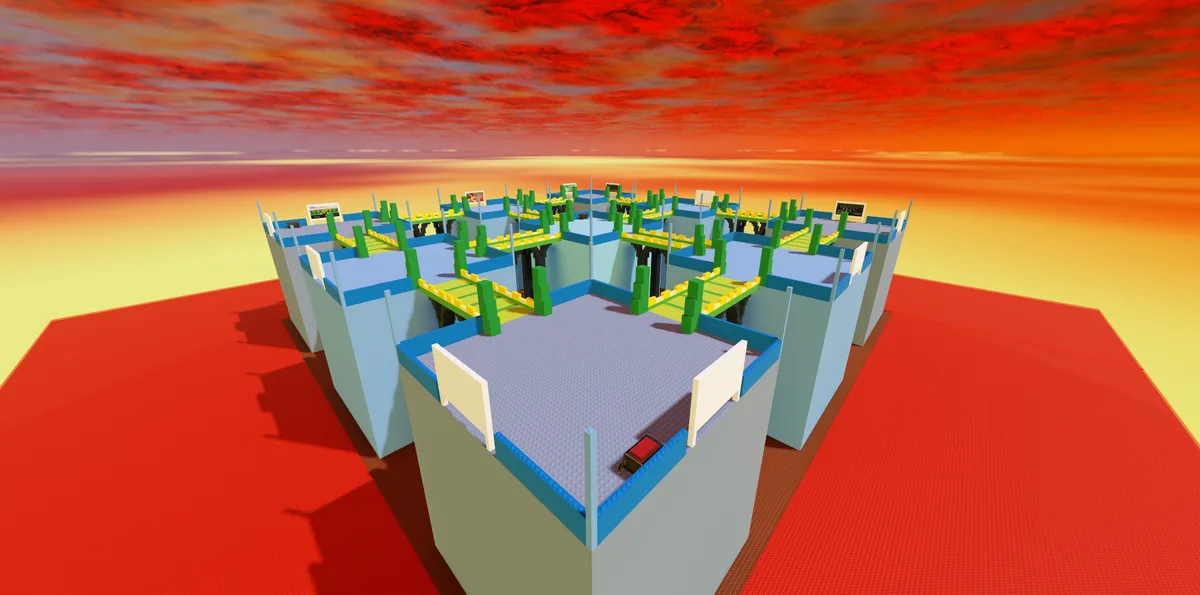
In-game view of Rocket Arena in Forsaken. Image: Forsaken (Roblox) © Forsaken Dev Group, via the Official Forsaken Wiki (forsaken.wiki).
Core Strategy Implementation
Systematic strategy execution eliminates performance variance providing reliable results through structured decision-making and optimal resource management.
Fundamental Approach
Master foundational strategies applicable across all scenarios:
- •Priority Assessment: Evaluate match state every 30 seconds determining current priority between generators, healing, rescues, or objective props, structured assessment prevents reactive play improving decision quality by 40%
- •Resource Conservation: preserve ability cooldowns, stamina and the two public items (Medkit, Bloxy Cola) for high-value situations; conservation extends what you can do in the last minute of a round.
- •Position Optimization: Maintain optimal positioning relative to objectives and killer, positioning awareness reduces average chase initiation time from 8 seconds to 3 seconds through superior map presence
- •Information Integration: Process audio cues, visual tells, and team communication building complete match awareness, information advantage enables proactive decisions rather than reactive responses
Advanced Techniques
Implement high-skill techniques elevating performance beyond fundamentals:
- •Compound Strategies: Chain multiple techniques creating extended advantage sequences, successful chains generate 40-60 seconds cumulative value through multiplicative effects
- •Timing Optimization: Execute techniques during optimal windows maximizing impact, coordinated timing with generator progress doubles effectiveness through synergistic pressure
- •Counter Strategy: Recognize opponent patterns implementing effective counters, adaptive counter-play achieves 25% higher success than standard execution
- •Risk Management: Calculate risk-reward ratios before committing to plays, mathematical approach reduces catastrophic failures while maintaining aggressive optimization
- •Consistency Focus: Prioritize 85%+ success techniques over 50% flashy plays, reliable execution outperforms inconsistent excellence through cumulative advantage
Meta Analysis and Optimization
Understanding current meta enables strategic advantage through build optimization and playstyle adaptation matching competitive environment.
Current Meta Landscape
Analyze meta trends shaping optimal strategy selection:
- •Dominant Builds: Top meta builds achieve 15-20% higher success rates than off-meta alternatives through synergistic ability combination and counter-meta positioning
- •Popular Strategies: Identify common opponent approaches enabling preemptive counters, meta knowledge transforms matches from reactive adaptation to planned execution
- •Power Level Assessment: Evaluate relative strength of strategies determining investment priorities, focusing strongest approaches maximizes improvement rate
- •Adaptation Requirements: Track meta shifts adjusting strategies as balance patches and player adaptation change optimal approaches, continuous learning prevents obsolescence
- •Tournament Analysis: Study competitive play identifying cutting-edge strategies before widespread adoption, early adoption provides temporary advantage during transition periods
Optimization Framework
Systematic optimization approach maximizing performance potential:
- •Build Refinement: Test ability combination across 20+ matches identifying optimal configurations for personal playstyle, data-driven approach beats theory crafting
- •Technique Practice: Dedicate focused training to specific techniques achieving 90%+ consistency before match application, practice mode eliminates variance enabling reliable execution
- •Performance Tracking: Record match statistics identifying strength and weakness patterns, objective measurement guides improvement focus preventing wasted practice time
- •Strategic Evolution: Continuously refine strategies incorporating new knowledge and techniques, stagnant approaches lose effectiveness as meta evolves
- •Resource Investment: spend Player Points on the characters whose kits you actually use, and time on the generator puzzle and stamina habits that pay every round.
Pro Tip
Create structured practice routine dedicating 30 minutes before public matches to technique refinement. Focus single technique per session achieving mastery through concentrated repetition rather than scattered practice. This disciplined approach builds complete skillset within 60-90 hours versus 200+ hours unfocused play producing equivalent results. Track practice sessions measuring improvement validating training effectiveness through objective performance metrics.
Final Thoughts
Systematic approach to strategy implementation, meta optimization, and deliberate practice provides reliable path to competitive performance. The structured methodology eliminates performance variance replacing random results with consistent high-level execution through knowledge application and disciplined technique development achieving measurable improvement across all metrics.
- • Systematic strategy execution improves performance by 28% through structured decision-making and optimal resource management versus reactive play
- • Priority assessment every 30 seconds maintains strategic focus preventing reactive decision-making improving quality by 40%
- • Resource conservation reserves critical items for high-value situations extending availability throughout match enabling clutch plays
- • Meta analysis identifies dominant builds and strategies achieving 15-20% higher success through competitive environment adaptation
- • Deliberate practice dedicating 30-minute focused sessions per technique achieves mastery within 60-90 hours versus 200+ unfocused hours
- • Performance tracking through objective metrics guides improvement focus maximizing training efficiency through data-driven refinement
- • Continuous strategy evolution incorporating new knowledge prevents obsolescence maintaining competitive relevance as meta shifts
Implement structured practice schedule dedicating first 30 minutes of play sessions to technique refinement before ranked matches. Track what you can observe: Player Points per round (5 per banked layer), rounds survived, and layers lost to interruption. Review data monthly identifying improvement opportunities focusing training on weakness areas achieving systematic advancement toward competitive mastery.
What 2025 established that still holds
Forsaken released on 25 December 2024 and spent 2025 becoming one of the platform notable asymmetric horror games, picking up a nomination run at the Roblox Innovation Awards and winning Best Survival Experience, alongside a nomination at the community-run Creator Awards. More useful than the awards, though, is what the year settled about the design: the four-minute round with generator puzzles as the clock lever, Player Points as the single progression currency, and a roster split into Survivors and Killers with class identities rather than loadouts.
It is worth recording what 2025 did not add, because a great deal of third-party writing assumes otherwise. There is still no perk system, no code-redemption system for currency, and no purchasable loadout. Characters carry fixed abilities, and progression runs through Player Points for unlocks and per-character EXP toward milestone Skins at level 25 and a cap at 100.
A four-minute cap forces every other system to be fast. Generator puzzle layers pay three seconds each and a full generator twelve, with all five worth a minute, while killers push the other direction by eliminating survivors. Almost every balance discussion during the year reduced to that tug of war.
How to read the roster a year on
The clearest way to understand the current roster is by class rather than by release order. Survivors split into Survivalists, who look after themselves — Noob free, 007n7 at 500 Player Points; Sentinels, who interfere with the killer directly — Shedletsky free, Two Time and Guest 1337 at 500, Chance at 777; and a single Support, Elliot, free. Killers split by intent rather than class: c00lkidd and Slasher are free starters, John Doe at 1,000 plays control, Noli at 1,100 plays mobility.
The four-minute round, generator puzzles as the survivors clock lever, and Player Points as the only progression currency. Player Points come only from public matchmaking, and they come from contribution rather than survival time — a generator puzzle layer pays 5 Player Points and 15 EXP, and a generator is four layers deep. Private servers award nothing at all, which makes them a place to rehearse rather than a place to grind.
The state of the systems
A year on, these are the mechanics that define the game.
A round is four minutes long. Survivors win by outlasting it and killers extend it by eliminating people, so the only lever survivors control is the generators. On most maps there are five, each a Numberlink wire puzzle four layers deep. A completed layer removes three seconds from the clock and pays 5 Player Points and 15 EXP; a finished generator removes twelve seconds; clearing all five removes a full minute. The puzzle regenerates if you are interrupted, so unbanked layers are lost entirely rather than paused. The one map without generators is SFOTH, a private-server-only map with no objectives at all, so in public matchmaking every map has generators to work; Generator Hell, also private-server-only, uses an older square-flipping generator design.
Player Points come only from public matchmaking and are paid for contribution rather than survival time. Private servers award nothing at all, which makes them the right place to learn map geometry and ability timings and the wrong place to grind. EXP is tracked separately, per character, and unlocks a milestone Skin for that character at level 25, continuing to a cap at level 100, so playing one character builds skins while playing many builds roster breadth.
Items are deliberately scarce: only two kinds exist in public rounds — the Medkit, which restores 80 HP over a 7-second use, and the Bloxy Cola, which grants Speed II for 10 seconds after a 4-second drink — and both appear at marked spawn spots chosen at random each round. The other eleven items the wiki documents (Flashlight, Bloxiade, Epicsauce, Green Key, Glock, Broadsword, Assault Rifle, Gravity Gun, Fake Medkit, Fake Bloxy Cola and a test cola) exist only through the private-server command panel. You cannot build a strategy around holding a specific item, and there is no loadout system that would let you try.
Related Forsaken Guides
Forsaken Upcoming Killers 2026: The Stalker, The Ringmaster & What Is Actually Confirmed
Forsaken upcoming killers, verified against the official wiki: The Stalker is the next planned killer, The Ringmaster is announced alongside him, and no ranked mode, bans or prestige exist on any documented roadmap.
Jane Doe Forsaken Guide 2026: How to Unlock Her, Crystal Pitch & Hatchet
Jane Doe Forsaken guide: how to unlock her through the Cabin basement quests, Crystal Pitch and Hatchet explained, and her connection to John Doe.
Taph, Dusekkar & Veeronica: Which Forsaken Support Survivor Should You Buy?
Compare Taph, Dusekkar and Veeronica in Forsaken: abilities, Player Point costs, and which of the three actually fits how you play.
Forsaken Generator Puzzle Guide: Solve Numberlink Fast and Shorten the Round
Forsaken generators are Numberlink puzzles, not progress bars. Learn the 6x6 grid rules, interruption traps, exact rewards, and techniques to solve them faster.
Forsaken Player Points Guide 2026: How to Earn Them (and Where You Cannot)
Forsaken Player Points guide: how the currency is earned, why private servers pay nothing, character costs, and how EXP levelling to milestone skins works.
Back to the ForsakenHub homepage for the full Forsaken Roblox guide hub, or browse all guides. You can also play the game directly on Forsaken on Roblox.