Underground War Map Guide - Forsaken Roblox (2026)
Complete Underground War map guide for Forsaken. Navigate the tunnels, find generators, and learn the best escape routes in this challenging underground map.
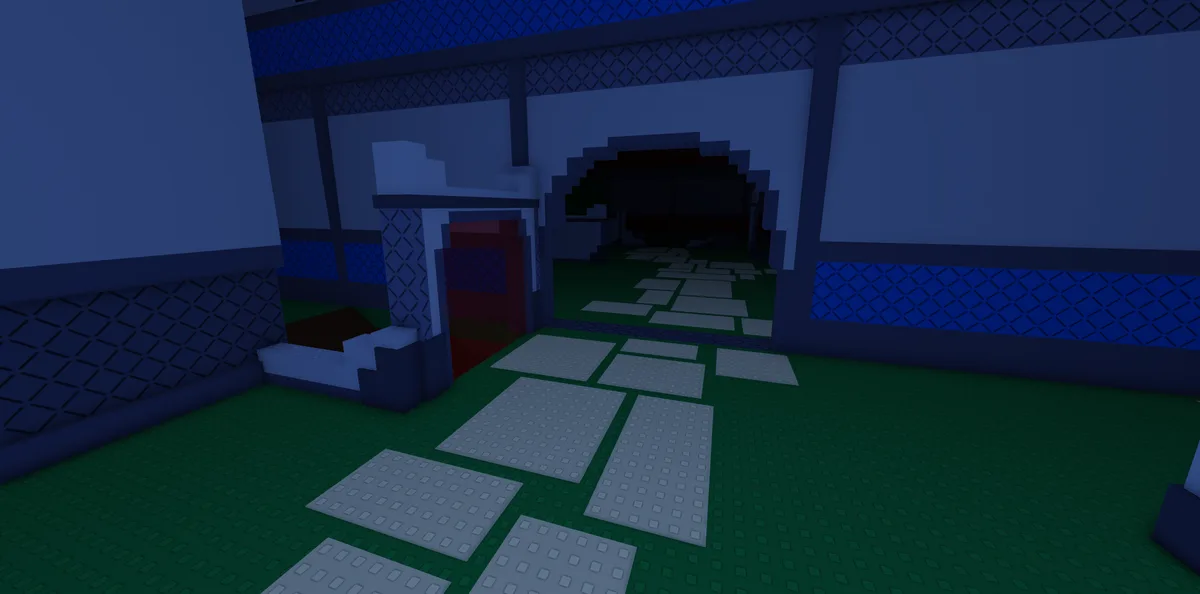
The Underground War map in Forsaken. Image: Forsaken (Roblox) © Forsaken Dev Group, via the Official Forsaken Wiki (forsaken.wiki).
Underground War is the single most killer-favored map in Forsaken with a crushing 62% killer win rate and for good reason: its sprawling tunnel network of narrow corridors, minimal lighting, and dead-end bunker rooms creates an oppressive environment where survivors are constantly funneled into chokepoints that killers control with minimal effort. The map's military bunker theme features concrete tunnels measuring just 5-7 studs wide, reinforced blast doors that create one-way traps, and lighting so dim that killers can approach within 10-12 studs before visual detection becomes possible. Survivors who load into Underground War without map-specific knowledge escape less than 28% of the time, making it the most punishing map in the game for unprepared players. However, survivors who invest in learning the tunnel layout, memorizing generator positions, and mastering the map's unique chokepoint mechanics achieve 48-52% escape rates that approach balanced gameplay through superior knowledge and disciplined play. This guide provides the complete blueprint for surviving Underground War, from tunnel navigation and generator sequencing to killer-specific counterplay and the advanced bunker control techniques that elite survivors use to neutralize this map's killer advantage. For how Underground War fits into the broader map pool, visit our complete map guide at /forsaken-maps.
Quick Stats: Underground War
- • Map Size: Large (11,000 sq studs across tunnel network)
- • Difficulty: Expert
- • Generators: 7 spawns, 5 required
- • Cover spots: 9-11 spawns
- • Tunnel Sections: 4 main wings + central hub
- • Lighting: Very Dark (30% base visibility)
- • Best For: Stealth-focused gameplay
- • Killer Win Rate: 62% (heavily killer-favored)
Underground War Tunnel Layout and Navigation
Underground War is laid out as a military bunker complex with a central command hub connecting four tunnel wings that branch outward like spokes on a wheel. Each wing terminates in a dead-end bunker room or connects to an adjacent wing through narrow maintenance passages. The entire map exists underground with no outdoor areas, no windows, and no natural light sources. Dim overhead fluorescent lights provide inconsistent illumination creating pools of light separated by stretches of near-darkness that both killers and survivors must navigate. Understanding the tunnel layout is not optional on this map; it is a survival prerequisite. Getting lost in the tunnels adds 15-25 seconds to every generator routing decision and leads survivors into dead ends where killers cornering them is inevitable.
1 - Central Command Hub
The heart of the bunker where all four tunnel wings converge:
- •Command Room: A 20x20 stud open room containing a large central table with maps and equipment creating the map's only wide-area loop structure. The command table provides 12-15 second loops with enough room for direction changes and mindgames. This room is the best chase destination on the entire map. Contains a guaranteed cover spot at the northern entrance and a generator spawn 50% of the time.
- •Four-Way Intersection: Corridors branch north, south, east, and west from the command room creating the primary navigation reference point. All tunnel navigation should orient relative to the command hub: learning which wing is north versus south versus east versus west prevents the disorientation that causes 40% of Underground War deaths.
- •Communications Alcove: A small side room off the command hub containing radio equipment and monitors. Provides a hiding spot and a generator spawn 30% of the time. The alcove has a single entrance making it a dead end during chases but a viable stealth position during killer patrols because killers rarely check it during fast rotation.
- •Ventilation Shaft Access: The command hub ceiling contains ventilation grates that provide auditory information about killer movement on the level above (if the map generates with the rare upper maintenance level). These grates also create ambient noise that masks footsteps within 8 studs of the hub.
- •Lighting Conditions: The command hub has the brightest lighting on the map with full fluorescent coverage providing 70% visibility compared to 30% in tunnels. This lighting advantage makes the command hub easier for both sides: survivors see killers approaching from tunnel entrances, but killers also spot survivors at the command table from 16+ studs.
- •Strategic Value: Controlling the command hub during endgame provides access to all four wings within 10-15 seconds, making it the optimal survivor positioning for final generator completions. However, killers who camp the hub control access to the entire map forcing survivors into dangerous tunnel approaches.
2 - North Wing - Barracks Section
Military sleeping quarters with bunk-lined corridors and storage areas:
- •Main Barracks Tunnel: A 6-stud-wide corridor running 40 studs from the command hub to the terminal barracks room. The corridor contains bunk beds lining both walls creating minor obstacles that slow killer movement by 5-8% through tight pathing between beds. Two overhead lights illuminate the first third and last third, leaving the middle section in near-darkness.
- •Terminal Barracks Room: Dead-end room at the end of the north tunnel containing 8 bunk beds arranged in rows. Contains a generator spawn 60% of the time and a cover spot between bed rows. The dead-end nature makes this room extremely dangerous: killers who spot survivors repairing here can body-block the single exit trapping them. Complete this generator only when killer is confirmed in a distant wing.
- •Storage Closet: Small side room halfway along the north tunnel containing weapon racks and supply crates providing hiding spots. The closet has no loop structures but its dark lighting and off-path position make it an effective stealth location during killer patrol rotations.
- •Maintenance Passage North-East: A narrow 4-stud-wide connector tunnel linking the north barracks to the east wing armory. This passage is the tightest space on the map where killer body-blocking is guaranteed if they catch you inside. However, it provides essential cross-wing transit that avoids the command hub chokepoint.
- •Barracks Ventilation: Air ducts above the bunk beds create ambient noise masking survivor footsteps and generator repair sounds within the barracks section. This noise cover makes barracks generators safer to repair than raw positioning suggests.
3 - East Wing - Armory and Workshop
Weapons storage and maintenance area with equipment-based loops:
- •Armory Corridor: 7-stud-wide tunnel with weapon racks and equipment cases lining walls. Wider than other corridors providing slightly more maneuvering room during chases. The armory corridor is the safest tunnel transit route due to its width and two overhead light sections.
- •Main Armory Room: Medium-sized room with weapons lockers, display cases, and a central workbench creating the second-best loop on the map after the command table. The workbench provides 10-12 second loops with weapon cases creating secondary obstacles. Contains a guaranteed generator spawn and a cover spot at the room entrance. This room should be a priority loop destination during east wing chases.
- •Workshop Area: Connected to the armory through a wide doorway, the workshop contains tool benches, machinery, and a vehicle maintenance pit creating complex terrain. The maintenance pit is a unique map feature: survivors can drop into the shallow pit (4 studs deep) to break line of sight while killers must path around the pit edges. A generator spawns in the workshop 40% of the time.
- •Ammunition Storage: Dead-end closet off the armory containing explosive crates and ammunition boxes. No loop structures and single entrance making it a death trap during chases. However, the room's extreme darkness (10% visibility) makes it an effective hiding spot if you enter before the killer establishes line of sight.
- •Maintenance Passage East-South: Connector tunnel linking east wing to south wing medical area. Standard 5-stud width with no lighting creating pitch-dark transit. Memorize this passage route through 3-4 custom matches to navigate it confidently without visual reference.
- •East Wing Strategic Value: The armory's central workbench loop and relatively wide corridors make the east wing the most survivor-friendly section of Underground War. Route chases toward the armory whenever possible and prioritize east wing generators as medium-priority completions that provide escape options.
4 - South Wing - Medical Bay
Emergency medical facility with operating rooms and pharmaceutical storage:
- •Medical Corridor: 6-stud-wide tunnel with stretchers and medical supply carts lining walls. The stretchers provide minor obstacles during chases and the carts can be used as temporary cover when crouching. One overhead light illuminates the corridor entrance, with the remainder in semi-darkness.
- •Operating Room: Medium room with a center operating table creating a loop structure similar to the armory workbench. The table provides 8-10 second loops supplemented by medical equipment stands creating secondary obstacles. Contains a generator spawn 50% of the time. The operating room connects to both the medical corridor and the pharmaceutical storage through separate entrances, preventing dead-end scenarios.
- •Pharmaceutical Storage: Temperature-controlled room with medicine shelves and a lockable cage section. The cage door creates a unique obstacle where survivors can pass through the open cage door and close it behind them, creating a 2-second delay for killers who must open the door. Contains a generator spawn 30% of the time.
- •Morgue Section: Dead-end room at the south terminus containing body storage drawers and an autopsy table. The autopsy table provides a weak loop (5-8 seconds) but the dead-end positioning makes this room extremely dangerous. A locker in the corner provides emergency hiding. This room hosts the basement entrance 50% of the time.
- •Maintenance Passage South-West: Connector tunnel to the west wing. This passage has a unique feature: a partially collapsed ceiling section that forces both killers and survivors to crouch through a 3-stud segment, slowing movement equally but creating an audio choke point where footsteps echo loudly.
5 - West Wing - Power Plant and Storage
The most dangerous wing containing critical infrastructure and the darkest areas:
- •Power Plant Corridor: 5-stud-wide tunnel (the narrowest main corridor) running from the command hub to the generator room. Pipes and conduits line the ceiling creating a low-clearance feel. The corridor has zero overhead lights relying entirely on dim emergency floor lighting providing just 15% visibility. This is the darkest transit route on the map.
- •Generator Room: Contains the bunker's power generators (non-gameplay generators that are environmental props alongside a potential gameplay generator spawn 60% of the time). The large machinery creates the third-strongest loop on the map with heavy equipment forcing killers into 12-15 second pursuit loops. Contains a guaranteed cover spot near the machinery access point.
- •Storage Depot: Large room filled with supply crates stacked in rows creating a maze-like environment. The crate stacks provide multiple line-of-sight breaks and hiding spots within a single room. A generator spawns here 40% of the time. The maze layout makes this room uniquely powerful for stealth escapes where survivors break line of sight among the crates and crouch-walk to the exit while the killer searches the wrong row.
- •Fuel Storage: Dead-end room containing fuel drums and hazardous material containers. No loop structures, minimal lighting, single entrance. Avoid this room entirely during chases. The fuel storage hosts the basement entrance 50% of the time (when the morgue does not), making it the more dangerous of the two potential basement locations.
- •Maintenance Passage West-North: Connector to the north barracks wing. This passage contains a unique cover spot spawns (40% chance) that when dropped completely blocks the passage for 2 seconds creating the strongest choke cover spot on the map due to the passage's extreme narrowness.
Underground War Navigation Danger
Getting lost in Underground War tunnels is the number one cause of death for survivors on this map. The uniform concrete texture, dim lighting, and symmetric tunnel layout create disorientation that adds 15-25 seconds to every routing decision. Before playing Underground War competitively, spend 3-4 custom matches walking every tunnel, memorizing which wing connects to which, and establishing your personal navigation reference system. Most experienced players use the command hub as true north and orient all tunnel knowledge relative to hub direction: "barracks is north from hub, armory is east, medical is south, power plant is west." This mental map prevents the panic routing that sends survivors into dead-end rooms during chases.
Generator Strategy for Underground War
Generator completion on Underground War is the most strategically demanding task in all of Forsaken due to the combination of dangerous dead-end generator positions, narrow tunnel patrol routes that killers traverse quickly, and the map's dark lighting that prevents survivors from spotting approaching killers until dangerously close. The 7 generator spawns distribute across all four wings and the command hub, but their relative safety varies dramatically from nearly suicidal (terminal barracks, morgue) to moderately safe (armory, operating room). Completing generators in optimal sequence prevents the tunnel 3-gen scenario that is statistically the most unwinnable endgame in Forsaken.
Generator Danger Rankings and Completion Order
Complete generators in this priority order based on danger assessment:
- •Priority 1 - Terminal Barracks (North Dead End): The most dangerous generator position in Forsaken. A dead-end room at the end of a 40-stud corridor with a single exit. Killers who spot repair activity can body-block the only escape route. Complete this generator within the first 90 seconds using cooperative repair (40 seconds with Prove Thyself) while the killer establishes initial patrol. Never attempt this generator solo after the 3-minute mark.
- •Priority 2 - Morgue or Fuel Storage (Dead-End Rooms): Whichever dead-end room contains a generator should be your second priority. These rooms share the terminal barracks problem of single exits that killers exploit. Complete during early game when killer distance from these rooms provides safe windows.
- •Priority 3 - West Wing Generators: The power plant generator room and storage depot generators should be completed third to eliminate the darkest, most dangerous wing from late-game play. The west wing's poor lighting makes late-game repair attempts extremely risky as killers approach within 10 studs before detection.
- •Priority 4 - Command Hub Generator: When it spawns, the command hub generator benefits from wide-area visibility and strong loop structure. Complete this as your fourth generator using the command table loop as escape insurance if the killer interrupts.
- •Priority 5 - East Wing Generators (Safest Last): The armory and workshop generators should be your final completions. Their superior loop structures, wider corridors, and better lighting make them the safest endgame repair locations. Having the armory generator as your fifth completion provides the workbench loop and entrance cover spot as defensive resources during maximum killer pressure.
- •Three-Gen Prevention: Underground War's most common 3-gen involves command hub, north barracks, and east armory creating a triangular patrol route through the hub that killers traverse in 18-22 seconds. Complete either the hub generator or barracks generator early to break this triangle before it forms.
- •Tunnel Patrol Timing: The killer requires 12-15 seconds to traverse a full wing tunnel from hub to terminal room. This means you have 24-30 seconds of safe repair time when the killer enters the opposite wing (12-15 seconds out, 12-15 seconds back). Time your repair sessions to these patrol windows for consistent progress.
Stealth Repair Techniques
Underground War rewards stealth repair more than any other map:
- •Dark Zone Exploitation: Generators in unlit tunnel sections are harder for killers to detect visually. Approach these generators through dark corridors using crouch-walk to eliminate scratch marks and footstep audio. The 30% base visibility means killers must come within 12-16 studs to visually confirm repair activity.
- •Audio Discipline: Generator repair sounds propagate 16-20 studs through Underground War tunnels (reduced from 24 studs on open maps due to wall dampening). Position your repair approach from the tunnel direction opposite the killer's expected patrol to ensure repair audio does not carry toward the killer.
- •Tunnel Intersection Monitoring: While repairing, listen for footstep audio from connecting tunnels. Underground War's concrete surfaces amplify footstep sounds providing 6-8 seconds of advance warning through directional audio. Stop repairing and crouch when you detect approaching footsteps rather than waiting for visual or terror radius confirmation.
- •Connector Passage Escape: When repairing in a wing with a maintenance passage to an adjacent wing, always position your escape route through the connector rather than back through the main tunnel toward the hub. The killer expects survivors to flee toward the hub; escaping through the connector passage creates confusion about your destination.
- •Cooperative Stealth Repair: Two survivors repairing in formation where one faces the primary approach tunnel and one repairs provides both speed and safety. The lookout survivor can repair a nearby generator simultaneously if one exists, or heal the repairing survivor as secondary value.
Chase Mechanics in Tunnel Environments
Tunnel chases on Underground War are brutally efficient for killers. The 5-7 stud corridor width eliminates lateral movement, the dim lighting prevents survivors from seeing loop structures until they are upon them, and the linear tunnel layout means bloodlust builds rapidly with no natural reset points. Average chase duration on Underground War is just 22 seconds compared to 38 seconds across all maps, meaning survival depends on reaching loop structures immediately or breaking chase through stealth rather than extended looping. The limited cover spots (9-11 total) and minimal window vaults demand extreme resource conservation and routing precision.
Tunnel Chase Survival Principles
Core rules for surviving Underground War chases:
- •Never Run Straight Down Tunnels: Linear tunnel running guarantees bloodlust catch-up within 15-20 seconds. Instead, immediately route toward the nearest room with a loop structure (command table, armory workbench, operating table, generator room machinery). Room loops are your only reliable chase extension on this map.
- •Chokepoint Cover spots: Underground War cover spots block the entire tunnel width creating absolute chokepoints. A dropped cover spot forces the killer to spend 2 seconds breaking it during which you gain 8-10 studs of distance. Use these guaranteed distance gains to reach loop structures rather than attempting to loop the cover spot itself in tight corridors.
- •Darkness Jukes: The 30% base visibility in tunnels enables stealth jukes where survivors break line of sight at tunnel intersections then immediately crouch and walk in the opposite direction. Killers commit to the running direction based on scratch marks and tunnel orientation, while the crouching survivor moves silently in darkness toward safety. This technique succeeds 35-40% of the time on Underground War compared to 15-20% on well-lit maps.
- •Maintenance Passage Routing: When chased in one wing, routing through a maintenance passage to an adjacent wing creates confusion as killers must decide whether to follow through the narrow passage (losing bloodlust) or reroute through the hub (losing distance). Either choice benefits the survivor.
- •Connector Cover spot Value: The rare maintenance passage cover spots (40% spawn rate) are the highest-value cover spots on the map. A passage cover spot blocks a 4-stud-wide tunnel completely, and the narrow passage prevents killers from reaching the cover spot quickly from either side. Save these cover spots for critical late-game chases.
- •Room Entry Commitment: When you reach a loop room, commit to the loop structure immediately. Do not hesitate in the doorway as killers in narrow tunnels are 2-3 studs behind you with no room to dodge. Enter the room, reach the loop obstacle, and begin circling before the killer rounds the doorframe.
- •Vertical Escape: The maintenance pit in the east wing workshop provides a unique vertical escape where dropping into the pit breaks line of sight and forces killers to path around the pit edges. Use this feature when chased in the east wing as a chase-breaking technique rather than a loop.
- •Exhaustion Ability Necessity: a burst-speed ability or Lithe is mandatory on Underground War. The 2.5-second speed boost from exhaustion abilities creates 10-12 studs of distance in narrow tunnels, often the difference between reaching a loop room and getting downed in the open corridor.
Room-Specific Loop Strategies
Maximize chase time at each loop structure:
- •Command Table Loop (Best): The large command table in the central hub provides 12-15 second rotations with direction change potential at all four corners. The table's size means killers cannot lunge across it, forcing full perimeter commitment. Chain 3-4 rotations with direction changes for 40-50 seconds of chase time before transitioning to the guaranteed north entrance cover spot.
- •Armory Workbench Loop (Second Best): The workbench provides 10-12 second rotations supplemented by weapon case obstacles that extend the loop path. Combine the workbench loop with the entrance cover spot for 25-35 seconds of total east wing chase time before routing through the east-south maintenance passage.
- •Generator Room Machinery (Third Best): Heavy power equipment creates complex pathing where survivors cut through narrow gaps between machines that killers navigate slower. The machinery loop provides 12-15 seconds per rotation with multiple path options creating uncertainty for killers.
- •Operating Table Loop (Fourth): The surgical table provides 8-10 second rotations. Supplement with the pharmaceutical cage door technique (closing the cage door behind you for 2-second delay) for additional time. Route through the operating room's second exit to the medical corridor rather than back toward the dead-end morgue.
- •Storage Crate Maze (Stealth Loop): The west wing storage depot crate maze does not provide traditional loops but offers stealth chase-breaking. Enter the maze, break line of sight among crate rows, crouch walk to a different row, and wait for the killer to check wrong rows. This stealth technique extends chase duration by 15-25 seconds against killers who do not systematically clear rows.
- •Barracks Bed Obstacles (Weak): The bunk beds in the north wing provide minimal loop value (5-8 seconds) through tight pathing between beds. Use barracks beds only as transition obstacles while routing toward the command hub rather than attempting extended loops in the dead-end barracks.
Pro Tip
Survivors wearing dark-colored outfits gain significant advantage on Underground War. The map's 30% base visibility means dark-clothed survivors blend into the concrete environment reducing visual detection range from 16 studs to 10-12 studs. Equip the darkest available cosmetics before queuing for Underground War matches. This simple cosmetic choice improves stealth play effectiveness by 20-30% through reduced visual detection range that compounds with crouch-walking and darkness juke techniques.
Killer-Specific Underground War Strategies
Underground War's tunnel environment creates extreme killer tier list distortions where certain killers become nearly unstoppable while others lose their primary power advantages. Understanding these matchup shifts allows you to adjust aggression levels, ability selections, and generator priorities based on the killer you face. The narrow corridors and low lighting create unique interactions with every killer ability in Forsaken. For detailed ability breakdowns, visit our killer guide at /forsaken-killers.
S-Tier Underground War Killers
These killers achieve 65%+ kill rates on Underground War:
- •Stealth Killers: The combination of 30% visibility and narrow corridors reduces survivor detection distance to 8-10 studs for stealth killers. On open maps survivors detect stealth killers at 20-30 studs. Underground War stealth killers land grabs on generators at twice the normal rate because survivors cannot see them coming through dark tunnels. Run an awareness ability as mandatory protection and face tunnel entrances during all repair activity.
- •John Doe and Trap Killers: Every tunnel entrance, doorframe, and chokepoint becomes a guaranteed trap trigger zone. The narrow corridors prevent survivors from sidestepping traps that they could avoid on wider maps. Against trap killers, walk slowly through every doorframe, check dark tunnel sections for placed traps, and bring a flashlight to illuminate trap locations in dark corridors.
- •Anti-Loop Killers: With only 9-11 cover spots and minimal loop structures, anti-loop abilities that counter the few existing cover spots leave survivors with nearly zero defensive resources. Against anti-loop killers on Underground War, abandon all loop attempts and commit to holding W toward the furthest safe structure, accepting longer routing for guaranteed distance.
- •Terror Radius Expansion Killers: Killers with expanded terror radius or map-wide audio abilities dominate Underground War because the tunnel acoustics make it impossible to determine killer direction from terror radius alone. The echoing corridors make the heartbeat seem to come from everywhere simultaneously, preventing directional escape decisions.
Weaker Killers on Underground War
These killers lose effectiveness in tunnel environments:
- •Nosferatu and Chainsaw Killers: Chainsaw charges require 12+ studs of straight corridor to reach full speed, and the frequent tunnel turns, doorframes, and 5-stud widths cause constant wall collisions. Chainsaw killers on Underground War function as basic M1 killers 70% of the time. Play aggressively on generators knowing their instant-down capability is severely diminished.
- •Ranged Killers: Projectiles in 5-7 stud tunnels sound threatening but actually become harder to land because the corridors are too narrow for arcing throws, tunnel turns block straight shots, and the low ceiling prevents high-arc projectiles. Ranged killers drop to 35-40% hit rates on Underground War compared to 50-55% on standard maps.
- •Mobility Killers: Dash and blink abilities that cover 20-30 studs on open maps collide with tunnel walls after 8-12 studs on Underground War. The maze-like tunnel layout with frequent 90-degree turns negates the distance advantages mobility killers normally exploit. Treat mobility killers as standard M1 killers and loop normally.
- •Area Denial Killers: Tunnel widths already restrict survivor movement, making additional area denial redundant. A hazard covering a 6-stud-wide tunnel adds marginal value when the tunnel itself already constrains movement. Area denial killers gain less incremental advantage from their power on Underground War than on any other map.
- •General Weak-Killer Strategy: Against killers who lose power on Underground War, increase generator aggression by 20-30%. Stay on generators longer before abandoning, commit to chases near strong loops knowing the killer lacks power-based shortcuts, and push for early 3-generator completion to establish momentum before the killer adapts to M1-focused gameplay.
Advanced Underground War Techniques
Elite Underground War survivors develop map-specific techniques that exploit the unique environmental properties of underground tunnels: acoustic exploitation for tracking, darkness manipulation for stealth, chokepoint control for team coordination, and patrol prediction through tunnel routing analysis. These advanced techniques represent the difference between the 28% escape rate of unprepared players and the 48-52% rate of map specialists.
Acoustic and Environmental Exploitation
Underground War's tunnel acoustics provide unique tactical opportunities:
- •Footstep Echo Reading: Concrete tunnel walls create distinct echoes from killer footsteps that experienced players read for distance and direction information. Footsteps echoing from the left audio channel indicate killer movement in the tunnel branch to your left. Develop this acoustic awareness through 20-30 matches of conscious audio monitoring.
- •Generator Sound Bounce: Generator repair sounds bounce off tunnel walls creating false audio signals that can mislead killers about which tunnel contains the active repair. When repairing near a tunnel intersection, the sound propagates down multiple branches making it difficult for killers to pinpoint the exact generator.
- •Injury Sound Amplification: Injured pain grunts echo through tunnels amplifying detection range by 30-40% compared to open maps. a stealth ability becomes S-tier on Underground War as it eliminates this amplified audio signature that otherwise makes injured survivors detectable through two tunnel sections.
- •Cover spot Break Audio Range: The cover spot break sound echoes through tunnel networks carrying 25-30 studs (compared to 16-20 studs on open maps). When teammates break cover spots, use the audio to triangulate killer position and plan your generator repair or escape routing accordingly.
- •Ambient Noise Zones: Ventilation fans, electrical humming near the generator room, and water dripping in maintenance passages create ambient noise zones that mask survivor activity within 8-10 studs. Memorize these noise zones and use them as stealth repair positions where generator sounds blend with environmental audio.
- •Chase Music Exploitation: Underground War's reverberating tunnel acoustics cause chase music to linger 2-3 seconds after the killer breaks chase, creating false danger signals. Learn to distinguish between active chase music (increasing volume) and echo chase music (steady or decreasing volume) to avoid unnecessary panic reactions.
Team Coordination in Confined Spaces
Coordinated team play transforms Underground War from killer-dominated to competitive:
- •Wing Assignment System: Assign each survivor to one wing at match start. Each wing contains 1-2 generators that the assigned survivor prioritizes. This prevents multiple survivors from attempting the same wing generator and ensures all wings receive repair attention. The command hub generator falls to whoever has the safest approach.
- •Hub Control Rotations: When one survivor gets chased, the remaining three should rotate repairs to generators furthest from the chase. Underground War's spoke-wheel layout means the killer committing to one wing provides guaranteed safe windows in the opposite wing. Time rotations to the killer's 24-30 second patrol cycles.
- •Rescue Coordination in Tunnels: Elimination rescues on Underground War require two survivors approaching from different tunnel directions. One survivor approaches from the primary tunnel while the second approaches through the maintenance passage, forcing the killer to commit to blocking one approach and conceding the other.
- •Cover spot Conservation Communication: With only 9-11 cover spots on the map, team cover spot communication is critical. Call out cover spot drops so teammates know which chokepoints are depleted. SWF teams should establish cover spot priority where the survivor in chase drops cover spots while other survivors conserve cover spots in their wing for later use.
- •Endgame Tunnel Control: During endgame, position survivors at opposite escape window with a clear tunnel route between them. When the killer commits to defending one gate (visible through tunnel approach monitoring), the opposite gate survivor begins opening. Underground War escape window are positioned at the terminus of the east and west wings, making hub control essential for monitoring both gates.
- •Elimination Trading: On Underground War, accepting one elimination to complete the final 2 generators is often optimal. The map's killer advantage means teams attempting to save every survivor frequently lose all four. Prioritize generator completion over risky tunnel rescues when the math favors trading one elimination for escape of three survivors. Visit /forsaken-survivors for recommended builds that support this team-first philosophy.
Underground War Wing Comparison
| Wing | Corridor Width | Lighting | Loop Quality | Gen Danger | Overall Rating |
|---|---|---|---|---|---|
| Central Hub | 20 studs (room) | 70% | Best (Table) | Medium | 7/10 |
| North (Barracks) | 6 studs | 40% | Weak (Beds) | Very High | 3/10 |
| East (Armory) | 7 studs | 50% | Strong (Bench) | Medium | 7/10 |
| South (Medical) | 6 studs | 35% | Medium (Table) | High | 5/10 |
| West (Power) | 5 studs | 15% | Strong (Machines) | Very High | 4/10 |
| Passages | 4 studs | 10% | None | N/A | 2/10 (transit) |
Final Thoughts
Underground War is not a map that forgives mistakes or rewards casual play. Its 62% killer win rate reflects a genuinely challenging environment where narrow tunnels, minimal lighting, and dead-end rooms create constant danger that no amount of mechanical skill alone can overcome. Surviving Underground War consistently requires a fundamentally different approach than any other Forsaken map: stealth replaces aggression, tunnel knowledge replaces loop mechanics, and team coordination replaces individual play. The survivors who succeed on this map treat it as a stealth game first and a chase game second, completing generators through careful timing of killer patrol routes rather than through extended loop battles that the tunnel environment does not support. Your path to Underground War competency begins with 3-4 custom matches dedicated purely to tunnel navigation, establishing your mental map of wing positions, connector passages, and dead-end rooms. Then spend 10-15 matches practicing darkness jukes and chokepoint cover spot usage. Finally, implement the generator priority sequence and team coordination techniques over 30-50 competitive matches. Track your Underground War escape rate separately and you will observe it climbing from below 30% to approaching 50% as tunnel knowledge replaces disorientation and strategic generator sequencing replaces random repair attempts. Underground War may be the hardest map in Forsaken, but mastering it provides the most satisfying improvement curve and the most dramatic skill expression of any map in the game.
- • Underground War is the most killer-favored map in Forsaken at 62% killer win rate due to narrow tunnels, dim lighting, and dead-end rooms that create constant survivor danger
- • The central command hub is your primary navigation reference point and contains the best loop structure on the map with the command table providing 40-50 seconds of chase time
- • Complete dead-end generators (terminal barracks, morgue, fuel storage) first within the opening 120 seconds to eliminate the most dangerous repair positions before killer pressure intensifies
- • Darkness jukes succeed 35-40% of the time on this map compared to 15-20% on well-lit maps, making stealth chase-breaking a core survival technique rather than a last resort
- • Stealth and trap killers achieve S-tier performance while chainsaw, ranged, and mobility killers lose significant effectiveness in the confined tunnel environment
- • a burst-speed ability or Lithe is mandatory for creating the distance needed to reach loop rooms from narrow tunnels where bloodlust catch-up is otherwise inevitable
- • Dark cosmetics reduce visual detection range by 20-30% on Underground War and should be equipped specifically for this map whenever possible
Load a custom Underground War match and spend 20 minutes walking every tunnel with zero pressure. Establish your mental map: north is barracks, east is armory, south is medical, west is power. Then locate every generator spawn, every cover spot, and every maintenance passage entrance. This single practice session will immediately reduce your Underground War death rate by preventing the navigation errors that kill more survivors than the killer does.
Related Forsaken Guides
Forsaken Map Rotation 2026: How the System Works + What's Active
Forsaken map rotation 2026: how the queue picks maps, the current 14-map roster, observed frequencies, seasonal events, and how to predict your next map.
Forsaken Folder Locations: All 3 Folders for John Doe Unlock (2026)
Where are the 3 folders in Forsaken? Complete folder spawn pools per map, John Doe unlock walkthrough, and answers to 8 most-asked folder questions.
Forsaken Survivors List 2026: All 10 Ranked + Stats & Roles
Forsaken survivors list 2026: all 10 survivors with base speed, HP, role, difficulty, and tier — plus the fastest, the best support, and the beginner pick.
Forsaken Private Server Guide 2026: Free Servers, Commands & VC
Forsaken private server guide 2026: how to claim a free private server, full command list, badge limitations, VC servers, and what private servers are best for.
Forsaken Performance Settings 2026: Lag Fix, FPS Boost & Best Settings
Forsaken performance settings 2026: best graphics, 5 FPS-boost tweaks that work, lag fix framework, optimal keybinds, and mobile vs PC settings.
Back to the ForsakenHub homepage for the full Forsaken Roblox guide hub, or browse all guides. You can also play the game directly on Forsaken on Roblox.