Planet Voss Map Guide - Forsaken Roblox (2026)
Master the Planet Voss map in Forsaken. Navigate alien terrain, find hidden generators, and use the unique environment for survival strategies.
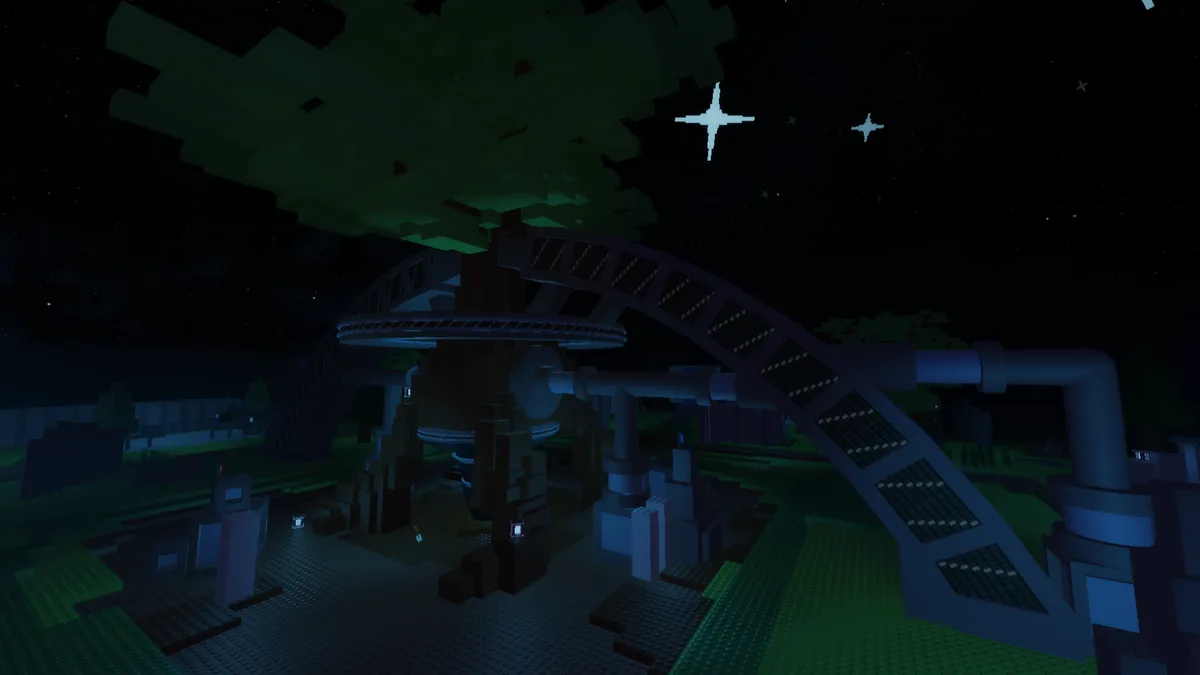
The Planet Voss map in Forsaken. Image: Forsaken (Roblox) © Forsaken Dev Group, via the Official Forsaken Wiki (forsaken.wiki).
Planet Voss is the most visually disorienting map in Forsaken, featuring alien terrain, bioluminescent flora, and crystalline formations that create an environment unlike anything else in the game. The alien landscape tricks spatial awareness with unfamiliar geometry, non-standard elevation changes, and unique terrain features that disrupt the looping fundamentals survivors develop on traditional maps. Players who invest time learning Voss-specific navigation achieve 54% escape rates compared to 36% for those who rely on general map skills, making Planet Voss the map with the second-highest knowledge-to-performance correlation in Forsaken. This guide provides the complete breakdown of every crystal formation loop, bio-cave hideout, alien terrain quirk, and Voss-specific strategy that experienced players use to dominate this extraterrestrial battlefield.
Quick Stats: Planet Voss Map
- • Map Size: Medium-Large (10,500 sq studs)
- • Difficulty: Advanced
- • Generator Spawns: 7 fixed locations
- • Cover spot Count: 12-15 spawns
- • Unique Mechanic: Bioluminescent detection zones
- • Terrain Types: Crystal fields, bio-caves, acid pools
- • Best For: Creative looping, environmental awareness
Planet Voss Map Overview
Planet Voss presents an alien world with purple-tinted skies, crystalline rock formations replacing traditional trees and buildings, bioluminescent plant life that pulses with light creating intermittent visibility zones, and hazardous acid pools that damage any player who walks through them. The map is organized around a central crashed spaceship that serves as the primary structure (similar to Forest's central lodge), with the alien landscape spreading outward into four biome zones each with distinct terrain features and strategic properties. The crashed ship contains the strongest loop structures, while the surrounding alien terrain provides unique environmental mechanics found on no other Forsaken map. Navigation on Voss requires abandoning Earth-based spatial instincts and learning to use alien landmarks like crystal pillars, bioluminescent mushroom clusters, and acid pool positions as reference points for orientation.
Crashed Spaceship (Central Structure)
The crashed ship serves as Castle's primary survivor structure:
- •Hull Breach Windows: The crashed ship has five hull breaches functioning as window vaults, more than any single structure on other maps. These breaches vary in vault speed based on breach size, with two providing fast vaults and three requiring medium vaults. Rotating between all five extends Entity blocker activation indefinitely when managing vault economy.
- •Cockpit Generator: The ship cockpit almost always contains a generator spawn, positioned at the front of the vessel behind reinforced bulkhead walls creating a protected repair position with two hull breach exits. This generator has strong nearby loops making it an excellent mid-game completion.
- •Cargo Bay Interior: The largest interior space on Planet Voss, containing crate obstacles that create jungle gym patterns with two cover spots and three line-of-sight blockers. The cargo bay connects to engineering section and exterior through multiple passages making it extremely difficult for killers to corner survivors inside.
- •Engineering Section: The ship's rear section features pipe structures and mechanical equipment creating tight loops around machinery. One generator occasionally spawns near the engine core. The engineering section's narrow corridors favor survivors against mobility killers whose powers collide with pipe obstacles.
- •Upper Deck Access: A damaged staircase provides access to the ship's upper hull surface where survivors can walk along the exterior. The upper deck provides visibility across 70% of the map during clear conditions and two drop points back to ground level for emergency escapes.
- •Ventilation Shafts: Three narrow crawlspace vents connect different ship sections, usable only by survivors due to size constraints. Killers cannot pursue through vents, creating guaranteed chase breaks when survivors enter vent from one section and exit in another. Vent transitions take 3-4 seconds.
- •Emergency Airlock: The ship's port-side airlock creates a unique door mechanic where survivors can close the airlock behind them, requiring killer to open it (2.5-second interaction) before pursuit. The airlock connects ship interior to Crystal Field biome.
- •Reactor Room Basement: Below the engineering section, the ship's damaged reactor room serves as Castle's basement equivalent. The reactor room has eerie green lighting and a single entrance via ladder from engineering, making it the most dangerous elimination location on Voss.
Four Biome Zones
The alien landscape surrounding the ship creates four distinct zones:
- •Crystal Field (North): Dense clusters of 6-10 stud tall crystalline pillars create the map's strongest outdoor loop structures. Crystal pillars function like large trees on Forest but with sharper geometry creating tighter loops. The crystal surfaces reflect light intermittently, occasionally creating flash effects that briefly disorient both killer and survivor.
- •Bio-Cave System (East): Underground cave network accessible through three surface openings, featuring bioluminescent mushrooms that pulse light every 4-6 seconds illuminating nearby survivors. The caves provide stealth opportunities between pulses and connect distant map areas through underground passages taking 15-20 seconds to traverse.
- •Acid Wastes (South): Open terrain dotted with acid pools that deal 10% health damage per second of contact. Acid pools create impassable obstacles that function as permanent wall structures for looping, but survivors must maintain precise pathing to avoid stepping in acid during chase pressure. One generator spawns in this dangerous zone.
- •Spore Valley (West): A low-lying area filled with tall alien plant stalks that function like tall grass on Forest, providing crouch-walk concealment. Spore plants release visible particle clouds when disturbed by running players, creating tracking markers visible at 20+ studs for 5 seconds after disturbance. Walking through spores avoids triggering particles.
- •Biome Transition Zones: The areas between biomes feature mixed terrain characteristics, with scattered crystals, small acid puddles, and sparse spore plants creating moderate obstacle density. Generators in transition zones have balanced risk-reward profiles suitable for mid-game completion.
- •Alien Monolith: A massive alien structure at the map's northeast edge serves as a landmark visible from anywhere on the map. The monolith base creates a powerful loop structure with a window vault through a carved opening and two cover spots near its base.
- •Landing Crater: The ship's crash landing created a large impact crater in the map center surrounding the vessel. The crater rim provides elevation advantage for survivors looking down into courtyard-like center area, and crater walls create 4-6 stud elevation drops usable with Balanced Landing.
- •Communication Array: A damaged alien communication tower in the northwest corner provides vertical gameplay with climbable sections reaching 15 studs high. The tower has one generator spawn at its base and provides map-wide visibility from its upper platform similar to Lighthouse on Tempest.
Unique Terrain Mechanics
Planet Voss introduces four terrain mechanics not found on any other Forsaken map, each requiring specific knowledge to exploit for survival or avoid for safety. These mechanics create a higher skill floor than standard maps because survivors must learn entirely new interactions rather than applying existing knowledge. However, the skill ceiling is equally high because mastering these mechanics provides advantages that killers cannot easily counter through standard gameplay adjustments.
Environmental Hazards and Features
Master these Voss-specific terrain features for survival advantage:
- •Acid Pool Looping: Acid pools deal 10% health damage per second making them lethal after 5 seconds of contact, but they also block killer pathing identically to walls. Survivors who memorize acid pool positions use them as permanent loop structures that cannot be destroyed like cover spots. Looping around large acid pools provides 20-30 second chase extensions without consuming any resources.
- •Bioluminescent Detection: Mushroom clusters in Bio-Caves pulse light every 4-6 seconds, illuminating survivors within 8-stud radius during each 1.5-second pulse. Survivors must time movement between pulses, crouching motionless during illumination and moving during dark periods. This creates a rhythm-based stealth system unique to Voss caves.
- •Spore Cloud Tracking: Running through Spore Valley plants creates visible particle clouds that persist for 5 seconds at 20-stud visibility range. Walking avoids triggering spores. During chases through Spore Valley, survivors should run along established paths between plant clusters rather than through them, preventing spore tracking while maintaining running speed.
- •Crystal Reflection Flashes: Crystal pillars intermittently create bright reflection effects that can disorient players looking directly at crystals during flash. Experienced survivors position camera away from crystal faces during loops, using peripheral awareness to track killer position rather than direct crystal-facing camera angles.
- •Crater Rim Elevation: The landing crater rim provides 4-6 stud elevation advantage that affects movement speed and chase dynamics similar to hill terrain on Forest. Running along crater rim provides consistent elevation advantage, and Balanced Landing drops from rim into crater center create sprint burst opportunities.
- •Acid Mist Visibility: Large acid pools generate green mist that reduces visibility to 25-30 studs in surrounding areas, creating semi-permanent fog zones. Generators near acid pools benefit from this visibility reduction making killer approach detection more difficult but also allowing survivors to repair with reduced long-range detection risk.
- •Cave Echo Audio: Bio-Cave tunnels create echo effects that distort audio directional cues, making terror radius direction unreliable underground. Survivors in caves should rely on visual detection rather than audio for killer tracking, using bioluminescent pulses to scan cave passages during illumination periods.
- •Alien Flora Interaction: Some alien plants react to player proximity by closing or retracting, creating visual indicators of recent player passage. Killers who notice closed plants can track survivor routes through Spore Valley even without scratch marks. Survivors should vary routes to prevent pattern detection through flora states.
Acid Pool Instant Down Risk
Acid pools deal damage continuously while standing in them, meaning an injured survivor who steps into acid will go down within one second of contact. During chases near Acid Wastes, maintain minimum 3-stud distance from pool edges to account for ping-related position correction. Multiple matches are lost each day to survivors who clip acid pool edges during tight loops, going from healthy to downed in 2 seconds because the initial acid damage puts them injured and continued contact immediately downs. Never loop acid pools when injured unless you have memorized the exact safe boundary through extensive practice.
Generator Locations and Bio-Zone Strategy
Generator positioning on Planet Voss interacts with the unique biome system, with each biome presenting different repair risk profiles based on terrain mechanics. Crystal Field generators have strong nearby loops but crystal flash distraction. Bio-Cave generators benefit from underground concealment but bioluminescent pulses create detection risk. Acid Waste generators have acid pool loop structures nearby but environmental damage danger. Spore Valley generators provide stealth repair opportunities but spore cloud tracking reveals survivor presence. Optimal generator sequencing on Voss requires biome-awareness rather than simple proximity-based repair decisions.
Biome-Based Generator Priority
Complete generators based on biome risk profiles:
- •Acid Waste Generator (Priority 1): The most dangerous generator due to environmental damage during chase escapes. Complete first when killer pressure is lowest and full health allows acid pool proximity without down risk. Removing this generator from the pool eliminates the most punishing late-game repair scenario.
- •Bio-Cave Generator (Priority 2): Underground generators benefit from concealment but bioluminescent pulse detection creates periodic vulnerability. Complete during early-to-mid game using pulse timing to repair between illumination cycles. Two-person cooperative repair with Prove Thyself completes cave generators in single extended dark period.
- •Spore Valley Generator (Priority 3): Walk to the generator position to avoid creating spore tracking clouds that reveal your repair location. Complete during mid-game when killer patrol routes are established and you can identify safe approach windows through confirmed killer position elsewhere.
- •Crashed Ship Generator (Priority 4-5): Ship generators have the strongest nearby loop structures making them ideal for mid-to-late game when killer pressure intensifies. The hull breach windows and cargo bay loops provide 45-60 second chase extensions when generator repair is interrupted.
- •Crystal Field Generator (Priority 4-5): Crystal pillar loops provide strong chase defense near generators. Crystal flash effects create brief distraction but experienced survivors learn to loop by audio and peripheral vision during flash moments. Suitable for any point in the match.
- •Communication Array Generator (Priority 6): Base-of-tower generator has moderate loops and the tower provides visibility for early killer detection. Save for late game when the array's visibility advantage helps coordinate final generator pushes.
- •Monolith Generator (Priority 7): The Alien Monolith base generator has the strongest single-structure loops on the map with window vault and double cover spot protection. This generator should be the final completion where endgame chase resources are most needed.
- •Three-Gen Bio-Zone: The three generators in eastern biomes (Bio-Cave, Acid Waste transition, Crystal Field east) create the most common Voss three-gen. Break this cluster by completing Bio-Cave generator in the first two minutes before killer establishes eastern patrol.
Killer-Specific Voss Strategies
Planet Voss's unique terrain creates distinctive matchup dynamics where environmental mechanics compound with killer abilities in ways not seen on standard maps. Stealth killers gain extreme advantage in Bio-Caves where bioluminescent pulse timing creates detection gaps, while mobility killers struggle with acid pool obstacles and crystal pillar density that interrupts dash abilities. Understanding how each killer interacts with Voss terrain allows survivors to route chases into biomes that minimize killer power effectiveness. Check /forsaken-killers for detailed killer ability guides that complement these Voss-specific strategies.
Killer Voss Matchup Analysis
Adapt your strategy based on killer identity and terrain:
- •Stealth Killers in Bio-Caves: Noli and similar stealth killers become exceptionally dangerous in Bio-Caves where bioluminescent pulse timing creates predictable detection windows and cave echo distorts terror radius direction. Against stealth killers, avoid cave generators entirely and repair surface generators where visual detection range remains standard 40 studs.
- •Nosferatu Crystal Counter: Nosferatu chainsaw charges collide with crystal pillars identically to tree trunks on Forest, making Crystal Field the strongest anti-Nosferatu biome. Route all chases against Nosferatu toward crystal formations where chainsaw paths are blocked every 6-10 studs by pillar density.
- •Ranged Killers and Acid Pools: Acid pool mist reduces visibility to 25-30 studs near Acid Wastes, reducing ranged killer effective engagement distance. Against Fog Blade or Jason ranged attacks, position near acid pools where mist provides permanent fog cover reducing projectile accuracy.
- •Trap Killers in Spore Valley: Traps placed among spore plants become nearly invisible due to alien flora ground cover, creating extremely dangerous Spore Valley traversal. Against trap killers, walk through all Spore Valley sections checking ground carefully, and avoid running through plant clusters where traps hide beneath foliage.
- •Mobility Killers and Crater Rim: Dash abilities along crater rim risk overshooting and falling into crater center, creating self-punishment for aggressive mobility power usage. Against dash killers, position on crater rim edges where killer must choose between powered pursuit (risking crater fall) and standard chase (losing power advantage).
- •1x1x1x1 Cave Exploitation: 1x1x1x1's abilities gain power in enclosed cave spaces where survivors have limited escape directions. Against 1x1x1x1, never enter Bio-Caves for any reason including generators. Surface gameplay with crystal and ship loops prevents 1x1x1x1 from exploiting enclosed environmental advantage.
- •Coolkid Spore Tracking: Coolkid can use spore cloud tracking to identify survivor positions from 20+ studs, gaining tracking advantage in Spore Valley that supplements his base abilities. Against Coolkid, avoid Spore Valley entirely or walk exclusively to prevent spore cloud generation.
- •Nosferatu Crystal Reflection: Crystal reflection flashes create brief visual disruption that interacts with Nosferatu's abilities, potentially disorienting survivors during critical chase moments near crystal formations. Against Nosferatu, loop crystal pillars from positions that minimize direct crystal face exposure.
Advanced Survivor Strategies for Voss
Mastering Planet Voss requires developing an entirely new navigation vocabulary separate from standard Forsaken map skills. The alien terrain does not respond to conventional wayfinding instincts, and survivors who attempt to apply Forest or Haunted Mansion strategies directly to Voss lose matches through environmental unfamiliarity rather than mechanical failures. The following advanced techniques represent Voss-specific skills developed through 60-100 matches of dedicated Voss play. For ability setup optimized for Voss's environmental challenges, visit /forsaken-survivors.
Voss-Specific Advanced Techniques
Develop these skills for Voss mastery:
- •Pulse Timing Movement: In Bio-Caves, count the 4-6 second interval between bioluminescent pulses. Move during dark periods (3-5 seconds of movement) and crouch motionless during illumination (1.5 seconds of stillness). This rhythm allows complete cave traversal without detection, including generator approach, repair sessions, and emergency repositioning.
- •Acid Pool Geometry Reading: Each acid pool has a unique boundary shape that creates distinct loop geometry. Spend early-match moments walking the perimeters of nearby acid pools to identify safe pathing distances. After 40-50 Voss matches, acid pool boundaries become instinctive allowing precise looping within 1-2 studs of acid edges.
- •Spore-Free Valley Routing: Memorize the 3-4 natural gaps between spore plant clusters in Spore Valley that allow running without triggering particle clouds. These gaps create invisible highways through the valley that killers cannot track through spore evidence, providing stealth transit routes at running speed.
- •Crystal Pillar Chain Loops: Link three to four crystal pillar clusters positioned 10-15 studs apart into chain loops that provide 40-60 seconds of continuous chase time. Crystal chain loops are stronger than tree chains on Forest because crystal geometry creates sharper line-of-sight breaks at every pillar.
- •Ventilation Shaft Mind Games: Enter ship ventilation shaft from one section, wait inside for 3-4 seconds (killer checks expected exit), then reverse back through entrance. Killer who repositioned to cover expected exit finds empty room while survivor exits from original entrance and gains 8-12 seconds of free movement.
- •Crater Rim Balanced Landing: Use Balanced Landing to drop from crater rim into center then immediately sprint to crashed ship hull breach. The sprint burst covers the exposed crater center in 2 seconds rather than the vulnerable 5-6 second normal crossing time.
- •Bio-Cave Shortcut Network: Learn all three Bio-Cave surface openings and the underground passages connecting them. During chases, enter cave through one opening and exit through another on opposite map side, teleporting 40-60 studs through underground travel while killer must traverse surface distance.
- •Emergency Airlock Reset: When chased inside crashed ship, route through emergency airlock closing it behind you. The 2.5-second killer interaction to open airlock provides distance equivalent to a medium cover spot break, and the airlock closes automatically after 10 seconds allowing repeated usage.
Ability Recommendations for Planet Voss
Optimize your loadout for Voss environmental mechanics:
- •Urban Evasion (Essential): Fast crouching at 100% crouch speed enables pulse-timed Bio-Cave movement at competitive speeds and spore-free Spore Valley traversal. Urban Evasion transforms two of four biomes from dangerous terrain into survivor-advantaged zones.
- •Balanced Landing (High Value): Crater rim drops, ship upper deck falls, and Communication Array descent all benefit from Balanced Landing's stagger elimination and sprint burst. Voss has more elevation drop opportunities than any map except Castle.
- •an awareness ability (Cave Safety): Bio-Cave echo distortion makes terror radius directional reading unreliable underground. an awareness ability provides consistent killer approach detection in caves where audio cues fail, preventing grab attempts during bioluminescent dark periods.
- •Calm Spirit (Spore Counter): Calm Spirit prevents crow disturbance that normally occurs near alien flora, and suppresses pain grunts that echo in Bio-Caves. This ability removes two of Voss's unique detection mechanics from killer toolkit.
- •a stealth ability (Universal Value): Injury audio echoes in Bio-Caves at 1.5x normal volume due to cave acoustics, making a stealth ability even more critical on Voss than standard maps. Without a stealth ability, injured survivors in caves are audible from 24+ studs versus normal 16.
- •Lightweight (Terrain Tracking): Alien terrain displays scratch marks differently than standard surfaces, with crystal surfaces showing scratch marks at higher contrast. Lightweight reduces scratch mark duration helping compensate for Voss's enhanced scratch mark visibility.
- •Quick and Quiet (Ship Vaults): Crashed ship hull breach vaults create loud metallic sounds audible at 20+ studs versus standard 12-stud window vault audio. Quick and Quiet eliminates this extended audio detection turning ship vaults into stealth tools.
- •Prove Thyself (Cave Efficiency): Cooperative Bio-Cave generator repairs with Prove Thyself can complete generators within extended dark periods between bioluminescent pulses, eliminating detection risk entirely through speed-based completion before next illumination cycle.
Pro Tip
The Bio-Cave system connects three surface openings positioned roughly in a triangle covering the eastern third of Planet Voss. Memorize all three entrance positions during your first 15 Voss matches. During chases near any cave entrance, entering the cave system breaks chase completely because killers must guess which of two possible exits you will use. If killer follows into cave, the bioluminescent pulse timing gives you periodic invisibility windows to reverse direction or reach an alternate exit. The cave system effectively provides three free chase breaks per match if you know all entrance positions. For comprehensive hiding spot guides across all maps, check /forsaken-maps.
Final Thoughts
Planet Voss stands alone in Forsaken's map roster as an environment that cannot be mastered through general game skills alone. The alien terrain mechanics, including acid pool geometry, bioluminescent pulse timing, spore cloud tracking, and crystal flash effects, create a completely separate skill domain that requires dedicated Voss-specific practice to develop. This uniqueness is precisely what makes Voss mastery so rewarding, because players who invest the time to learn these alien mechanics gain advantages that standard-map-focused opponents cannot replicate. The progression from Voss novice (30-36% escape rate) to intermediate (45-50% escape rate) to specialist (54-60% escape rate) maps to specific skill acquisitions: 30 matches learning biome navigation and hazard positions, 30 matches developing Bio-Cave pulse timing and spore-free routing, and 30+ matches integrating acid pool looping, crystal chain chases, and ship ventilation shaft mind games into fluid gameplay. Each skill layer builds on the previous, creating cumulative advantage that compounds with every technique mastered. Planet Voss rewards creative survivors who treat the alien environment as a toolkit rather than an obstacle. Acid pools become walls, bioluminescent pulses become timing windows, spore plants become stealth corridors, and crystal pillars become infinite loop structures. Survivors who adopt this reframing mindset consistently outperform mechanically superior players who fight the terrain instead of embracing it. Visit /forsaken-maps for our complete map tier list showing how Voss compares to every other Forsaken map, and check /forsaken-survivors for survivor builds optimized for environmental gameplay.
Master these techniques and dominate Forsaken!
Related Forsaken Guides
Builderman Forsaken Survivor Guide 2026: Sentries, Dispensers & Why He Is Not a Killer
Builderman Forsaken survivor guide: Sentry and Dispenser explained, 500 Player Points cost, placement strategy, and why he is a Support Survivor and not a killer.
Guest 1337 Forsaken Guide 2026: Block, Charge, Punch & the May Rework
Guest 1337 Forsaken survivor guide: Block, Charge and Punch explained, the May 2026 rework, 500 Player Points cost, and how to actually protect teammates.
Jane Doe Forsaken Guide 2026: How to Unlock Her, Crystal Pitch & Hatchet
Jane Doe Forsaken guide: how to unlock her through the Cabin basement quests, Crystal Pitch and Hatchet explained, and her connection to John Doe.
Taph, Dusekkar & Veeronica: Which Forsaken Support Survivor Should You Buy?
Compare Taph, Dusekkar and Veeronica in Forsaken: abilities, Player Point costs, and which of the three actually fits how you play.
Forsaken Generator Puzzle Guide: Solve Numberlink Fast and Shorten the Round
Forsaken generators are Numberlink puzzles, not progress bars. Learn the 6x6 grid rules, interruption traps, exact rewards, and techniques to solve them faster.
Back to the ForsakenHub homepage for the full Forsaken Roblox guide hub, or browse all guides. You can also play the game directly on Forsaken on Roblox.