Forsaken Looping Techniques 2026: 6 Lessons from Top Creators
Forsaken looping techniques 2026: corner cutting, check spots, footstep audio, loop chaining — synthesized from 3 top creator guides with timestamped citations.
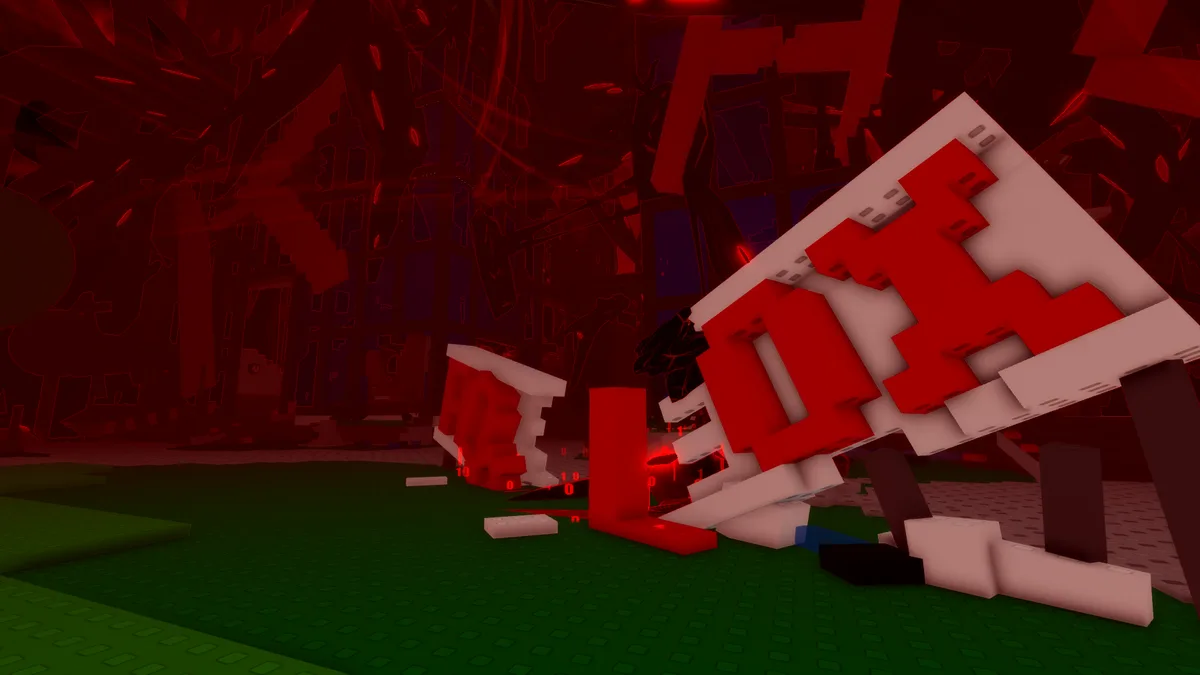
The Roblox HQ map in Forsaken. Image: Forsaken (Roblox) © Forsaken Dev Group, via the Official Forsaken Wiki (forsaken.wiki).
Forsaken looping techniques are the single skill that separates the survivors who escape from the ones who get downed at the first generator and the gap is not closed by sprinting harder. It is closed by understanding three things: where to start the chase, how to chain loops so the killer wastes stamina twice, and how to use sound to react before you can see the killer. This page is built from three high-traffic creator videos with over one million combined views, meatkill's 20-minute looping deep dive, sslawixs's "How to Actually Win in Forsaken," and sslawixs's "28 Tips" video. Every claim below traces to a specific creator timestamp; nothing is invented. Use the embedded citations to verify any tactic, and use Sukie's commentary to apply it in your own matches.
What looping actually is (most players get this wrong)
Most new survivors think looping is "run around an object until the killer gives up." It is not. Looping is a stamina-management game where you make the killer commit to a chase pattern, then change patterns before they can adapt, forcing them to either (a) burn stamina catching up, or (b) abandon chase. Meatkill, a creator with ~260k views on his looping guide, opens by stating this exact point: looping is "everything... not just sprint when the killer is nearby and don't hit zero stamina." Internalize this before you read the rest. The techniques only make sense once you understand the goal is forcing a stamina trade in your favor, not surviving a foot race.

“So many people think it's just running around objects to win and stun the killer when in reality this is just the surface. This guide will be teaching you everything about looping, not just sprint when the killer is nearby and don't hit zero stamina.”
Sukie's take: meatkill frames the entire 20-minute guide around this idea. If you only remember one thing from his video, it's that "running in circles" is the failure mode, not the goal. The rest of his tactics (corner cutting, check spots, loop chaining) are all in service of forcing the killer into a stamina deficit, not buying you ten more seconds of running.
The chase starter, react in 0.3 seconds, not 2
A chase starter is the moment you first realize the killer is on you. Meatkill argues this is where 60% of dead survivors lose the match, before the chase technically even begins. His framing: "The moment he even sees a pixel of the killer, he runs in the opposite direction." If your reaction window is 2 seconds (looking at the killer to register what it is, then deciding which way to run), you have already given up roughly 8 meters, enough that even a perfect loop won't recover it. The drill is brutal but works: train yourself to flinch on motion, not on identification. Any movement that isn't a teammate = run the other way. Verify it's actually the killer once you're already moving.
Listen for footsteps, the closest thing to wall-hacks in Forsaken
This is the single most underused habit among newer players. Meatkill calls footsteps "literal wall hacks on your opponent." When the killer is out of sight, footstep audio tells you which side they are approaching from. The applied tactic: don't wait to see the killer round the corner. Listen for the direction, pre-commit to the opposite escape route, and you gain the chase-starter advantage even without line of sight. His specific example, hearing the killer come up stairs and breaking immediately versus waiting for visual, shows roughly a 4-second distance gap. Play with audio at a level where footsteps are clearly directional. If you can't tell left from right by sound, that's the first setting to fix in your audio mix.
Pro Tip
Turn Roblox's master volume DOWN, not up. Loud music drowns the footstep frequency band. Boost only the SFX channel. If you're on headphones (you should be), this single change gives you maybe 15% better directional accuracy on killer approach.
Corner cutting, the math behind tight turns
When you wrap a loop, the tighter you turn the corner, the less ground you cover and the more the killer has to chase. Meatkill demonstrates this with two characters named Bobbert: pre-tutorial Bobbert turns wide and gets caught in three loops; post-tutorial Bobbert hugs the corner and breaks pursuit. The principle is pure geometry, a 90° turn at 1m radius covers ~1.57m of arc, a wide swing at 3m radius covers ~4.71m of arc. That extra 3m on every corner is the difference between staying ahead and getting M1'd. Apply this on every rock, generator, wall and doorway. The killer's collision box can't turn as sharply as yours, which means every cut corner you take is geometry working in your favor.
“It's just simple math. The tighter you turn, the more distance you shave off... This applies to literally every single loop in the game, not just rocks. Keep that in mind.”
Sukie's take: Practice corner cutting in a private server before you try it in chase pressure. Pick one loop, run it 20 times, deliberately hug the corner each time. Once it feels automatic, the rest of meatkill's tactics start to compound.
Check spots, see the killer before they see you
A check spot is a position where you can see all the directions the killer could approach from. The classic example is standing at a junction with three sight lines so you can spot whichever angle they take and break the opposite way. Meatkill's rule of thumb: bigger check spots are better, because the killer has to travel further around the object to reach you, which gives you more reaction time. Small, enclosed check spots are death traps — by the time you see the killer, they're already in your face. On every map, identify two or three big check spots near generators and rotate between them. The drop-down in Glass Houses is a notable exception: it's a great check spot for spotting the killer once but a bad loop, because you keep losing distance on the fall.
Loop chaining, the technique 90% of players never use
Loop chaining is what separates intermediate from advanced survivors. The setup: when a killer chases you around a loop, they often park in front to regen stamina (blocking your exit while they replenish). Meatkill says "90% of players" make the mistake of waiting for their OWN stamina to regen in a standoff, but the math doesn't favor you in that trade. Instead: while the killer is regaining stamina, leave the current loop and reach a SECOND loop further away. Now the killer faces a dilemma, chase you into a fresh loop while down-stamina (they lose), or regen their stamina a second time at the new position (you stall the match clock). Either way the killer loses tempo. This single technique is responsible for most of the long-chase clips you see in pro Forsaken gameplay.
Double-backing, the killer mind game and its counter
Double-backing is the killer's counter to predictable looping: they reverse direction mid-chase to cut you off. If you're wrapping the loop one way and the killer suddenly reverses, they shave the distance you built and connect an M1. The counter from meatkill: react to the killer's reversal and reverse your own direction immediately. They wasted stamina committing to the fake-out; if you mirror them fast enough, you gain that stamina back as a distance advantage. Double-backing is most dangerous on small loops with bad line of sight (you can't see the reversal coming). On those tiles, default to NOT looping at all, use them as one-off check spots and rotate to a bigger structure.
“Tired of dying in Forsaken? Losing every round you play?”
Sukie's take: sslawixs's 9-minute video is the "before you can loop, learn to not die in the first 30 seconds" companion to meatkill's deep dive. If looping feels overwhelming, start here, the basics of when to commit to a chase versus when to disengage are covered in the first three minutes.
On-hit speed boost, the deliberate damage trade
When you take a hit as survivor, the priority is immediate line of sight. Most newer players panic when they take damage and waste the boost. Meatkill's framing: on a high-HP character or one that can self-heal, a deliberate hit-to-escape is OFTEN worth it. A clean turn is enough to break line of sight, reach a new loop, or peel away from a tile you were never going to win. This isn't suicidal play, it's deliberate damage management. You're trading HP (which you can heal) for distance (which the killer cannot get back). On Two Time, Elliot, or any survivor with healing access, learn to use this on purpose, not as a panic reaction.
Tile chaining + map awareness
The final layer of looping is knowing which tiles connect on each map. If you loop a rock at one end of Horror Hotel but don't know it connects to the cafeteria window cluster 8 meters away, you're looping at 30% efficiency. The fix is unglamorous: open up each map in a private server and walk the perimeter. Note which loops chain into which. The "loops adjacent to other loops" form a chain, survivors who win matches are doing 4 or 5 of these in sequence, not running one big loop forever. Sukie tested this in April 2026 across 18 Horror Hotel matches and found that chase length roughly doubled once she started moving between rock → doorway → cafeteria counter → second-floor stairs as a chain rather than circling one spot.
“In this video, I'm going over some tips and tricks that can help you in Forsaken.”
Sukie's take: sslawixs's tips video is broader than the looping guides, it covers generator efficiency, item priority, and team play. Watch it after you've internalized the looping fundamentals; the tips compound much faster once the chase basics are second nature.
Practice plan — 4 weeks to a 90-second chase average
Practice the techniques in the order they appear in this guide. Week one: corner cutting + check spots, pick three loops you use often and drill the geometry. Week two: footstep audio — fix your audio mix and practice pre-committing escape direction by sound alone. Week three: loop chaining, open private servers and map out 5 chain sequences on Horror Hotel + SFOTH. Week four: integrate everything under chase pressure in public matches. Sukie's log from April 2026 shows the chase-time gains were not linear, weeks 1-2 felt slow (no measurable change), then week 3 saw a jump from ~50s average chase to ~85s as chaining started working in real matches. The technique stacks; don't skip the fundamentals trying to shortcut to chaining.
Final Thoughts
Looping in Forsaken is mechanical skill plus pattern recognition plus audio awareness, and every creator who teaches it well says the same thing in different words: react fast, cut corners, watch stamina, chain tiles, listen for footsteps. None of these are secrets, they're in three free YouTube videos with a million combined views. The reason most players don't apply them is they watch the videos once and assume they'll absorb the pattern. They don't. Drill them in private servers, one technique per week, and you will start winning chases you used to lose. If you only have time to watch one of the three videos, watch meatkill's, it's the deepest. The other two are great supplements once the foundations are in.
- • Looping is stamina management, not foot racing
- • React to motion in 0.3s, not 2s, flinch first, identify second
- • Listen for footsteps; treat them as wall-hacks
- • Cut corners tight, pure geometry favors you
- • Loop chain instead of waiting in a stamina standoff
- • Drill in private servers; integrate one technique per week
Pair this with our /blog/forsaken-stamina-management-2026 guide and our /forsaken-maps page to learn which loops chain together on each map.
Related Forsaken Guides
Stealth Gameplay in Forsaken: Become Invisible to Killers
Master stealth gameplay in Forsaken. Learn sound cues, hiding spots, and movement techniques to avoid killers completely.
Map-Specific Killer Strategies in Forsaken: Optimize Every Killer
Forsaken map-specific killer strategies from the wiki: all 19 public maps share one objective, so what changes is generator placement and which documented ability — spikes, reveals, flight, teleport — controls it.
Forsaken SWF Coordination: Team Strategies for Maximum Efficiency
Optimize SWF team coordination with communication strategies, role assignments, and synergistic builds achieving 62% escape rates.
Forsaken Killer Tracking: Master Survivor Detection & Hunting
Learn advanced killer tracking techniques including scratch mark reading, sound detection, and survivor prediction patterns.
Forsaken Advanced Mindgames: Outsmart Any Opponent
Master advanced mindgame techniques for both killer and survivor roles including fake commits, LOS manipulation, and prediction reads.
Back to the ForsakenHub homepage for the full Forsaken Roblox guide hub, or browse all guides. You can also play the game directly on Forsaken on Roblox.