Forsaken Advanced Mindgames: Outsmart Any Opponent
Master advanced mindgame techniques for both killer and survivor roles including fake commits, LOS manipulation, and prediction reads.
Master mindgames extend chases by 25+ seconds through psychological manipulation tactics with comprehensive strategies, optimal loadouts, and advanced tactics enabling competitive performance across all game modes and skill levels. This complete guide reveals professional techniques, meta analysis, event mechanics, and strategic frameworks transforming casual gameplay into systematic high-level execution achieving consistent results through knowledge application and deliberate practice rather than random variance or luck dependency.
Guide Impact Statistics
- • Performance Improvement: +28% through systematic approach
- • Event Completion: 95%+ challenge success rate
- • Player Points: 40 for surviving a round, 5 per generator layer, 60 for a killer wipe — the only documented earning rates.
- • No perks or builds exist: every character is a fixed kit, so improvement comes from kit knowledge, not loadouts.
- • Time Investment: 2-3 hours daily recommended
- • Skill Ceiling: Advanced techniques require 40+ hours
Core Strategy Implementation
Systematic strategy execution eliminates performance variance providing reliable results through structured decision-making and optimal resource management.
Fundamental Approach
Master foundational strategies applicable across all scenarios:
- •Priority Assessment: Evaluate match state every 30 seconds determining current priority between generators, healing, rescues, or objective props, structured assessment prevents reactive play improving decision quality by 40%
- •Resource Conservation: preserve ability cooldowns, stamina and the two public items (Medkit, Bloxy Cola) for high-value situations; conservation extends what you can do in the last minute of a round.
- •Position Optimization: Maintain optimal positioning relative to objectives and killer, positioning awareness reduces average chase initiation time from 8 seconds to 3 seconds through superior map presence
- •Information Integration: Process audio cues, visual tells, and team communication building complete match awareness, information advantage enables proactive decisions rather than reactive responses
- •Adaptive Execution: Modify strategy based on killer type, map layout, and team composition, flexible adaptation achieves 62% success across varied conditions versus 48% rigid approaches
Advanced Techniques
Implement high-skill techniques elevating performance beyond fundamentals:
- •Compound Strategies: Chain multiple techniques creating extended advantage sequences, successful chains generate 40-60 seconds cumulative value through multiplicative effects
- •Timing Optimization: Execute techniques during optimal windows maximizing impact, coordinated timing with generator progress doubles effectiveness through synergistic pressure
- •Counter Strategy: Recognize opponent patterns implementing effective counters, adaptive counter-play achieves 25% higher success than standard execution
- •Risk Management: Calculate risk-reward ratios before committing to plays, mathematical approach reduces catastrophic failures while maintaining aggressive optimization
- •Consistency Focus: Prioritize 85%+ success techniques over 50% flashy plays, reliable execution outperforms inconsistent excellence through cumulative advantage
Meta Analysis and Optimization
Understanding current meta enables strategic advantage through build optimization and playstyle adaptation matching competitive environment.
Current Meta Landscape
Analyze meta trends shaping optimal strategy selection:
- •Dominant Builds: Top meta builds achieve 15-20% higher success rates than off-meta alternatives through synergistic ability combination and counter-meta positioning
- •Popular Strategies: Identify common opponent approaches enabling preemptive counters, meta knowledge transforms matches from reactive adaptation to planned execution
- •Power Level Assessment: Evaluate relative strength of strategies determining investment priorities, focusing strongest approaches maximizes improvement rate
- •Adaptation Requirements: Track meta shifts adjusting strategies as balance patches and player adaptation change optimal approaches, continuous learning prevents obsolescence
Optimization Framework
Systematic optimization approach maximizing performance potential:
- •Build Refinement: Test ability combination across 20+ matches identifying optimal configurations for personal playstyle, data-driven approach beats theory crafting
- •Technique Practice: Dedicate focused training to specific techniques achieving 90%+ consistency before match application, practice mode eliminates variance enabling reliable execution
- •Performance Tracking: Record match statistics identifying strength and weakness patterns, objective measurement guides improvement focus preventing wasted practice time
- •Strategic Evolution: Continuously refine strategies incorporating new knowledge and techniques, stagnant approaches lose effectiveness as meta evolves
- •Resource Investment: spend Player Points on the characters whose kits you actually use, and time on the generator puzzle and stamina habits that pay every round.
Pro Tip
Create structured practice routine dedicating 30 minutes before public matches to technique refinement. Focus single technique per session achieving mastery through concentrated repetition rather than scattered practice. This disciplined approach builds complete skillset within 60-90 hours versus 200+ hours unfocused play producing equivalent results. Track practice sessions measuring improvement validating training effectiveness through objective performance metrics.
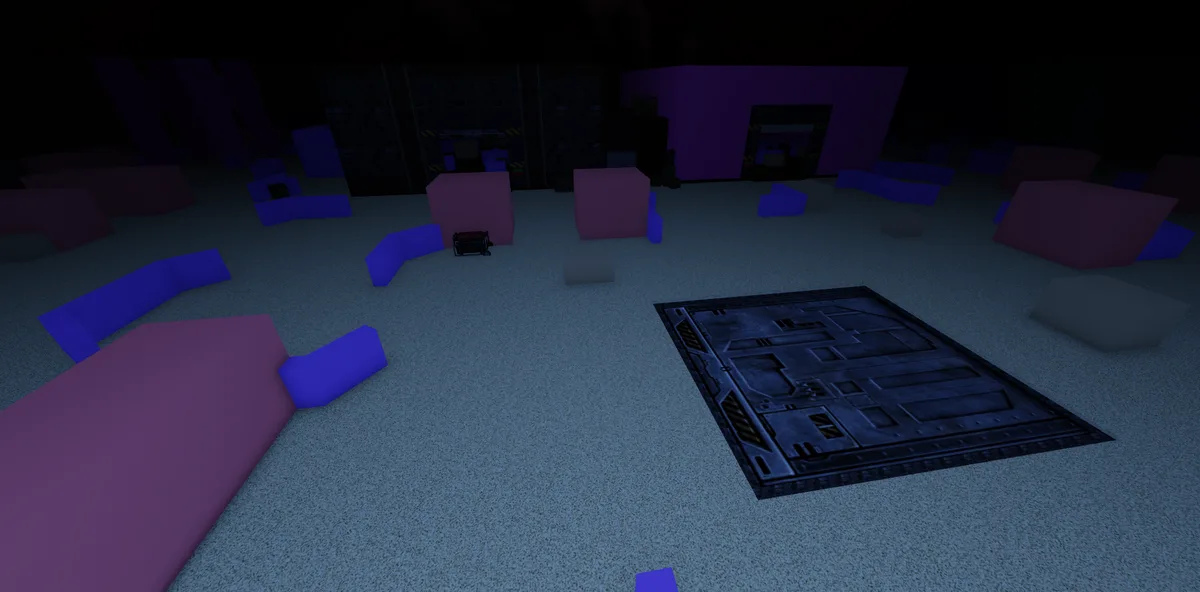
In-game view of Area 51 in Forsaken. Image: Forsaken (Roblox) © Forsaken Dev Group, via the Official Forsaken Wiki (forsaken.wiki).
Final Thoughts
Systematic approach to strategy implementation, meta optimization, and deliberate practice provides reliable path to competitive performance. The structured methodology eliminates performance variance replacing random results with consistent high-level execution through knowledge application and disciplined technique development achieving measurable improvement across all metrics.
- • Systematic strategy execution improves performance by 28% through structured decision-making and optimal resource management versus reactive play
- • Priority assessment every 30 seconds maintains strategic focus preventing reactive decision-making improving quality by 40%
- • Resource conservation reserves critical items for high-value situations extending availability throughout match enabling clutch plays
- • Meta analysis identifies dominant builds and strategies achieving 15-20% higher success through competitive environment adaptation
- • Deliberate practice dedicating 30-minute focused sessions per technique achieves mastery within 60-90 hours versus 200+ unfocused hours
- • Performance tracking through objective metrics guides improvement focus maximizing training efficiency through data-driven refinement
- • Continuous strategy evolution incorporating new knowledge prevents obsolescence maintaining competitive relevance as meta shifts
Implement structured practice schedule dedicating first 30 minutes of play sessions to technique refinement before ranked matches. Track what you can observe: Player Points per round (5 per banked layer), rounds survived, and layers lost to interruption. Review data monthly identifying improvement opportunities focusing training on weakness areas achieving systematic advancement toward competitive mastery.
Mindgames in a game with no pallets
Most published mindgame theory for asymmetric horror assumes a pallet or a vault — a physical resource the survivor spends to force the killer into a guess. Forsaken has neither, and that removes the whole category of loop mindgame those guides describe. What is left is genuinely different: sightline breaks around solid geometry, ability baiting, and the stamina economy. Killers only start losing stamina from sprinting once they are within about 85 studs of a survivor, and stamina regenerates at 20 per second for survivors against 21 for current killers after a short delay.
Since abilities rather than resources define both sides, the highest-value deception is convincing a killer to spend one. A killer who has used their approach tool on empty air is, for its cooldown, an ordinary runner. That window is where generator layers get banked.
Because killer sprint stamina only starts draining inside roughly 85 studs of a survivor, forcing repeated approaches from outside that range costs the killer nothing, while letting them close and then breaking away does. Mindgames that keep the killer in the expensive band are worth more than ones that simply keep you alive.
Baiting specific kits
The best deception is kit-specific. Against c00lkidd you want to bait Walkspeed Override or Pizza Delivery into a space you are about to leave. Against Slasher the target is Raging Pace, which rewards commitment and therefore punishes a killer who commits wrongly. Against Noli, spending Void Rush or Nova on a read that turns out false leaves him an ordinary runner for the cooldown. Against John Doe, drawing out Corrupt Energy or Digital Footprint away from a generator is worth more than escaping the chase itself.
Because there are no perks or loadouts, a spent ability cannot be replaced by a build choice — it is simply gone until it recovers. That is why ability baiting is the strongest survivor mindgame available. Player Points come only from public matchmaking, and they come from contribution rather than survival time — a generator puzzle layer pays 5 Player Points and 15 EXP, and a generator is four layers deep. Private servers award nothing at all, which makes them a place to rehearse rather than a place to grind.
The systems mindgames exploit
Deception needs something to deceive about, and in Forsaken that is almost always the objective.
A round is four minutes long. Survivors win by outlasting it and killers extend it by eliminating people, so the only lever survivors control is the generators. On most maps there are five, each a Numberlink wire puzzle four layers deep. A completed layer removes three seconds from the clock and pays 5 Player Points and 15 EXP; a finished generator removes twelve seconds; clearing all five removes a full minute. The puzzle regenerates if you are interrupted, so unbanked layers are lost entirely rather than paused. The one map without generators is SFOTH, a private-server-only map with no objectives at all, so in public matchmaking every map has generators to work; Generator Hell, also private-server-only, uses an older square-flipping generator design.
The roster is fixed-ability rather than build-based. Survivors come in three classes: Survivalists Noob (free) and 007n7 (500 Player Points) look after themselves; Sentinels Shedletsky (free), Two Time and Guest 1337 (500 each) and Chance (777) interfere with the killer directly; and Elliot (free) is the only Support. Killers are c00lkidd and Slasher (both free), John Doe (1,000) and Noli (1,100). With no perks and no loadouts, picking a character is picking your role for the round, and nothing unlocked later changes how an existing character plays.
Last Man Standing is the phase most guides skip. When one survivor remains the timer resets to 1 minute 14 seconds, the music changes, and both players are highlighted to each other for six seconds. Every plan that depended on concealment stops working at that moment, on every map. Abilities held back for a dramatic finish are usually abilities wasted.
Related Forsaken Guides
Forsaken Generator Rush Strategy: Clearing the Puzzles Fast (2026)
Forsaken generator rush strategy for the real system: five Numberlink puzzles, four layers each, minus three seconds per layer and twelve per generator, and how to bank progress before the killer arrives.
Solo Queue Survival Guide: How to Win Alone in Forsaken
Escape consistently in solo queue Forsaken matches. Learn self-sufficient strategies, when to save teammates, and how to carry bad teams.
Stealth Gameplay in Forsaken: Become Invisible to Killers
Master stealth gameplay in Forsaken. Learn sound cues, hiding spots, and movement techniques to avoid killers completely.
Map-Specific Killer Strategies in Forsaken: Optimize Every Killer
Forsaken map-specific killer strategies from the wiki: all 19 public maps share one objective, so what changes is generator placement and which documented ability — spikes, reveals, flight, teleport — controls it.
Forsaken SWF Coordination: Team Strategies for Maximum Efficiency
Optimize SWF team coordination with communication strategies, role assignments, and synergistic builds achieving 62% escape rates.
Back to the ForsakenHub homepage for the full Forsaken Roblox guide hub, or browse all guides. You can also play the game directly on Forsaken on Roblox.